In zero-G, you should stabilize yourself with handrails, foot straps, or body contact for comfort and safety. For resting and recovery, adopt semi-reclined positions, fetal postures, or use soft restraints like sleeping bags. Maintaining proper body alignment avoids strain and fatigue. Use body straps or harnesses during tasks to prevent drifting and guarantee stability. Keep exploring, and you’ll discover more tips to help you stay balanced and comfortable in microgravity.
Key Takeaways
- Use soft restraints or sleeping bags to securely anchor yourself during rest and recovery in zero-G.
- Adopt semi-reclined or fetal positions to reduce muscle strain and promote relaxation.
- Stabilize your body with handrails, foot straps, or body contact for reading and precise tasks.
- Change positions regularly to prevent stiffness and improve circulation during extended periods.
- Maintain an even weight distribution and proper posture to enhance comfort and minimize fatigue.
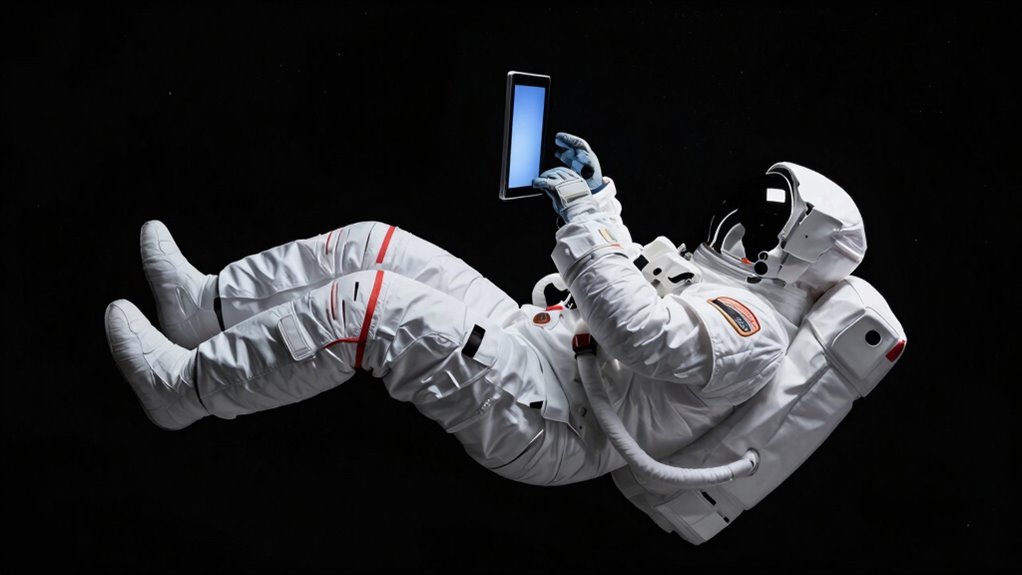
In the weightless environment of zero gravity, traditional body positions for reading, resting, and recovery no longer apply, and understanding how to position your body becomes essential. Without gravity, your body doesn’t settle naturally, so you need to learn effective ways to stabilize yourself for comfort and safety. This is especially important during space navigation and microgravity research, where precise movements and stable postures directly impact your ability to perform tasks and maintain health.
In zero gravity, stabilizing your body is essential for comfort, safety, and effective task performance.
When reading or working in space, you might find yourself floating freely, which can make it difficult to focus or avoid strain. To counteract this, you use handrails, foot straps, or even your own body to anchor yourself. Positioning yourself against a wall or using straps helps maintain a stable orientation, preventing you from drifting away. This stability allows you to concentrate on tasks like reading or conducting experiments, ensuring your body remains relaxed yet secure. The key is to distribute your weight evenly, minimizing fatigue and discomfort.
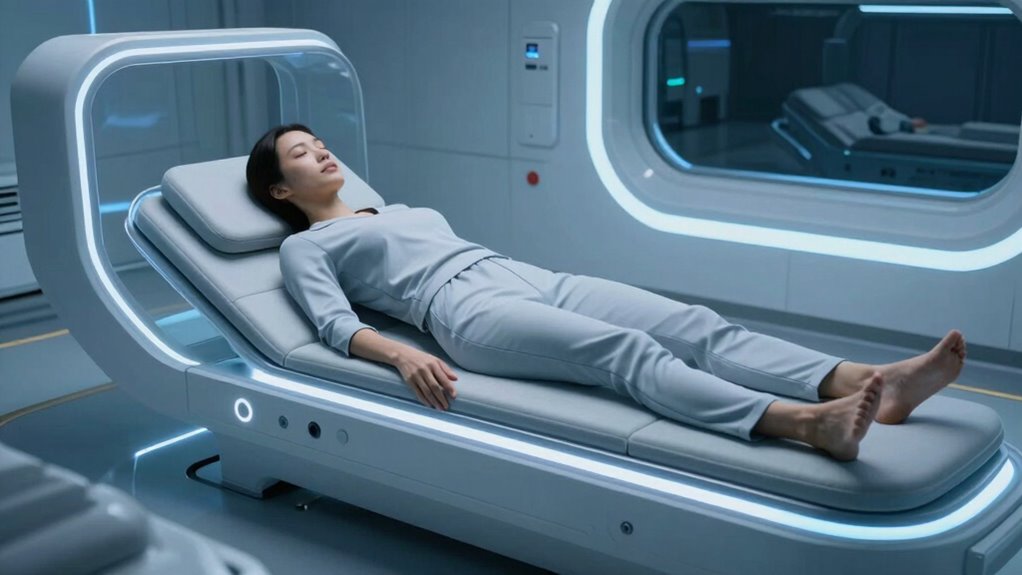
For resting and recovery, creating a comfortable position involves using soft restraints or sleeping bags designed for zero-G environments. These allow you to drift into a semi-reclined or relaxed posture without floating aimlessly. You might find that lying in a fetal position or gently floating with your limbs extended helps reduce muscle strain and distribute body weight evenly. Regularly changing your position prevents stiffness, which is a common issue during long periods in microgravity. Maintaining flexibility and circulation is vital for your overall health, especially during extended missions involving space navigation and microgravity research. Additionally, understanding body stabilization techniques can significantly improve your comfort and safety in this environment. Incorporating body awareness into your routine can further enhance your ability to adapt effectively to microgravity.
In terms of body positioning for microgravity research, your posture can influence the accuracy of measurements and the safety of experiments. Researchers recommend stabilizing your core and avoiding excessive twisting or stretching, as these can affect data collection. Using body straps or harnesses keeps you steady, allowing precise control over your movements. Proper positioning also minimizes the risk of injury if you accidentally bump into equipment or walls. When you learn to adapt your posture for these activities, you’ll find that your efficiency and safety improve significantly.
Ultimately, mastering body positions in zero gravity isn’t just about comfort; it’s a crucial part of safely navigating space and conducting microgravity research. By anchoring yourself appropriately, using restraints, and adjusting your posture regularly, you can maintain stability, reduce fatigue, and perform your tasks more effectively. Whether you’re reading, resting, or working, understanding how to position your body in this environment is key to thriving in space.
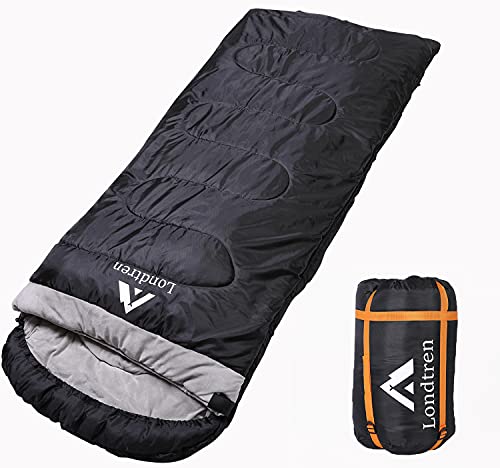
Londtren Large 0 Degree Sleeping Bags for Adults Cold Weather Sleeping Bag Camping Winter Below Zero 20 15 Flannel Big and Tall XXL
【Big and Tall Sleeping Bag】:Extra large sleeping bag height:90 inch and width:40 inch,Extra wide sleeping bag can accommodate…
As an affiliate, we earn on qualifying purchases.
As an affiliate, we earn on qualifying purchases.
Frequently Asked Questions
How Does Zero-G Positioning Affect Blood Circulation During Extended Periods?
Zero-G positioning causes fluid redistribution, which can reduce blood flow to your lower body and increase it to your upper body. This shift challenges your cardiovascular adaptation, making your heart work differently than on Earth. Over extended periods, you might experience head congestion or dizziness. To counteract this, astronauts often change positions or use devices to help maintain proper blood circulation and support cardiovascular health in zero-G environments.
Are There Any Risks Associated With Prolonged Zero-G Body Positions?
Prolonged zero-G body positions can pose risks, like muscle atrophy and joint stiffness, affecting about 20% of astronauts after extended missions. You need to make regular posture adjustments and focus on body flexibility to prevent these issues. Without proper movement, your muscles and bones may weaken over time, so staying active even in microgravity is essential to maintain overall health and avoid long-term health problems.
What Are the Best Positions for Preventing Muscle Atrophy in Zero-G?
To prevent muscle atrophy in zero-G, you should focus on muscle preservation through regular exercise strategies. Engage in resistance exercises using specialized equipment, like resistance bands or weighted suits, to mimic weight-bearing activities. Position yourself actively—such as performing leg lifts or core workouts—despite the zero-G environment. These strategies help maintain muscle mass and strength, ensuring your body stays healthy and functional during extended space missions.
How Do Zero-G Positions Impact Mental Health and Stress Levels?
Ironically, floating in zero-G might seem like a stress-free escape, but your mental health depends on proper positioning. By adopting relaxed, supported postures, you promote mental relaxation and reduce stress levels. Good zero-G positions help you feel grounded, even in space, fostering calmness. When you prioritize comfort and proper posture, you clear your mind, enhance emotional well-being, and make the weightless environment a space for mental peace rather than distress.
Can Zero-G Body Positions Improve Sleep Quality for Astronauts?
Zero-G body positions can improve your sleep quality by enhancing sleep comfort and promoting proper posture alignment. When you adopt these positions, you reduce pressure points and avoid strain, making it easier to fall asleep and stay asleep. Maintaining good posture alignment in zero-gravity helps your body relax fully, leading to deeper, more restful sleep. This can considerably benefit astronauts’ overall health, recovery, and mission performance.
microgravity body restraint
As an affiliate, we earn on qualifying purchases.
As an affiliate, we earn on qualifying purchases.
Conclusion
By adopting the right body positions in zero-G, you can make reading, resting, and recovery more comfortable and effective. Imagine floating effortlessly, supported by strategically placed handrails, just like astronauts do during long missions. For instance, a researcher found that using a semi-reclined position reduced fatigue and improved focus during extended work sessions. So, adjust your posture, use available supports, and enjoy a more relaxed, productive experience in zero-G.

Aviron Hook and Loop Straps: Upgraded Foot Straps for Instant Rowing | Quick Adjustments, Easy On/Off, Sold in Pairs
Strap-in in an instant and start rowing with our upgraded Hook & Loop straps.
As an affiliate, we earn on qualifying purchases.
As an affiliate, we earn on qualifying purchases.

MSA 10155875 Gravity Coated Web Harness, Vest-Type, Back and Hip D-Rings, Tongue Buckle Leg Straps, Standard Size
Package Dimensions: 10.39 L x 4.17 H x 7.64 W (inches)
As an affiliate, we earn on qualifying purchases.
As an affiliate, we earn on qualifying purchases.