In zero-G, you’ll feel weightless, but your body faces circulation challenges as fluids shift toward your head, causing issues like vision distortion and facial puffiness. Your heart works differently to maintain blood flow, and muscle weakening is a risk without proper exercise. Space crews follow safety and circulation protocols like suit monitoring and airflow management to prevent health problems. If you’re curious about how astronauts stay healthy, there’s more to discover below.
Key Takeaways
- Zero-G causes fluid shifts toward the head, increasing intracranial pressure and affecting vision and brain function.
- Proper circulation management during spacewalks prevents fluid buildup and ensures safe blood flow outside the spacecraft.
- Space habitats use specialized airflow and ventilation systems to maintain air quality and prevent stagnant zones.
- Astronauts perform resistance and cardiovascular exercises to counteract muscle and bone loss caused by microgravity.
- Long-term effects of zero-G on circulation and vision are ongoing research areas to develop protective health strategies.
What Does Zero-G Feel Like for Astronauts?

Have you ever wondered what zero-G actually feels like for astronauts? In space, you float effortlessly, experiencing a sensation of weightlessness. This makes spacewalk challenges even more demanding, as moving requires careful control and planning. Without gravity, your muscles and bones aren’t burdened, which might sound ideal, but it actually leads to muscle weakening over time. To counteract this, astronauts perform zero-G exercises daily, mimicking the resistance they’d face on Earth. During a spacewalk, you’ll notice how every movement requires extra effort and coordination. You won’t feel your usual sense of up or down, and even simple tasks become more complex. It’s a strange, disorienting experience, but one that astronauts learn to adapt to through training and routine. Smart indoor gardens and other innovative technologies are helping us understand how to support health and activity in microgravity environments.
How Does Microgravity Affect Blood Circulation?
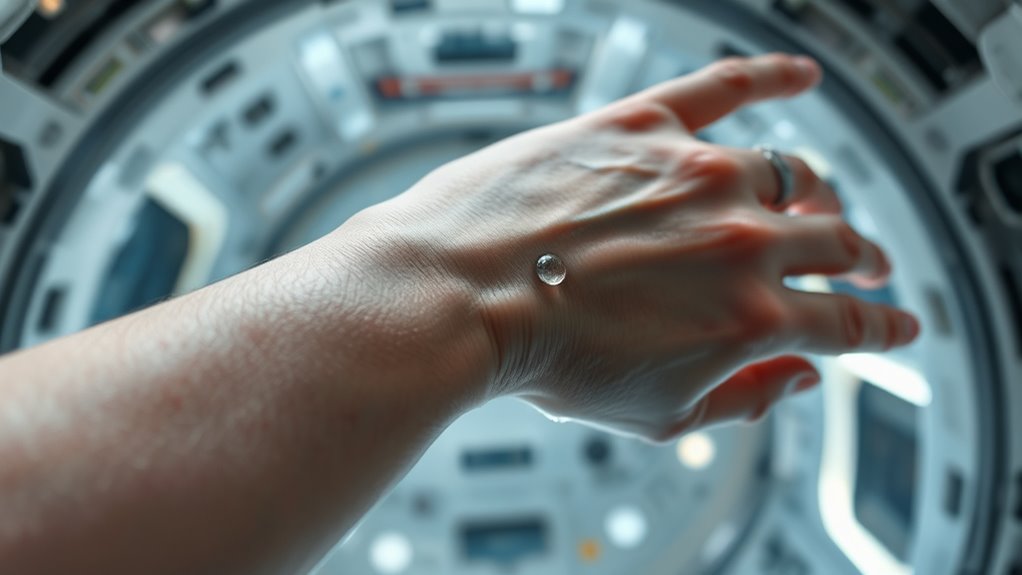
Microgravity markedly impacts blood circulation by causing fluids to shift toward the upper body and head, which can lead to facial puffiness and increased pressure in the brain. This blood flow redistribution challenges your cardiovascular system, prompting it to adapt quickly. Your heart may experience reduced workload initially, but over time, your body adjusts through cardiovascular adaptation to maintain proper blood circulation. You might notice changes in blood vessel behavior, such as dilation or constriction, to compensate for the fluid shift. These adjustments help guarantee oxygen and nutrients are delivered efficiently throughout your body despite microgravity. Understanding how your body responds to these changes is essential for maintaining health during space missions. Your cardiovascular system’s ability to adapt is indispensable for your safety and well-being in a microgravity environment. Cardiovascular adaptation is a vital process that enables your body to cope with the unique challenges posed by space travel.
What Are the Challenges of Living in Zero-G Environments?

Living in zero-G environments presents a range of physical and logistical challenges that can considerably impact your daily life. Space habitat design must address issues like fluid redistribution, muscle atrophy, and bone density loss, making your environment different from Earth’s. You’ll need specialized equipment and routines to maintain health. Psychological adaptation is equally vital; living without gravity can cause feelings of disorientation and isolation. The confined space and lack of natural cues require mental resilience and effective support systems. Adjusting to zero-G demands continuous effort to stay comfortable and focused. Maintaining color accuracy and proper lighting conditions is also crucial for psychological well-being and operational efficiency in such environments. Overall, these challenges require careful planning, innovative design, and mental strength to ensure you can live and thrive in a gravity-free environment.
How Do Astronauts Prevent Health Issues Related to Circulation?

To prevent health issues related to circulation in zero-G environments, astronauts employ a combination of specialized exercises, medical devices, and positional strategies. Space fitness routines include resistance training and cardiovascular workouts that help maintain muscle strength and promote healthy blood flow. They also use devices like lower body negative pressure suits to simulate the effects of gravity, encouraging blood to circulate properly. Astronauts often change positions frequently and elevate their legs to counteract fluid shifts that occur in microgravity. Additionally, monitoring indoor air quality and maintaining a clean environment are vital for overall health during space missions. Maintaining effective circulation is indispensable for overall health and performance during long-duration space missions.
Can Zero-G Impact Brain Function and Vision?

Zero-G can cause changes in brain pressure and blood flow, which may affect your brain function and vision. You might experience visual disturbances or other neurological symptoms, but the long-term consequences are still uncertain. Researchers continue to study these effects to better understand potential risks. Additionally, understanding the effects of microgravity on human physiology is crucial for developing safety protocols for space travel.
Brain Pressure Changes
Have you ever wondered how the absence of gravity affects your brain? When you’re in zero-G, fluid shifts occur, causing blood and cerebrospinal fluid to move upward. This can lead to increased intracranial pressure, as fluids no longer settle due to gravity’s pull. The change in pressure may impact your brain’s environment, potentially affecting its function. Without gravity, the normal fluid balance in your head is disrupted, which can cause pressure to build up in certain areas. Over time, these shifts could influence how your brain processes information and maintains homeostasis. While astronauts adapt, these pressure changes highlight how gravity plays a vital role in regulating intracranial pressure and overall brain health during spaceflight.
Visual Disturbances Risks
Ever wondered how the absence of gravity might affect your vision and brain function? In microgravity, circulation risks increase, which can lead to visual impairment. Without gravity, blood flow shifts toward your head, causing fluid buildup in the brain and eyes. This pressure can distort vision, resulting in blurred sight or even visual disturbances. Over time, these circulation changes may impair your brain’s ability to process visual information properly. While some astronauts experience these symptoms temporarily, the risks of long-term visual impairment remain a concern. By understanding how microgravity impacts circulation, you can better appreciate the potential effects on your brain and vision during extended space missions. Maintaining proper circulation is essential to minimize these visual disturbances in zero-G environments. Additionally, research into AI safety measures highlights the importance of ongoing monitoring and intervention strategies to address health risks associated with unique environments like space.
Long-Term Effects Unclear
While short-term circulation changes in microgravity are well-documented, the long-term effects on brain function and vision remain uncertain. Ongoing circulation research aims to understand how extended space exposure might influence your long-term health. You might experience various risks, but their full scope is still unclear. Here are key considerations:
- Potential for sustained intracranial pressure increases affecting brain health
- Changes in cerebrovascular function impacting cognition and sensory processing
- Persistent visual disturbances due to fluid shifts and structural alterations
- The role of natural materials in mitigating some health risks by supporting physiological stability during long-term space missions.
Because long-term effects are not fully understood, scientists continue studying these risks to develop protective strategies. Your long-term health in microgravity depends on this circulation research, which seeks to clarify how extended space travel might influence brain and vision health over time.
What Measures Are Taken to Maintain Safe Circulation in Space?

Maintaining safe circulation in space requires careful management of airflow and movement to prevent health risks and guarantee crew safety. You’ll find that air circulation systems are designed to ensure even airflow, reducing stagnant spots and minimizing the risk of contamination. During spacewalk safety procedures, astronauts wear suits that help regulate circulation and prevent fluid buildup. Regular equipment maintenance is essential to keep ventilation systems functioning correctly, avoiding blockages or failures that could compromise air quality. Movement within the spacecraft is carefully monitored to prevent fluid shifts that might lead to dizziness or other health issues. Additionally, Nissan Tuning techniques emphasize the importance of precise adjustments and system checks to optimize performance, which is analogous to ensuring all life support systems function seamlessly. These measures work together to maintain a healthy, safe environment, ensuring that circulation stays consistent and reliable throughout your mission.
Frequently Asked Questions
How Does Zero-G Impact Long-Term Muscle Memory Retention?
In zero-G, your muscles experience less resistance, which can lead to muscle atrophy if you don’t exercise regularly. This environment impacts long-term muscle memory retention because neural adaptation slows down without consistent activity. You might find that skills or strength you’ve built diminish faster, but with proper training, you can maintain or regain muscle memory by stimulating neural pathways and preventing atrophy.
What Psychological Effects Are Caused by Circulation Changes in Space?
As you adapt to space, circulation changes can trigger psychological effects like anxiety or mood swings, challenging your mental resilience. Space adaptation demands you stay mentally strong while your body adjusts to fluid shifts and reduced gravity. These physiological shifts can amplify feelings of isolation or stress, but developing psychological resilience helps you manage these effects, maintaining focus and emotional stability during your space mission.
Are There Specific Diets to Support Circulation in Zero-G Environments?
You should focus on nutritional strategies that support circulation in zero-g environments, including a balanced diet rich in omega-3 fatty acids, antioxidants, and fiber. Incorporate dietary supplements like vitamins C and E to boost vascular health. Staying well-hydrated and avoiding excessive salt can help prevent blood flow issues. Consult with space nutrition experts to tailor your diet, ensuring your circulatory system stays healthy during your time in zero gravity.
How Does Zero-G Influence the Body’s Immune System?
An ounce of prevention is worth a pound of cure. In zero-g, your immune response can weaken, making you more vulnerable to infection risk. The lack of gravity impacts immune cell function and circulation, which hampers your body’s ability to fight off illnesses. You must stay vigilant, maintain proper hygiene, and support your immune system through diet and exercise to counteract these effects.
What Technological Innovations Are in Development to Improve Circulation in Space?
Researchers are developing innovative solutions like wearable sensors to monitor your circulation in space continuously. They’re also working on artificial gravity systems, which simulate Earth’s gravity to help you maintain healthy blood flow. These advancements aim to reduce health risks associated with microgravity, ensuring you stay healthier during long missions. With such technology, you’ll benefit from better circulation management, making space travel safer and more comfortable for you.
Conclusion
Living in zero-G is like floating through a dream, where your body adapts in surprising ways. While it presents challenges to circulation and health, astronauts have strategies to keep safe, much like a sailor adjusting to rough seas. Understanding these effects helps you appreciate the incredible resilience required to thrive in space. As you can see, with the right measures, zero-G becomes a navigable frontier—just like charting a course through uncharted waters.