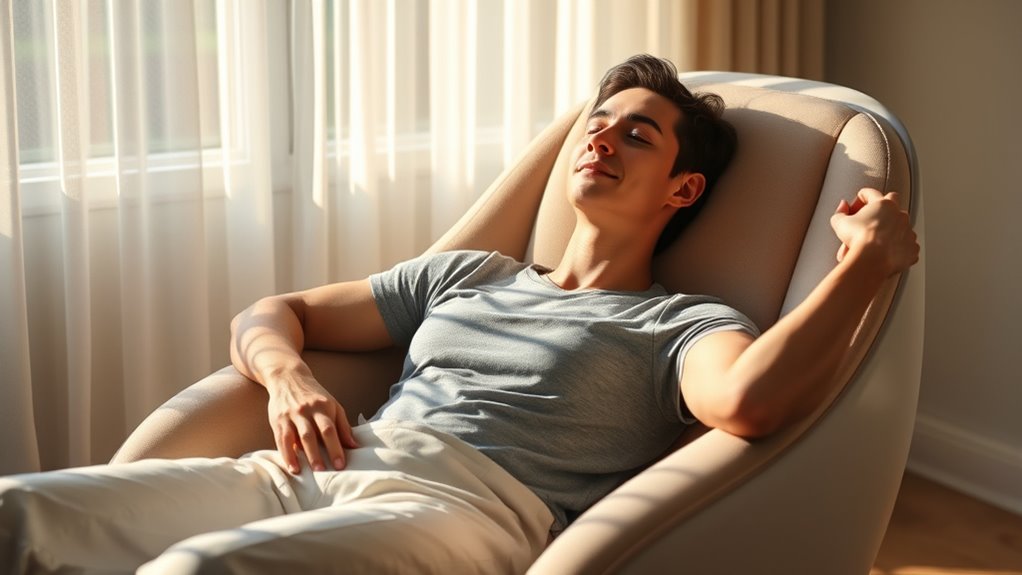

Reclining in zero-G helps lower your heart rate by promoting deep relaxation and easing physical tension. The sensation of weightlessness calms your nervous system and encourages mindful breathing, which activates your parasympathetic nervous system—your body’s relaxation mode. As your muscles relax and stress diminishes, your pulse slows naturally. Staying in this environment can reinforce these calming effects over time, so keep exploring how zero-G experiences support your overall stress reduction journey.
Key Takeaways
- Zero-G reduces physical tension, promoting muscle relaxation and calming the nervous system.
- Reclining in zero-G enhances parasympathetic activation, helping to lower heart rate.
- Floating in weightlessness diminishes stress signals, facilitating mental calmness and emotional stability.
- Combining zero-G with mindfulness and breathing exercises deepens relaxation and supports heart rate reduction.
- The environment resets the stress response, leading to a slower heart rate and improved overall well-being.
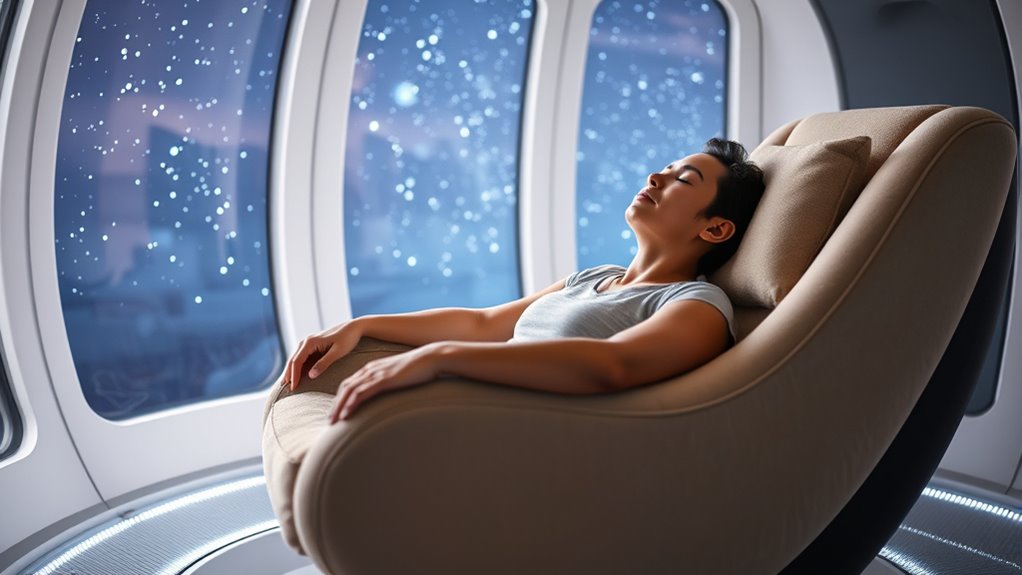
Experiencing zero gravity can markedly reduce stress by offering a unique sense of weightlessness and relaxation. When you float effortlessly in a zero-G environment, your body no longer bears the usual physical burdens, which helps calm your nervous system. This sensation of floating can serve as a powerful tool for stress reduction, providing a mental escape from daily worries. To deepen this calming effect, practicing mindfulness techniques while in zero-G can be especially effective. By focusing your attention on your breath, bodily sensations, or the environment around you, you anchor yourself in the present moment. This mindfulness helps diminish anxious thoughts and promotes a sense of peace, allowing you to fully enjoy the tranquility that zero gravity provides.
Floating in zero gravity relieves physical burdens, calms the nervous system, and fosters mindfulness for deep stress relief and inner peace.
Breathing exercises complement these mindfulness techniques perfectly. In a zero-G setting, your breathing naturally slows down because your body feels lighter, but intentionally controlling your breath amplifies this relaxation. Simple practices like deep diaphragmatic breathing—inhale slowly through your nose, filling your lungs, then exhale gently through your mouth—can considerably lower your heart rate. As you do this, you activate your parasympathetic nervous system, which promotes rest and recovery. The experience of controlled breathing in zero-G can feel almost effortless, making it easier to enter a meditative state and let go of tension. Over time, combining breathing exercises with mindfulness techniques while floating can lead to sustained reductions in stress levels and a calmer heart.
As your body adapts to the zero-G environment, you’ll notice your pulse slowing and your muscles relaxing more deeply. The weightless sensation helps release stored tension, and your mind becomes more receptive to calming practices. You might find that during these moments, your thoughts become clearer, and your emotional state stabilizes. It’s an ideal setting to practice breathing exercises, focusing solely on each inhale and exhale, without distractions. This focused attention not only enhances the physical benefits but also fosters mental clarity. When you regularly engage in these techniques in zero-G, you reinforce your body’s natural ability to manage stress more effectively, even after returning to normal gravity. Additionally, the practice of mind-body connection during these moments can further enhance relaxation and emotional resilience.
In essence, reclining in zero gravity, combined with mindfulness and breathing exercises, creates a prime environment for relaxation. It’s a unique opportunity to reset your stress response, slow your heart rate, and nurture your overall well-being. This experience underscores how physical environment and mental practices work together to promote tranquility. By leveraging the weightless state, you can develop lasting habits that help you stay calm and centered, no matter what life throws your way.
Frequently Asked Questions
Can Reclining Help Reduce Stress During High-Pressure Work Situations?
Yes, reclining can help reduce stress during high-pressure work situations. When you recline, you can practice mindfulness meditation and deep breathing exercises, which calm your nervous system. These techniques lower your heart rate and promote relaxation, making it easier to handle stressful moments. Taking a brief break to recline and focus on your breath helps you regain control, stay centered, and improve your overall resilience under pressure.
How Quickly Does Reclining Impact Heart Rate After Starting?
Reclining quickly triggers your relaxation response so you notice your heart rate drop within minutes, like a switch flipping from stress to calm. This position relaxes your muscles and calms your nervous system, helping your heart beat more steadily. As you settle into a reclined posture, your heart rate starts to decrease, allowing you to feel more centered and less overwhelmed in just a short amount of time.
Are There Specific Recline Angles More Effective for Stress Relief?
Yes, certain recline angles are more effective for stress relief. An ergonomic design that promotes proper posture alignment, typically around 120 to 130 degrees, helps you relax more deeply. This angle reduces strain on your spine and encourages better circulation, which can lower your heart rate. Adjust to a position that feels comfortable and supportive, allowing your body to fully unwind and reduce stress effectively.
Is Reclining Beneficial for Individuals With Chronic Anxiety?
Think of reclining as a gentle lullaby for your nerves. It’s definitely beneficial for chronic anxiety, helping you find a calm harbor amid turbulent seas. Good posture benefits your body, while deep breathing exercises become easier in this relaxed position. By reclining, you ease tension, slow your heart rate, and create space for mental clarity. It’s a simple yet powerful tool to help soothe your anxious mind and restore balance.
Can Reclining Be Combined With Other Relaxation Techniques for Better Results?
Yes, you can combine reclining with mindfulness meditation and aromatherapy pairing for enhanced relaxation. As you recline, focus on your breath and stay present through mindfulness, deepening your calm. Add soothing scents via aromatherapy to amplify the stress-relief effects. This multi-layered approach helps lower your heart rate more effectively, making your relaxation session more powerful and restorative. Give it a try to maximize your stress reduction benefits.
Conclusion
So, next time you’re feeling overwhelmed, try leaning back and relaxing. It turns out, reclining can genuinely lower your heart rate and reduce stress—almost like experiencing a mini zero-g moment. While it might seem simple, science shows that taking a moment to unwind this way can boost your mood and overall well-being. So go ahead, kick back a little more often—you might just find that peace and calm are closer than you think.