
In zero-G, your blood no longer flows downward like on Earth but shifts toward your head, causing facial swelling and congestion. Without gravity, blood spreads evenly, reducing pressure in your legs and increasing it in your upper body. This redistribution changes how your heart works and can lead to issues like dizziness when you return to Earth. If you keep exploring, you’ll discover how scientists are working to protect astronauts from these effects.
Key Takeaways
- In zero-G, fluids and blood distribute evenly, causing less pooling in the lower body and more in the head.
- Blood pressure shifts upward, increasing blood flow to the upper body and face while decreasing in the legs.
- The heart works less to pump blood uphill, leading to changes in blood volume and circulation over time.
- Microgravity raises the risk of blood clots forming due to slowed and pooled blood flow.
- Understanding these changes helps develop health strategies to protect astronauts’ cardiovascular health in space.
What Is Zero-G and How Does It Affect Blood Flow?
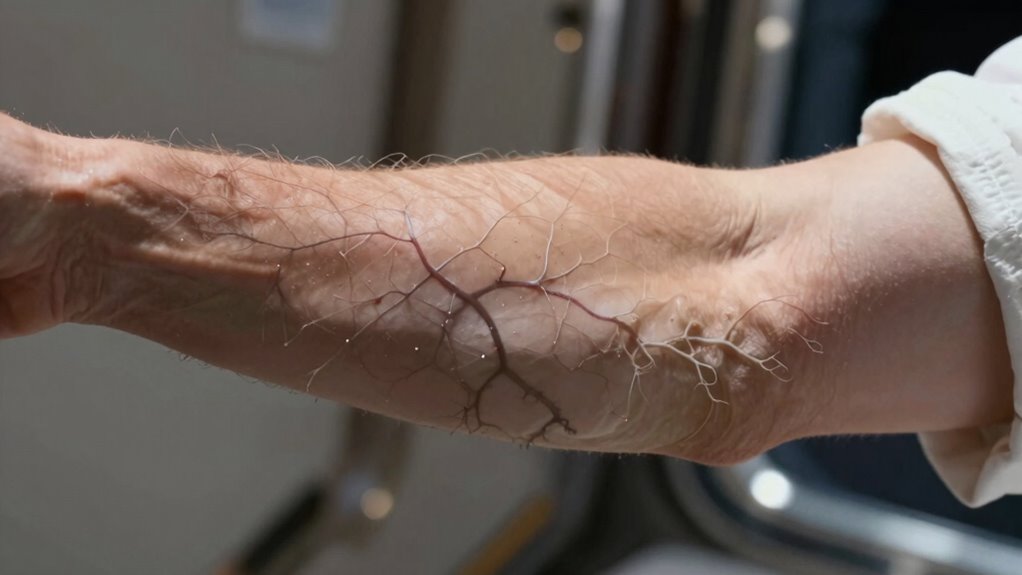
Zero-G, or microgravity, refers to the condition where Earth’s gravity is so weak that objects and people experience a sensation of weightlessness. In this environment, gravity effects are minimal, and fluid dynamics behave differently than on Earth. Instead of fluids like blood settling or flowing downward, they distribute more evenly through your body. This change impacts how blood moves, as gravity no longer pulls it toward your lower body. Instead, fluids tend to shift toward your head, causing facial swelling and nasal congestion. Understanding these gravity effects helps explain how your blood circulation adapts in space. Microgravity alters the usual flow patterns, making it a fascinating area of study for scientists exploring how the human body functions without the constant pull of gravity.
How Spaceflight Changes Blood Movement in Your Body

When you’re in space, your blood no longer flows the way it does on Earth. Gravity effects your blood movement, so without gravity, blood doesn’t pool in your legs or move downward as it normally does. Instead, it redistributes more evenly throughout your body. This shift impacts your blood pressure, often causing it to decrease in your legs and increase in your upper body and head. Your heart doesn’t have to work as hard to pump blood uphill, so it adjusts accordingly. These changes can lead to dizziness or lightheadedness when you return to Earth. Spaceflight fundamentally rewires how blood moves, challenging your body’s usual regulation of blood pressure and flow, which is why astronauts often experience these adaptations during and after missions. Additionally, research into microgravity’s effects on blood flow can also provide insights into vascular health and potential medical treatments for related conditions. Understanding these alterations can also shed light on how gravity influences bodily functions beyond the context of space. Moreover, studying these effects can help develop medical interventions for conditions affected by blood circulation. Such research highlights the importance of blood flow regulation for overall health and recovery.
The Impact of Zero-G on Blood Volume and Circulation
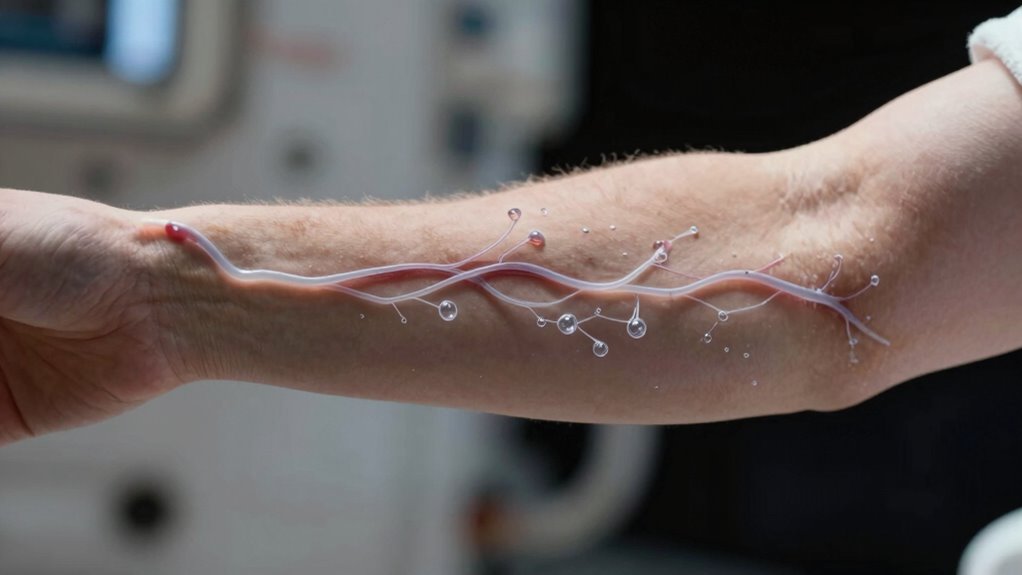
In the absence of gravity, your body undergoes significant changes in blood volume and circulation. Without gravity pulling blood downward, your body redistributes fluids, causing blood volume in your upper body and head to increase. This shift affects circulation mechanisms, making blood flow more evenly throughout your body. As a result, your heart doesn’t need to work as hard to pump blood, leading to decreased overall blood volume over time. The redistribution also influences how your blood vessels respond, often causing them to relax or become less flexible. These changes can impact your cardiovascular system, making it essential to understand how zero-G alters blood volume and circulation during space missions. Recognizing these effects helps prepare your body for the unique challenges of living in a microgravity environment.
What Research Shows About Blood Clots and Space Health Risks
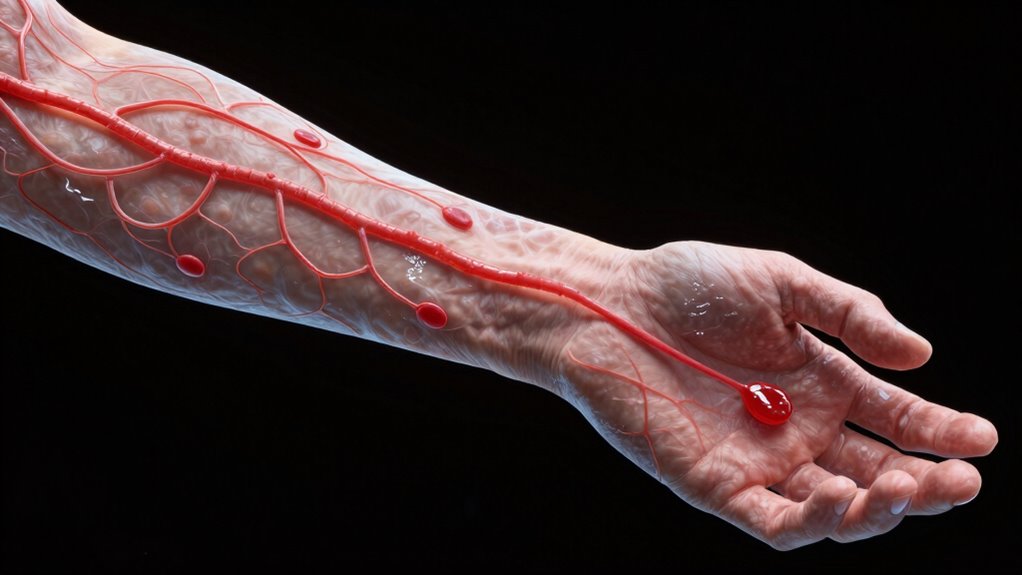
Research indicates that microgravity considerably increases the risk of blood clots in astronauts, posing serious health concerns during space missions. In zero-G, blood clot formation becomes more likely because blood flow slows and pools, especially in the lower limbs. This stagnation can lead to dangerous clots that travel to essential organs, risking conditions like deep vein thrombosis or pulmonary embolism. The altered gravity environment amplifies cardiovascular risks, making clot prevention a top priority for space agencies. Studies have shown that astronauts are more prone to developing abnormal blood clotting patterns during extended missions. Understanding these risks helps scientists develop better strategies to monitor, prevent, and treat blood clots, ensuring the safety of crew members on long-duration spaceflights.
How Understanding Zero-G Blood Flow Helps Keep Astronauts Safe
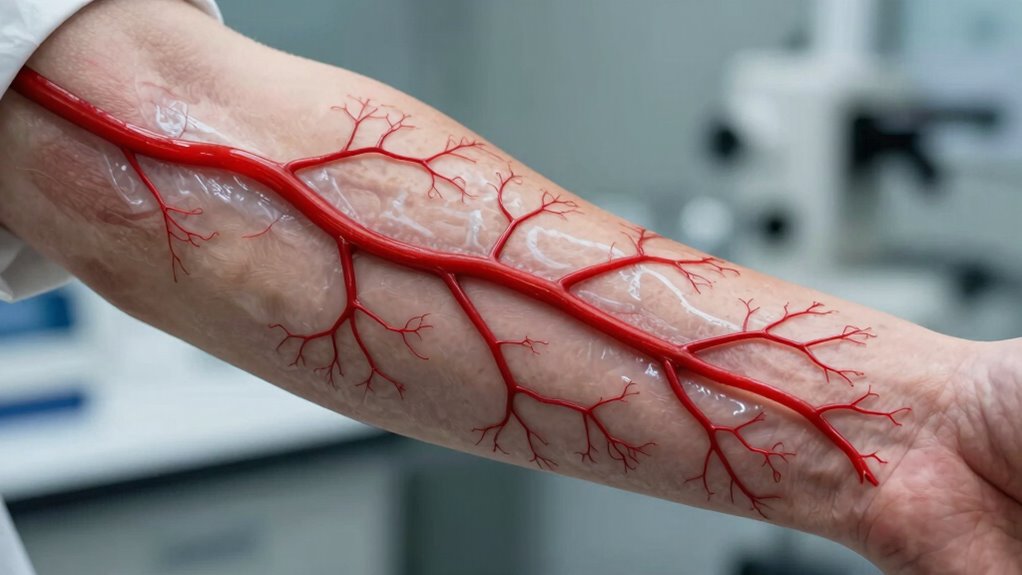
Understanding how zero-G affects blood flow is essential for developing effective strategies to protect astronauts’ health. By studying gravity effects on circulation, space agencies can anticipate how the body adapts. This knowledge helps in designing countermeasures to prevent issues like blood pooling and cardiovascular deconditioning. Additionally, understanding the importance of fuel injection cleaning can inform health monitoring techniques that keep the cardiovascular system functioning properly in space. Recognizing the impact of fluid redistribution on bodily functions allows for more precise interventions. To stay safe, you should focus on:
- Monitoring cardiovascular adaptation to detect early signs of health risks.
- Implementing exercise routines that simulate gravity effects to maintain blood flow.
- Developing medical protocols tailored to zero-G conditions for swift intervention.
Recognizing these factors allows for better preparation, ensuring your body adjusts effectively during space missions. This understanding ultimately keeps you safer and healthier during prolonged stays in zero-G environments.
Frequently Asked Questions
How Long Does It Take for Blood Flow to Normalize After Returning to Earth?
After returning to Earth, your blood flow typically normalizes within a few hours, but full circulatory recovery can take days. Your body undergoes gravity adaptation, adjusting to increased gravitational forces, which helps restore blood distribution. During this period, your circulatory system works to stabilize blood pressure and flow. Staying hydrated, resting, and moving gently can support faster recovery, ensuring your blood flow and overall circulation return to pre-flight conditions quickly.
Can Zero-G-Induced Blood Changes Affect Astronauts’ Long-Term Health?
You might wonder if zero-g-induced blood changes could impact your long-term health. While your blood circulation adapts during spaceflight, some effects on cardiovascular health could linger, like subtle shifts in heart function. These changes remind you that your body’s delicate balance is always in motion. Staying vigilant and engaging in post-mission health checks helps guarantee your long-term well-being, maintaining your body’s harmony long after you return home.
Are There Specific Exercises to Prevent Blood Flow Issues in Space?
You can perform specific exercise routines designed for space to prevent blood flow issues. These routines include resistance training, treadmill sessions with harnesses, and stationary cycling, which help maintain circulation and cardiovascular health. By staying consistent with these exercises, you actively promote blood flow prevention in zero-G environments, reducing the risk of blood pooling and related health problems during long missions. Prioritizing such routines is essential for your long-term well-being in space.
How Does Zero-G Impact Blood Pressure Regulation in the Body?
In zero-g, gravity effects take a backseat, making your blood pressure regulation a wild ride. Your blood vessels adapt quickly, dilating and constricting without gravity’s steady hand. This chaos confuses your body’s usual pressure controls, causing dizziness or fainting when you return to Earth. So, in space, your circulatory system becomes a rebellious teenager, adjusting to the lack of gravity but struggling to keep everything balanced.
What Are the Latest Technological Advancements to Monitor Blood Flow in Space?
You can now use advanced spacecraft sensors combined with blood flow imaging technology to monitor your circulatory health in space. These innovations enable real-time, non-invasive tracking of blood flow changes, helping astronauts detect issues early. The sensors are lightweight and adaptable, providing detailed insights into your cardiovascular system. This technology enhances space medicine, ensuring your safety and well-being during extended missions.
Conclusion
Understanding how zero-G changes blood flow helps you grasp the gravity of space health. By studying these shifts, scientists can safeguard astronauts’ safety and spot subtle signals of danger. Staying savvy about blood’s behavior in zero-G keeps space travelers secure and sound. So, as science soars, your awareness of these changes keeps you connected to the cosmic core of health and safety in the vast void of space.