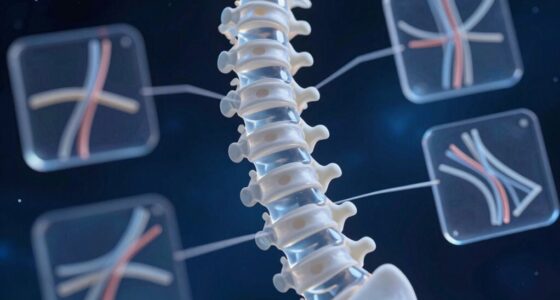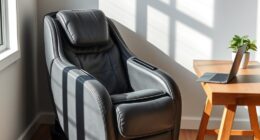
Zero gravity therapy gently decompresses your spine by mimicking weightlessness in a comfortable, passive position, promoting relaxation and improved circulation. Inversion therapy involves actively hanging upside down or at an angle to stretch and decompress your spine, providing more intense relief for specific issues like herniated discs. Both aim to alleviate back pain, but they differ in effort, safety considerations, and effects. Keep exploring to understand which method might suit your needs best.

Get wellness gear delivered free — and shop member deals
- Fast, free delivery on millions of items
- Access to Prime Big Deal Days deals on October 6–7
- Prime Video, Amazon Music and more included
Key Takeaways
- Zero gravity therapy provides passive spinal decompression through specialized comfortable positioning, while inversion therapy uses active hanging to stretch the spine.
- Zero gravity setups promote relaxation without effort; inversion therapy involves controlled inversion and active participation.
- Zero gravity reduces pressure on vertebrae passively, whereas inversion therapy actively decompresses the spine by hanging at angles.
- Zero gravity is suitable for gentle, non-strenuous relief; inversion therapy offers more intense decompression for targeted issues.
- Safety considerations differ: zero gravity minimizes strain, while inversion therapy requires caution for individuals with certain health conditions.
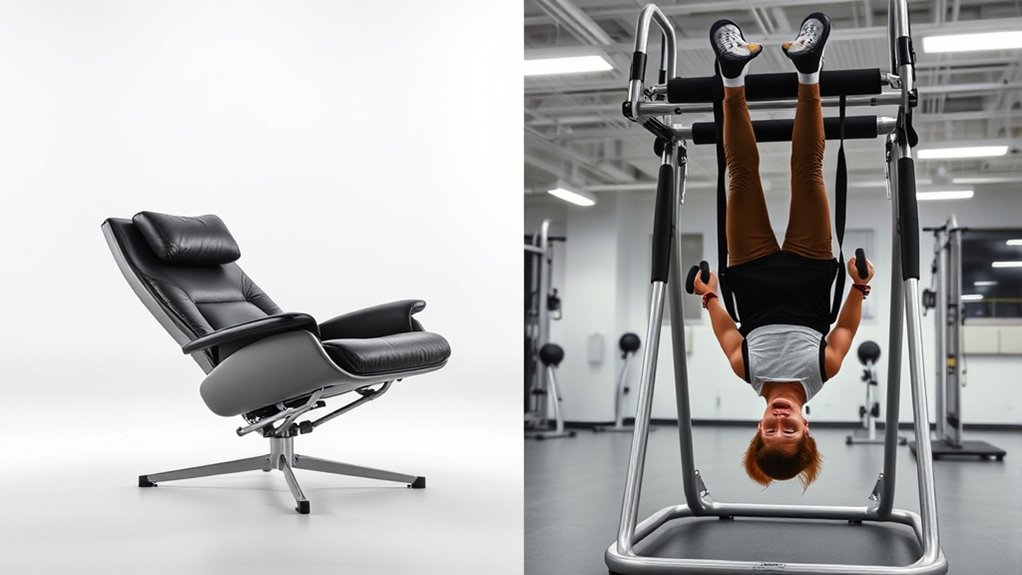
When it comes to relieving back pain and improving spinal health, many people turn to alternative therapies like zero gravity and inversion therapy. These methods aim to reduce pressure on your spine, promote better alignment, and alleviate discomfort. Zero gravity therapy involves using specialized chairs or loungers that position your body in a way that mimics the weightlessness experienced by astronauts. This setup minimizes the gravitational pull on your spine, allowing your vertebrae and discs to decompress naturally. It’s a gentle, passive approach that helps ease tension, increase circulation, and promote relaxation. Many users find that spending time in zero gravity positions reduces their pain and enhances overall spinal health without putting additional strain on their joints or muscles.
Zero gravity therapy offers a gentle, passive way to ease back pain and promote spinal health.
Inversion therapy, on the other hand, typically involves hanging upside down or at an inverted angle using equipment like inversion tables or gravity boots. This method relies on the principle of spinal decompression through inverse gravity, where your body’s weight is used to gently stretch and elongate your spine. Gravity boots are a popular tool for inversion therapy; they secure your ankles and allow you to hang freely, creating a traction effect that pulls your vertebrae apart. This decompression can relieve nerve compression, reduce muscle tightness, and improve blood flow. Inversion therapy requires active participation, as you control the angle and duration of your inversion. It’s often used for targeted relief of herniated discs, sciatica, or general back stiffness.
While both zero gravity and inversion therapy aim to decompress the spine, they do so through different mechanisms. Zero gravity therapy emphasizes a passive, weightless experience that reduces overall pressure and promotes relaxation. It’s ideal if you’re looking for a comfortable, non-strenuous way to manage back pain and enhance your spinal health. In contrast, inversion therapy with gravity boots involves a more active process that can provide more intense decompression but also requires some caution, especially if you have high blood pressure or other health concerns. The choice between these methods depends on your specific needs, comfort level, and medical condition.
Ultimately, understanding these differences helps you make an informed decision about which approach best suits your back health goals. Both therapies have their benefits and limitations, but they share the common goal of alleviating back pain through spinal decompression. Whether you prefer the gentle, reclined comfort of zero gravity or the active stretching of inversion therapy, you’re taking steps toward a healthier, more pain-free spine.
zero gravity spinal decompression chair
As an affiliate, we earn on qualifying purchases.
As an affiliate, we earn on qualifying purchases.
Frequently Asked Questions
Are There Any Age Restrictions for Zero Gravity or Inversion Therapy?
You should be aware that age limitations and safety considerations vary for zero gravity and inversion therapy. Generally, these therapies are safer for adults, but caution is advised for children, seniors, or those with health issues like hypertension or heart problems. Always consult with a healthcare professional first, especially if you’re over 60, pregnant, or have any medical conditions. Prioritizing safety guarantees you experience benefits without undue risk.
Can These Therapies Help With Specific Medical Conditions?
Imagine stepping into a time machine — these therapies can help with specific medical conditions like herniated discs, spinal decompression, and circulation issues. You might find relief from back pain, sciatica, or improve your overall circulation. Both zero gravity and inversion therapy offer targeted benefits, but always consult with a healthcare professional to verify they’re safe for your unique health needs before trying them.
How Long Should Each Session Last for Optimal Benefits?
For ideal benefits, aim for a session duration of about 15 to 20 minutes for both zero gravity and inversion therapy. Start with shorter sessions to see how your body reacts, and gradually increase the duration as tolerated. The optimal timing depends on your comfort level and goals, but consistent daily or several times a week sessions tend to provide the best results, always listening to your body’s signals.
Are There Any Side Effects Associated With These Therapies?
You should be aware that both therapies carry some risks involved, especially if used improperly. Inversion therapy might cause increased blood pressure or strain on your eyes and ears, while zero gravity sessions generally have fewer side effects. Long-term effects are still being studied, but overuse could lead to joint or muscle issues. Always consult a healthcare professional before starting these therapies to mitigate risks and ensure safe, beneficial use.
How Do I Choose Between Zero Gravity and Inversion Therapy?
To choose between zero gravity and inversion therapy, consider your ergonomic needs and relaxation goals. If you seek enhanced comfort and spinal decompression, zero gravity chairs offer ergonomic benefits and gentle relaxation. Inversion therapy, on the other hand, provides more intense spinal traction and may suit those looking for specific back relief. Assess your comfort level, health conditions, and consult a professional to make an informed choice that aligns with your relaxation and ergonomic needs.
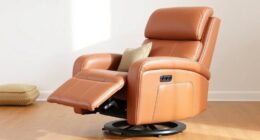
inversion table for back pain relief
As an affiliate, we earn on qualifying purchases.
As an affiliate, we earn on qualifying purchases.
Conclusion
So, it’s interesting how both zero gravity and inversion therapy aim to ease your body’s tension, almost like two sides of the same coin. You might find yourself trying one, only to discover the other offers a surprising benefit. Sometimes, it’s just a coincidence that these methods can complement each other perfectly. Whichever you choose, keep an open mind—you might just stumble upon the relief you’ve been searching for, without even planning it.
gravity boots for inversion therapy
As an affiliate, we earn on qualifying purchases.
As an affiliate, we earn on qualifying purchases.
As an affiliate, we earn on qualifying purchases.
Fall Picks
fall essentials
As an affiliate, we earn on qualifying purchases.