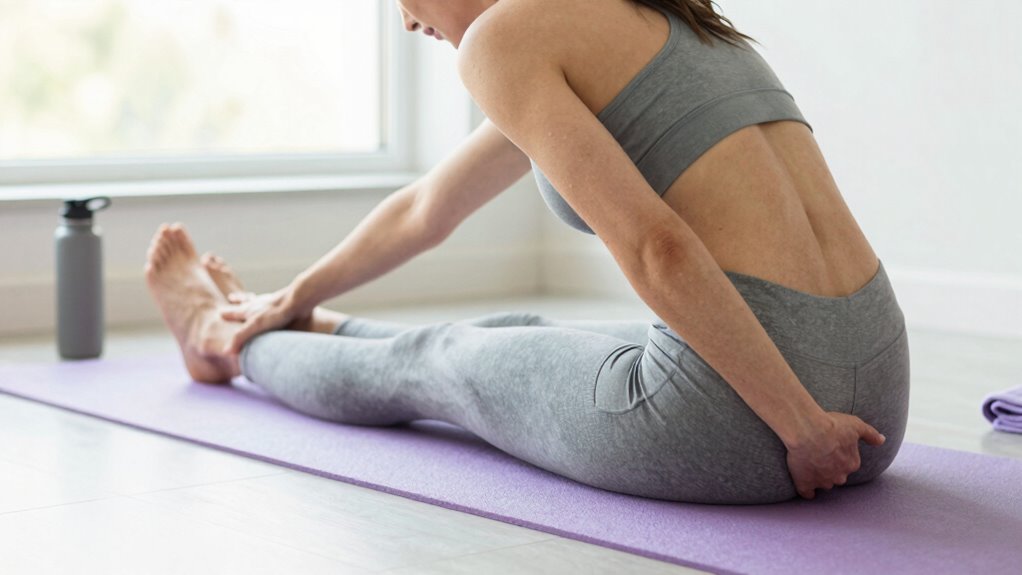

To recover from heavy legs and a stiff lower back, start by hydrating well and doing light stretches like calf raises, hamstring stretches, and lower back twists to promote circulation and loosen muscles. Walk or do gentle cardio upon arrival, and use foam rolling or massage for muscle relief. Maintain good posture, include core exercises, and prioritize quality sleep. Keep moving and fueling your body to speed up recovery—and there’s more to help you feel your best again.

Get wellness gear delivered free — and shop member deals
- Fast, free delivery on millions of items
- Access to Prime Big Deal Days deals on October 6–7
- Prime Video, Amazon Music and more included
Key Takeaways
- Perform gentle stretching and calf raises to improve circulation and reduce heaviness in the legs.
- Use foam rolling or light massage on legs and lower back to release muscle tension.
- Incorporate light activity like walking or cycling after travel to promote blood flow.
- Apply warm compresses to the lower back for muscle relaxation and relief.
- Prioritize hydration, proper posture, and restorative sleep to support overall recovery.
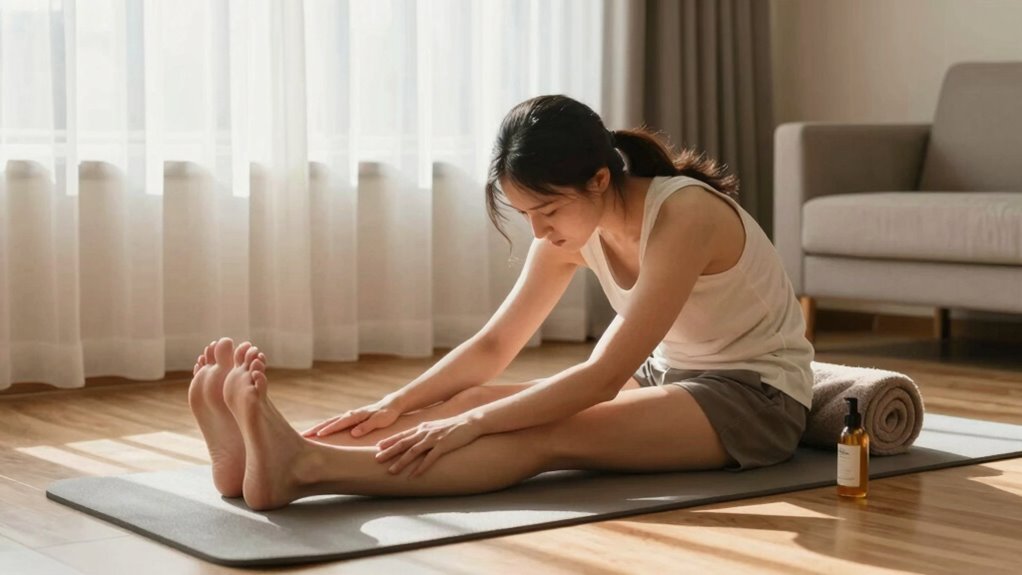
After a long trip, your heavy legs and stiff lower back can make you feel sluggish and uncomfortable. It’s a common experience, especially after hours of sitting in cramped seats or on crowded buses. To bounce back quickly, you need a simple, effective recovery routine. Start by hydrating thoroughly—water helps flush out toxins and reduces swelling. Pair this with some light stretching to loosen tight muscles. Focus on gentle leg stretches—like calf raises or hamstring stretches—and include lower back twists to relieve stiffness. These movements promote circulation, which is crucial after prolonged sitting.
Hydrate, stretch gently, and do leg and back movements to boost circulation after travel.
When it comes to restoring your energy, consider your travel snacks. Opt for nutrient-rich options like nuts, fresh fruit, or yogurt, which provide sustained energy without the crash of sugary treats. Eating well during your trip can prevent fatigue and improve your overall recovery. Packing tips are also essential; bring compact, healthy snacks that are easy to access during travel. This way, you avoid grabbing unhealthy options and keep your body fueled with good nutrients, aiding your recovery process.
After you arrive at your destination, take a brisk walk or do light cardio—like cycling or a quick jog—to boost circulation further. Moving around helps to reduce the heaviness in your legs and loosens up your lower back muscles. If you’re still feeling stiff, try foam rolling or gentle massage to release muscle tension. Applying a warm compress to your lower back can also help relax muscles and alleviate soreness. Remember, consistency is key—don’t wait until discomfort worsens to act.
Incorporating core exercises can support your back in the long run. Simple moves like pelvic tilts or bird-dogs strengthen the muscles that stabilize your spine. It’s also wise to pay attention to your posture, especially if you spend a lot of time sitting afterward. Keep your back straight, shoulders relaxed, and feet flat on the ground when seated. Adjust your workspace to prevent strain and avoid slouching, which can prolong stiffness. Recognizing the importance of circulation and muscle recovery is essential in preventing ongoing discomfort. Improving your muscle recovery techniques can further enhance your overall well-being.
Finally, prioritize rest and sleep. Your body needs time to recover, so give yourself plenty of quality sleep each night. Good sleep restores energy, reduces muscle tension, and helps your body heal from travel fatigue. Combining proper hydration, movement, good nutrition, and mindful posture creates an effective travel recovery routine. With these steps, you’ll shake off that sluggish feeling faster and get back to feeling your best in no time.
As an affiliate, we earn on qualifying purchases.
Frequently Asked Questions
Can These Routines Prevent Future Travel-Related Discomforts?
Yes, these routines can help prevent future travel discomforts. Using travel accessories like compression socks and neck pillows supports your body during long journeys. Staying hydrated with proper hydration tips reduces muscle stiffness and fatigue. Incorporating stretching and movement breaks into your travel routine keeps your legs and lower back flexible. Consistently practicing these habits prepares your body for travel, minimizing discomfort and promoting quicker recovery after each trip.
Are There Specific Stretches for Different Types of Back Pain?
Think of your back as a garden needing different tools for each weed. Yes, specific stretches target different types of back pain—lumbar, thoracic, or cervical. Focus on muscle flexibility and posture correction with tailored stretches like cat-cow for lower back or thoracic extensions. These movements help loosen tight muscles and improve alignment, easing pain and preventing future discomfort. Adjust your routine based on the pain’s nature for best results.
How Long Should Each Recovery Session Last?
You should aim for each recovery session to last about 10 to 15 minutes. During this time, focus on hydration importance to keep your muscles supple and support healing. Incorporate gentle stretches that promote posture correction to relieve heavy legs and stiff lower back. Consistency is key, so do these routines daily or after long travel periods to enhance recovery and prevent future discomfort.
Are There Any Contraindications for These Exercises?
Exercise safety is vital, so you should check for medical contraindications before starting these exercises. If you have conditions like deep vein thrombosis, severe back pain, or circulatory issues, avoid certain movements or consult your healthcare provider first. Always listen to your body, and if you experience pain or discomfort, stop immediately. Prioritizing safety guarantees your recovery routine benefits you without risking further issues or complications.
What Should I Do if Pain Persists After Following the Routine?
If post-travel soreness persists, you should stop the exercises and consult a healthcare professional to rule out injury. It’s important to listen to your body—avoid pushing through pain. You might need exercise modifications, such as reducing intensity or switching to gentler stretches. Applying ice or heat can also help. Prioritize rest and professional advice to guarantee proper recovery and prevent further discomfort or injury.
As an affiliate, we earn on qualifying purchases.
Conclusion
Imagine stepping off the plane, feeling your legs lighten and your back unfurl like a flower welcoming the sun. With these simple stretches, you’ll wash away the fatigue, leaving behind the heaviness and stiffness. Feel the gentle stretch ripple through your muscles, energizing every step you take. Before long, you’ll glide through your day, as if your journey never paused your body’s rhythm. Embrace this routine, and let your travels end with renewed energy.
As an affiliate, we earn on qualifying purchases.
As an affiliate, we earn on qualifying purchases.
Fall Picks
fall essentials
As an affiliate, we earn on qualifying purchases.