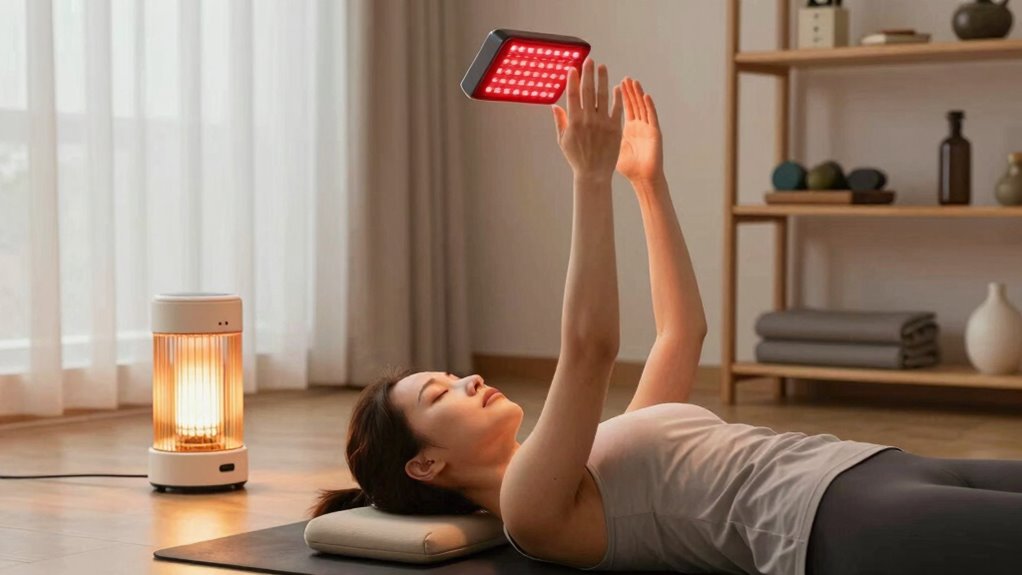

Start by applying red light therapy for a few minutes to promote cellular repair. Next, use gentle heat, like a warm towel or heating pad, to relax your muscles and increase blood flow. After your muscles feel loosened, perform controlled stretching of major muscle groups, focusing on slow, deep breaths. Combining these steps helps optimize recovery and flexibility. Keep exploring these techniques to discover how they work together for your best results.

Get wellness gear delivered free — and shop member deals
- Fast, free delivery on millions of items
- Access to Prime Big Deal Days deals on October 6–7
- Prime Video, Amazon Music and more included
Key Takeaways
- Begin with 3-5 minutes of red light therapy to stimulate cellular repair and reduce inflammation.
- Apply heat for 5-10 minutes to relax muscles and increase blood flow before stretching.
- Perform gentle, controlled stretches targeting major muscle groups immediately after heat application.
- Incorporate deep breathing during stretching to enhance flexibility and muscle relaxation.
- Repeat the cycle regularly for improved mobility, recovery, and overall muscle health.
Incorporating red light therapy, heat, and stretching into a simple home routine can substantially boost your recovery and flexibility. One of the most effective ways to do this is by integrating infrared therapy, which uses specific wavelengths of light to penetrate deep into your muscles. This process promotes cellular repair and reduces inflammation, making it ideal for muscle recovery. When you include infrared therapy in your routine, you’re providing your muscles with the tools they need to heal faster and perform better during your workouts or daily activities. It’s a safe, non-invasive method that can be used regularly at home, and it’s especially beneficial after intense physical activity or injury.
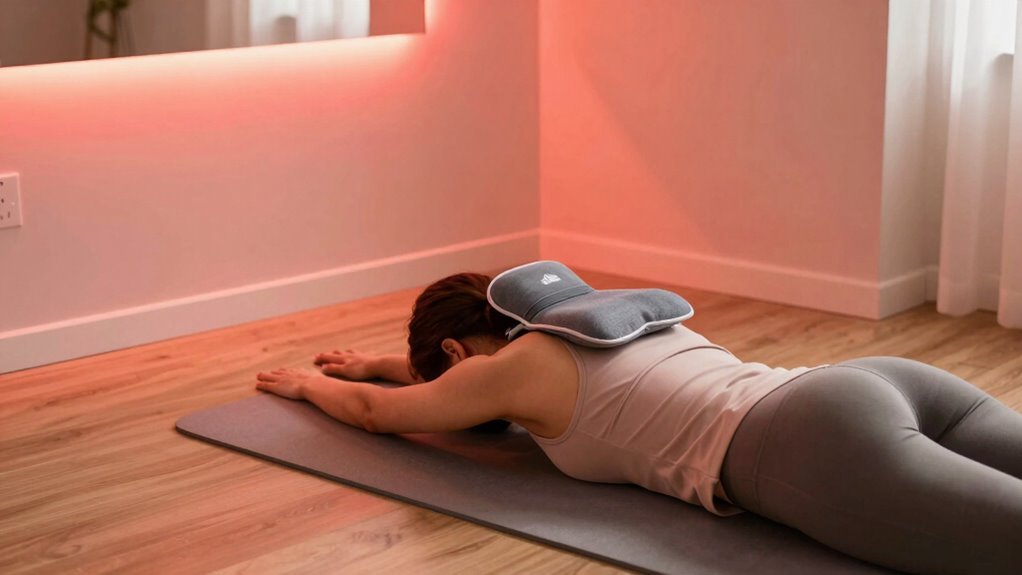
Once you’ve started with infrared therapy, adding heat can amplify the benefits. Applying heat before stretching helps loosen tight muscles and increases blood flow, preparing your body for movement. You can use a heating pad or a warm towel, which are easy to manage and safe for home use. When heat helps relax your muscles, you’ll find stretching becomes easier and more effective. It reduces the risk of overstretching or injury, allowing you to hold stretches longer and deepen them gradually. The warmth also soothes sore areas, easing discomfort and promoting a more relaxed state of mind. Incorporating muscle relaxation techniques can further enhance the effectiveness of this routine. Additionally, using proper breathing methods can help maximize muscle relaxation and improve flexibility during stretching. Engaging in regular self-care practices can support your overall wellness and reinforce the benefits of this routine. Understanding muscle health can help you tailor your routine to meet your specific needs and goals.
Applying heat before stretching relaxes muscles, boosts blood flow, and enhances flexibility for safer, more effective stretches.
After applying infrared therapy and heating, it’s time to incorporate stretching exercises. Focus on gentle, controlled stretches that target your major muscle groups—hamstrings, quadriceps, calves, back, and shoulders. Take your time, breathe deeply, and avoid bouncing or forcing your body into uncomfortable positions. Stretching after heat and infrared therapy maximizes muscle elongation and improves flexibility over time. Consistency is key; performing this routine a few times a week can lead to noticeable improvements in your range of motion and overall muscle health.
To optimize recovery, you can combine these elements into a seamless sequence: start with infrared therapy for a few minutes to stimulate cellular activity, follow with heat to relax muscles, then proceed with gentle stretching. This integrated approach ensures your muscles are primed, relaxed, and elongated, which not only accelerates muscle recovery but also reduces soreness and stiffness. Incorporating infrared therapy into your routine can also support overall muscle health by promoting better cellular function. Over time, this simple routine can enhance your athletic performance, prevent injuries, and support your overall mobility. By sticking with this combination, you’re giving your body the best chance to heal, adapt, and stay flexible—all from the comfort of your home.
infrared red light therapy device
As an affiliate, we earn on qualifying purchases.
As an affiliate, we earn on qualifying purchases.
Frequently Asked Questions
Can I Use Red Light Therapy Without Heat or Stretching?
Yes, you can use red light therapy without heat or stretching. Red light offers numerous therapy benefits, such as promoting skin health, reducing inflammation, and boosting cellular repair. While heat and stretching enhance overall results, they aren’t necessary for red light therapy to be effective. You can simply incorporate the light into your routine, focusing on targeted areas, to enjoy its benefits without adding heat or stretching.
How Long Should Each Session Last for Optimal Results?
For ideal results, aim for a device placement of about 15-20 minutes per session. Keep your sessions consistent, ideally 3-5 times a week. Focus on maintaining proper distance from the device to avoid overheating, and listen to your body’s signals. Adjust session duration if you notice discomfort, but generally, 15-20 minutes provides enough exposure for effective red light therapy combined with heat and stretching.
Are There Any Safety Precautions for Home Use?
Of course, safety guidelines are your best friends here—ignoring risk factors can turn your home spa day into a trip to the ER. Always follow manufacturer instructions, avoid overuse, and keep sessions within recommended durations. Be cautious with heat to prevent burns and use red light devices as directed. Remember, a little caution now saves a lot of trouble later, making your routine both effective and safe.
Can This Routine Help With Specific Injuries or Chronic Pain?
This routine can support injury recovery and pain management by reducing inflammation, easing muscle tension, and promoting blood flow. Red light therapy accelerates healing, heat relaxes muscles, and stretching improves flexibility. While it may help with chronic pain or minor injuries, consult a healthcare professional for severe issues. Combining these methods regularly can enhance your recovery process and provide relief, but always listen to your body and prioritize safety.
How Often Should I Perform This Routine Weekly?
You should perform this routine about three to four times weekly for consistent results. Focus on frequency planning to avoid overdoing it while ensuring steady progress. Routine consistency is key, so set specific days to stay committed. By balancing your sessions wisely, you optimize recovery, relaxation, and reinforcement, making your efforts more effective. Stick to this schedule, and you’ll notice improvements in flexibility and pain relief over time.
heating pad for muscle relaxation
As an affiliate, we earn on qualifying purchases.
As an affiliate, we earn on qualifying purchases.
Conclusion
Think of red light, heat, and stretching as the sun, warm winds, and gentle waves guiding your journey to wellness. Together, they symbolize the dawn of renewed strength and flexibility within you. Embrace this simple routine as your daily sunrise — a fresh start that awakens your body’s potential and soothes your mind. With patience and consistency, these elements become your lighthouse, illuminating the path to lasting health and harmony.
home stretching strap for flexibility
As an affiliate, we earn on qualifying purchases.
As an affiliate, we earn on qualifying purchases.
As an affiliate, we earn on qualifying purchases.
Fall Picks
fall essentials
As an affiliate, we earn on qualifying purchases.