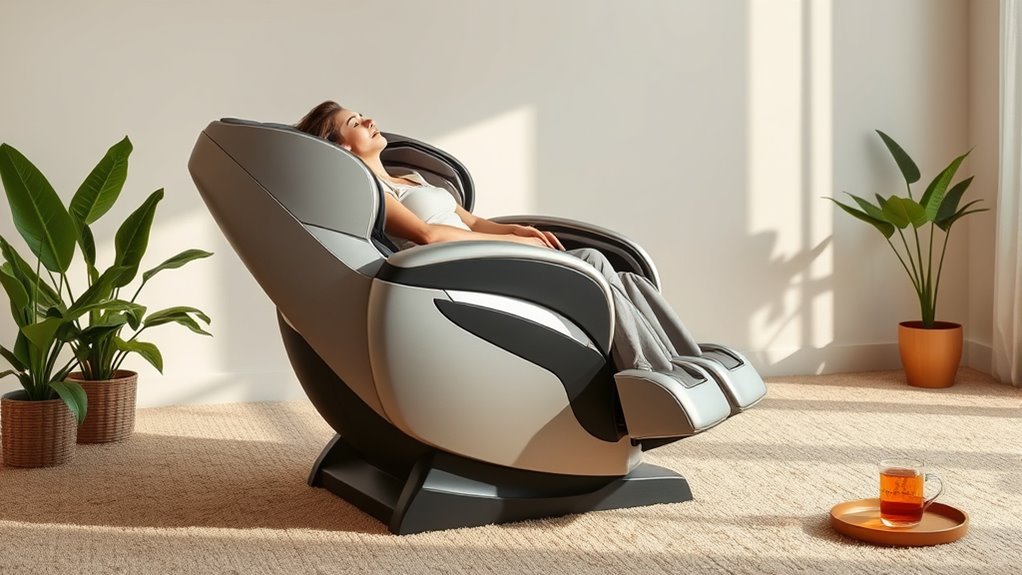

To build healthy habits with your massage chair, always guarantee you’re seated with proper ergonomic support, keeping your back fully supported and feet flat on the floor. Use the chair within recommended durations and gradually increase intensity to avoid soreness. Regularly maintain and clean the device, and follow safety guidelines to prevent overheating or malfunctions. Avoid overuse and pay attention to your body’s signals—learning more will help you maximize benefits safely.
Key Takeaways
- Start with short, low-intensity sessions to prevent overstimulation and build comfort gradually.
- Maintain proper ergonomic positioning to maximize safety and massage effectiveness.
- Regularly clean and inspect the chair to ensure safe operation and extend its lifespan.
- Avoid overusing the chair; take breaks to prevent overheating and reduce strain.
- Follow safety guidelines and stop use immediately if you experience discomfort or unusual noises.

Using a massage chair can be a great way to relax and relieve tension, but knowing the do’s and don’ts is essential to guarantee safe and effective use. One of the most important aspects is maintaining proper ergonomic positioning. When you sit in the chair, make sure your back is fully supported and your feet rest flat on the floor or on the designated footrest. Keep your spine aligned and avoid slouching, which can cause strain or reduce the benefits of the massage. Proper positioning not only maximizes comfort but also guarantees that the massage rollers and airbags target the right areas without causing discomfort or injury. Adjust the chair’s settings and position so that your head, neck, and shoulders are relaxed, avoiding any tension buildup. Taking the time to find the most ergonomic setup helps you experience the full benefits of the massage while minimizing the risk of muscle strain or joint stress. Regularly consulting safety guidelines can further ensure proper usage and prevent potential injuries. Maintenance tips are equally essential for keeping your massage chair in prime condition. Regularly cleaning the surface with a soft, damp cloth prevents dust, sweat, and oils from accumulating, which can deteriorate the upholstery over time. Check the user manual for specific cleaning instructions, especially if your chair has electronic or sensitive components. Keep the vents and air filters free from dust to prevent overheating and guarantee smooth operation. Periodically inspect the power cord and connectors for damage; never use the chair if you notice frayed wires or exposed internal parts. Following these maintenance tips extends the lifespan of your massage chair and keeps it functioning safely. Additionally, avoid excessive use of the chair — giving it time to cool down and rest prevents overheating of electronic parts. If you notice any unusual noises, smells, or malfunctions, stop using the chair immediately and seek professional servicing. Proper maintenance also involves paying attention to the massage intensity and duration. Don’t overdo it, especially if you’re new to massage chairs. Start with shorter sessions at lower intensities, then gradually increase as your body adapts. This approach prevents overstimulation or soreness and helps you build healthy habits around its use.
Frequently Asked Questions
Can I Use a Massage Chair if I Have a Medical Condition?
If you have a medical condition, you should consult your healthcare provider before using a massage chair. Medical considerations are important, as certain conditions may worsen with massage. Follow accessibility guidelines and make certain the chair’s features suit your needs. Always listen to your body, and if you experience discomfort, stop immediately. Your safety and health come first, so professional advice helps you use the chair safely and effectively.
How Often Should I Schedule Massages With the Chair?
Using your massage chair is like tending a garden; consistency helps it thrive. For ideal scheduling, follow the frequency guidelines provided by the manufacturer or your healthcare provider. Generally, you should use the chair 2-3 times a week, but listen to your body—if you feel sore or fatigued, cut back. Regular sessions promote relaxation and muscle recovery, so find a routine that fits your needs without overdoing it.
Are There Age Restrictions for Using Massage Chairs?
Age restrictions for using massage chairs vary, but generally, children under 12 should avoid them due to safety guidelines. Teenagers over 12 usually can use the chair with adult supervision, ensuring proper settings. Always check the manufacturer’s age recommendations and follow safety guidelines to prevent discomfort or injury. If you’re unsure, consult a healthcare professional before allowing younger users to operate the massage chair.
What Should I Do if I Feel Discomfort During Use?
If you feel discomfort during use, stop the massage immediately—don’t be that person who stubbornly endures pain like a hero in a soap opera. Practice discomfort management by adjusting the settings and taking breaks. Always follow safety precautions, such as avoiding overuse and consulting a healthcare professional if pain persists. Your comfort and safety matter more than finishing a session, so listen to your body and act accordingly.
Can Massage Chairs Help With Chronic Pain or Injuries?
Massage chairs can help with pain relief and injury recovery by relaxing tense muscles and improving circulation. They may diminish discomfort associated with chronic pain or minor injuries when used correctly, but they’re not a substitute for professional medical treatment. Always listen to your body, avoid overuse, and consult a healthcare provider if you’re dealing with serious injuries or persistent pain to ensure safe and effective recovery.
Conclusion
Think of your massage chair as a trusted garden tool. When used wisely and with care, it nurtures your well-being and helps your body flourish. But neglect or misuse can turn it into a weed that stifles growth. By following the do’s and don’ts, you’re cultivating a healthier, more balanced life. Remember, regular, mindful use is your secret to a garden of relaxation—where your body blooms and thrives.