

To develop a safe and effective lower back routine, start by understanding your back’s anatomy and common issues. Warm up with gentle stretches and focus on core stability exercises like bridges or bird dogs. Always prioritize proper technique, progress gradually, and listen to your body’s signals to avoid injury. Incorporate flexibility practices like stretches and maintain good posture throughout daily activities. Continue exploring this guide to learn how to build resilience and stay motivated long-term.
Key Takeaways
- Understand your lower back anatomy to identify issues and develop safe, effective routines.
- Incorporate warm-up, stretching, and strengthening exercises to improve flexibility and core stability.
- Progress gradually, track your workouts, and set achievable goals for long-term consistency and motivation.
- Prioritize proper posture, ergonomic adjustments, and preventive measures to reduce injury risk.
- Maintain a balanced routine with mindful progression and rest to build resilience and ensure sustainable back health.

Samsonite Lumbar Support Pillow for Office Chair, Lower Back Support for Car, Back Pillow Desk Chair Cushion with Memory Foam, Improved Posture Backrest
𝗔𝗹𝗹 𝗗𝗮𝘆 𝗖𝗼𝗺𝗳𝗼𝗿𝘁 – High-grade memory foam contours to your spine, delivering lumbar support for office chair users…
As an affiliate, we earn on qualifying purchases.
As an affiliate, we earn on qualifying purchases.
Understanding Your Lower Back: Anatomy and Common Issues

Your lower back is a complex structure made up of bones, muscles, ligaments, and nerves that work together to support your body’s weight and enable movement. Key muscle groups, like the erector spinae and multifidus, stabilize and move your spine. Nerve pathways, including the sciatic nerve, run through this area, transmitting signals between your brain and lower body. When these muscles are strained or the nerves become compressed, you might experience pain, numbness, or weakness. Understanding how these components interact helps you recognize common issues such as muscle strains, herniated discs, or nerve impingements. Staying aware of your lower back’s anatomy empowers you to identify problems early and take proactive steps to prevent injury. Proper knowledge of muscle groups and nerve pathways is essential for safe and effective training, especially considering the muscle stabilization functions vital to maintaining spinal health.

CAP Barbell Folding Exercise Mat – Durable, Anti-Tear, Thick Padding for Fitness, Aerobics, Gymnastics & Home Workouts. 72"L x 24"W x 2"Thick. BLACK
EXTRA THICK 2-INCH HIGH-DENSITY FOAM – Premium thick exercise mat engineered for superior cushioning and impact absorption; ideal…
As an affiliate, we earn on qualifying purchases.
As an affiliate, we earn on qualifying purchases.
Essential Precautions Before Starting Your Routine
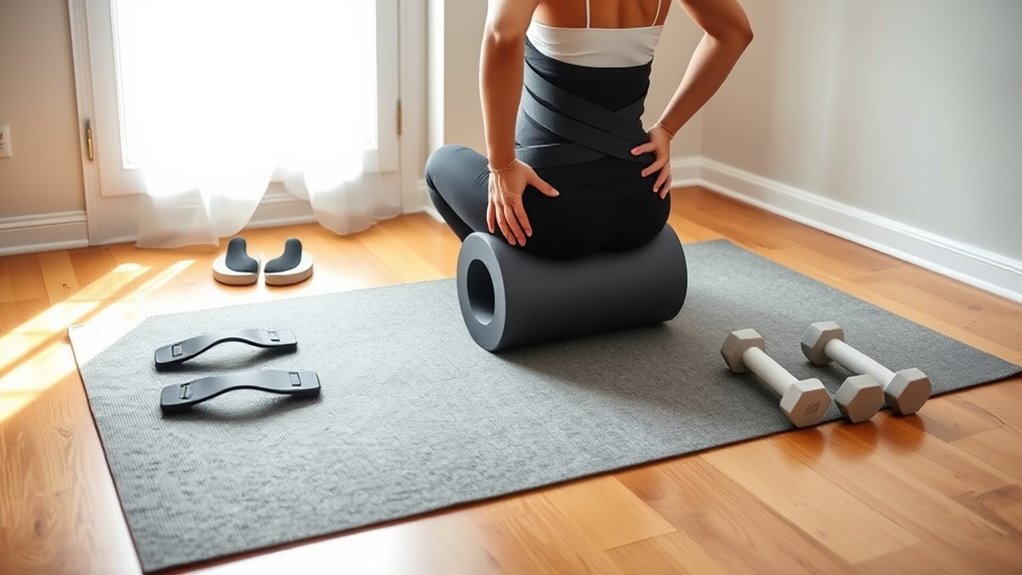
Before diving into lower back exercises, it’s crucial to take necessary precautions to prevent injury and guarantee safety. First, verify you have proper equipment, like a supportive mat or lumbar cushion, to provide stability and comfort during workouts. Wearing appropriate attire also helps avoid strain. Additionally, getting medical clearance from your healthcare provider is essential, especially if you have existing back issues or health concerns. This step ensures you’re ready to start safely and helps identify any limitations. Never ignore pain or discomfort during exercises, and consult a professional if anything feels wrong. Taking these precautions minimizes injury risk and sets a solid foundation for a safe, effective lower back routine. Recognizing spinal health and understanding your body’s signals can further enhance your safety during exercises.

Trideer Stretching Strap Yoga Strap Physical Therapy for Home Workout, Exercise, Pilates and Gymnastics, 10 Loops Non-Elastic Stretch Bands with Aesthetic Packaging for Women & Men (Black)
Home PT Strap for Independence (3 Recovery Stages) – A physical therapy stretching strap designed for gentle knee/hip/leg…
As an affiliate, we earn on qualifying purchases.
As an affiliate, we earn on qualifying purchases.
Warm-Up Exercises to Prepare Your Lower Back

Warming up your lower back is an essential step to prepare your muscles for exercise and reduce the risk of injury. Start with gentle stretches that promote posture correction, such as pelvic tilts or cat-cow stretches. These movements help loosen tight muscles and improve your spinal alignment, making your workout safer and more effective. Focus on slow, controlled motions to activate your lower back muscles without overexerting them. Proper warm-up routines also enhance blood flow, which aids recovery and minimizes strain during your workout. Remember, a well-prepared lower back reduces the chance of strain or injury, setting a solid foundation for your routine. Incorporating preventive measures can further protect your back and promote long-term spinal health. Incorporate these exercises regularly to build awareness of your posture and protect your back as you strengthen it.

Trideer Exercise Ball for Yoga, Pilates & Fitness – Stability Ball Equipment for Home Gym & Office Chair, Core & Balance Training Accessories, Physical Therapy Equipment, Quick Pump Included, 5 Sizes
Designed with anti-slip stripes and a fine frosted texture for enhanced grip and stability. The increased surface friction…
As an affiliate, we earn on qualifying purchases.
As an affiliate, we earn on qualifying purchases.
Beginner-Friendly Lower Back Strengthening Exercises

Starting with gentle stretching techniques can help ease your lower back into movement without strain. Incorporating core stability practices will build the support you need for a stronger, healthier back. These beginner-friendly exercises set the foundation for ongoing strength and flexibility. Exploring easy-to-use equipment such as resistance bands or stability balls can further enhance your routine and promote better results.
Gentle Stretching Techniques
Gentle stretching techniques are an effective way to ease lower back tension and build strength gradually, especially if you’re new to exercise. These stretches help improve posture correction by loosening tight muscles and promoting proper alignment. Before stretching, make ergonomic adjustments to your workspace and daily habits to reduce strain. Focus on slow, controlled movements to avoid overstretching or injury. Simple stretches like knee-to-chest or cat-cow pose gently release tension in your lower back and hips. Remember to breathe deeply and stay relaxed throughout each stretch. Incorporating proper projector setup can also enhance your viewing experience and reduce eye strain. Consistent practice can increase flexibility, reduce discomfort, and support your overall back health. Incorporate these gentle techniques into your routine regularly, and you’ll notice a more comfortable, balanced lower back over time.
Core Stability Practices
Building core stability is essential for supporting your lower back and preventing future injuries. Focus on core activation exercises that engage your abdominal muscles, helping improve posture correction. These exercises strengthen the muscles around your spine, making daily movements safer and more controlled. Imagine your core as a sturdy foundation with these moves:
| Activation Exercises | Posture Correction Moves |
|---|---|
| Planks | Pelvic Tilts |
| Dead Bugs | Bird Dogs |
| Bridge | Wall Sits |
Practicing these regularly enhances your posture, reduces strain, and builds a resilient lower back. Start slow, maintain proper form, and gradually increase intensity for lasting benefits. Strengthen your core to support your entire back and promote long-term health.
Stretching and Flexibility Techniques for Lower Back Health

Gentle stretching exercises can considerably improve your spinal flexibility and reduce tension in your lower back. Incorporating these techniques regularly helps prevent pain and supports overall back health. By focusing on flexibility, you can move more freely and avoid common lower back issues.
Gentle Stretching Exercises
When it comes to maintaining lower back health, incorporating gentle stretching exercises can substantially improve flexibility and reduce tension. These exercises are easy to do and help relax tight muscles. Focus on breathing techniques to deepen each stretch and promote relaxation. Remember to stay hydrated, as hydration tips support muscle elasticity and recovery. For example, gentle spinal twists, knee-to-chest stretches, and cat-cow poses are effective. Below is a simple guide:
| Exercise | Benefits | Tips |
|---|---|---|
| Knee-to-Chest Stretch | Loosens lower back muscles | Breathe steadily, hydrate |
| Cat-Cow Pose | Improves spinal flexibility | Move slowly, stay relaxed |
| Child’s Pose | Releases tension in back | Maintain steady breathing |
| Seated Spinal Twist | Enhances flexibility | Use gentle pressure, hydrate |
A gentle reminder to consider glycolic acid skincare routines, which can improve skin texture and elasticity, complementing your overall health and wellness.
Improving Spinal Flexibility
Enhancing spinal flexibility is essential for reducing lower back pain and preventing injury. Improving your spinal mobility allows for smoother movement and less strain during daily activities. Incorporate targeted flexibility routines that focus on gentle stretches like the cat-cow pose, spinal twists, and child’s pose. These exercises help loosen tight muscles and improve range of motion. Consistency is key—perform these stretches daily to see steady progress. Remember to keep movements controlled and avoid overstretching to prevent strain. As your flexibility improves, you’ll notice greater ease in bending, twisting, and lifting. Developing a routine that emphasizes spinal mobility not only alleviates discomfort but also builds a more resilient lower back. Prioritize gentle, mindful stretching to support long-term lower back health. Additionally, integrating these routines with muscle relaxation techniques can enhance overall flexibility and reduce tension.
Preventing Lower Back Pain
To prevent lower back pain, incorporating targeted stretching and flexibility techniques into your routine is essential. These practices help maintain mobility and reduce strain, especially when combined with good posture correction and ergonomic adjustments. Proper posture supports your lower back throughout the day, while ergonomic setups minimize unnecessary stress on your spine. Regular stretching can alleviate muscle tightness that contributes to discomfort. Focus on flexibility exercises that target your hips, hamstrings, and lower back. Remember to listen to your body and avoid overstretching. Incorporate these habits consistently to build resilience and prevent pain before it starts.
- Practice hip and hamstring stretches daily
- Maintain correct posture during work and daily activities
- Adjust your workspace ergonomically for comfort
- Include gentle back stretches to enhance flexibility
Tips for Progressing Safely and Staying Motivated

Progressing safely and staying motivated are essential for long-term success with your lower back routines. To do this, focus on progress tracking; keep a journal of your workouts to monitor improvements and prevent overexertion. Gradually increase the intensity or duration of exercises, avoiding sudden jumps that could cause injury. Incorporate workout variety to prevent boredom and challenge different muscles, which keeps your routine fresh and engaging. Setting small, achievable goals boosts motivation and provides a sense of accomplishment. Celebrate milestones along the way, and remember that automation can help analyze your progress and identify areas for improvement. Stay consistent, listen to your body, rest when needed, and don’t rush progress. Staying mindful of these tips helps ensure your lower back routines are safe, effective, and sustainable.
Frequently Asked Questions
How Often Should I Perform Lower Back Routines Weekly?
You should perform lower back routines about 2 to 3 times a week, following the recommended frequency guidelines. This allows your muscles enough time to recover and grow stronger. When planning your workout scheduling, make sure to include rest days between sessions to prevent overtraining and injury. Consistency is key, so stick to this routine, but listen to your body and adjust as needed for peak results.
Can Lower Back Exercises Help Alleviate Chronic Back Pain?
Yes, lower back exercises can help alleviate chronic back pain by strengthening your core and improving flexibility. When you focus on core strengthening, you support your spine better; when you work on flexibility, you reduce muscle tension and stiffness. Together, these exercises enhance your posture and reduce strain, making pain less frequent and severe. Incorporate targeted routines consistently to see lasting relief and improved back health.
Are There Any Posture Habits to Improve During Daily Activities?
Yes, improving your posture habits makes a difference. You should focus on ergonomic adjustments like adjusting your chair height, using lumbar support, and keeping your computer screen at eye level. Practice posture awareness throughout the day by avoiding slouching and maintaining a neutral spine when sitting or standing. Taking regular breaks to stretch and move also helps prevent strain, ensuring your back stays healthy and pain-free.
What Signs Indicate I Should Stop Exercising Immediately?
If you experience injury warning signs or pain indicators during exercise, stop immediately. Sharp, persistent pain, dizziness, or numbness in your lower back or legs are clear signals you should pause. Don’t ignore discomfort that worsens or doesn’t subside. Pushing through injury warning signs can lead to serious harm. Listen to your body and consult a healthcare professional if symptoms persist or worsen after stopping.
How Do I Modify Routines for Existing Back Injuries?
You should modify routines for existing back injuries by focusing on injury-specific modifications and avoiding exercises that cause pain or discomfort. Consult a healthcare professional for tailored injury recovery exercises, ensuring you perform gentle stretches and low-impact movements. Always listen to your body, gradually increase intensity, and prioritize proper form. This approach helps prevent further injury and supports a safe, effective recovery process.
Conclusion
Remember, strengthening your lower back is vital, but rushing progress can lead to setbacks. Just like building a sturdy foundation takes time, so does your strength and flexibility. Stay patient and consistent—each small step adds up. While it’s tempting to push harder, safety always comes first. With steady effort and mindful practice, you’ll not only prevent pain but also enjoy greater movement and confidence. Your journey to a healthier back starts now—steady, safe, and unstoppable.