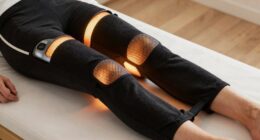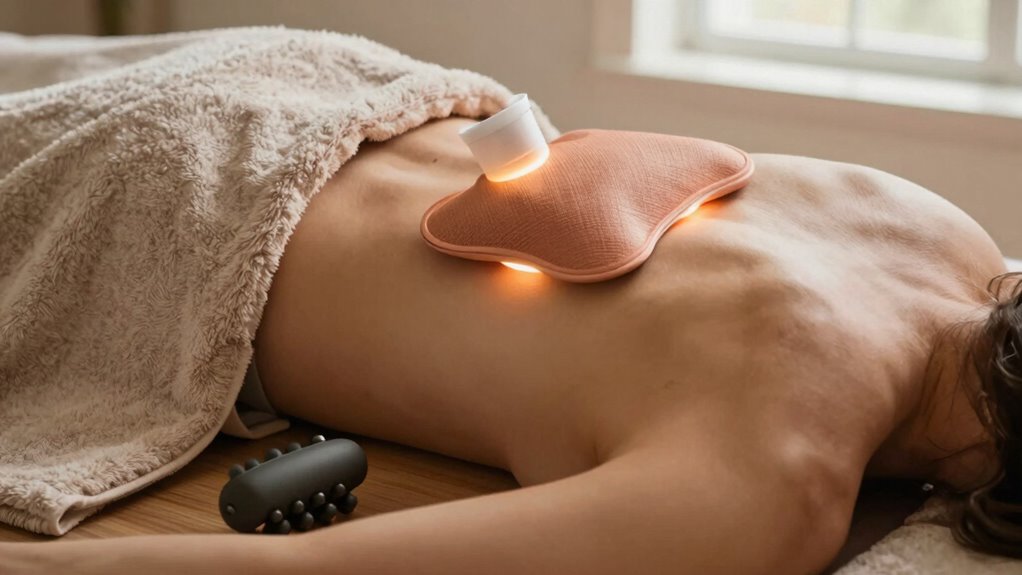
Use heat before a massage to relax tight muscles, improve blood flow, and prepare your body for relief. Apply heat for 15-20 minutes if there’s no swelling, redness, or sharp pain, and always test the temperature first. Avoid heat if you notice swelling or inflammation, or if pain worsens. For safer options, try cold therapy or gentle stretches. To discover more about when and how to combine heat safely, keep exploring these tips.
Key Takeaways
- Apply heat before massage to loosen muscles and enhance blood flow, especially with stiffness or tightness.
- Skip heat if there’s swelling, redness, or recent injury to prevent worsening inflammation.
- Limit heat application to 10-15 minutes and test temperature beforehand for safety.
- Use cold therapy instead of heat if experiencing acute pain, swelling, or inflammation.
- Follow with massage within 20 minutes after applying heat for optimal muscle relief.
How Heat Helps Relieve Muscle Stiffness and Soreness

When you apply heat to sore or stiff muscles, it increases blood flow to the area, which helps deliver essential nutrients and oxygen. Using hot packs can be especially effective for muscle relaxation, easing tightness and reducing discomfort. The warmth from hot packs helps loosen stiff muscles, making them more flexible and less prone to pain. As blood circulation improves, waste products and lactic acid are cleared away more efficiently, reducing soreness. This process not only alleviates immediate discomfort but also promotes faster recovery. Applying heat is a simple yet powerful way to relax tense muscles, improve flexibility, and prepare your muscles for massage or activity. Just be sure to use the right temperature to avoid burns or irritation.
Signs That Heat Might Make Your Muscle Pain Worse

While heat can often soothe muscle pain, it can also worsen certain conditions. If you notice these signs, stop using heat immediately, as it may increase injury risk or hinder muscle relaxation:
Heat can worsen injuries; stop use if pain or swelling increase.
- Swelling or redness around the muscle area
- Sharp or intense pain during heat application
- A feeling of warmth that worsens over time
- Persistent soreness after heating
These signs suggest your muscles might be inflamed or injured, and applying heat could intensify discomfort or cause further damage. Be cautious if heat seems to escalate pain rather than alleviate it. Recognizing these warning signs helps prevent injury risk and ensures you don’t interfere with natural muscle recovery or relaxation. When in doubt, consult a healthcare professional before continuing heat treatments. Additionally, understanding contrast ratio can help tailor your therapy environment for safer, more effective pain relief. Proper temperature regulation is essential to avoid exacerbating inflammation and to promote healing, especially when considering muscle inflammation. Incorporating appropriate cooling methods when needed can further aid in reducing swelling and discomfort.
When and How to Safely Use Heat During Massage

To use heat safely during a massage, timing and temperature control are essential. Start by using heat wraps or an electric blanket set to a low or warm setting, avoiding high heat that can cause burns. Apply heat for no more than 15-20 minutes to prevent overheating or skin irritation. Always test the heat on your skin first to ensure comfort. If you feel any discomfort, remove the heat immediately. Use heat wraps directly on the skin or over clothing, and never sleep with an electric blanket turned on. Keep the heat source at a safe distance from your body, and never leave it unattended. Proper control ensures you enjoy the benefits without risking burns or overstimulation. Additionally, understanding the science behind skin safety can help you make more informed decisions about heat application during massage routines. Being aware of safe heat practices can further reduce the risk of injury and ensure a relaxing experience. Remember that thermal regulation plays a key role in maintaining comfort and safety during heat therapy. Incorporating knowledge of air quality considerations can also contribute to a more comfortable and safe environment while using heat.
Alternatives to Heat When You Should Skip It

Sometimes, applying heat isn’t the best choice, especially if you have certain health conditions or injuries. Instead, consider cold therapy or other massage alternatives to manage stiffness and discomfort. Cold therapy reduces inflammation and numbs pain effectively, making it ideal when heat might worsen swelling. Here are some alternatives to heat when you should skip it:
- Cold packs or ice massage
- Gentle stretching exercises
- Acupuncture or acupressure
- Light massage with soothing oils or lotions
These options help alleviate stiffness without risking increased inflammation or discomfort. Cold therapy is especially beneficial for recent injuries or acute pain. Exploring massage alternatives ensures you can find relief that suits your specific condition while avoiding potential setbacks from heat.
Tips for Combining Heat and Massage for Better Relief

Combining heat and massage can maximize relief and speed up recovery. To target trigger points effectively, start with heat to loosen tight muscles and increase blood flow. Once muscles are warmed, use massage to apply gentle pressure on trigger points, encouraging muscle relaxation. Focus on slow, steady movements to avoid aggravating stiffness. Timing is key; apply heat for 10-15 minutes beforehand, then follow with massage within 20 minutes for best results. Be mindful not to overheat areas that are inflamed or injured. Using heat and massage together helps break up knots and eases stiffness, making relief more profound. Incorporating proper technique and safety precautions ensures you get the most benefit while minimizing risks. Regular sessions and mindful application can also help prevent future muscle issues and promote overall flexibility. Additionally, understanding safe backup power options can help ensure your routines are not interrupted during power outages, maintaining your comfort and wellness routines. Being aware of muscle anatomy and trigger points can further enhance the effectiveness of your treatment and targeted relief.
Frequently Asked Questions
Can Heat Therapy Be Used for Chronic Muscle Conditions?
Yes, heat therapy can be effective for chronic muscle conditions. It promotes muscle relaxation and helps relieve pain by increasing blood flow and loosening tight muscles. You should use heat therapy regularly, especially before activity, to maintain flexibility. However, avoid applying heat if you have swelling or inflammation, as it can worsen these issues. Always listen to your body and consult a healthcare professional for personalized advice.
How Long Should I Apply Heat During a Massage Session?
Think of heat as a gentle wave calming your muscles; it should roll over your body for about 15-20 minutes during a massage. Stick to duration guidelines to prevent overheating and use proper application techniques—like a warm cloth or heat pack—keeping it comfortable and safe. If you start feeling any discomfort, it’s time to pause and reassess, ensuring your session remains soothing and effective.
Are There Specific Types of Heat That Work Best?
For thermal therapy, your best options are heat modalities like moist heat packs, warm towels, or paraffin baths. These types of heat penetrate deep and relax muscles effectively. Avoid dry heat like heating pads that can cause burns if left on too long. Always choose a heat modality that suits your skin sensitivity and stiffness level, and make sure the temperature is warm, not hot, to prevent injury.
Can Heat Therapy Cause Skin Irritation or Burns?
Heat therapy can cause skin irritation or burns if you’re not careful. If you have sensitive skin, you should use a lower heat intensity and limit exposure time. Always test the temperature first, avoid applying heat directly to broken or irritated skin, and never leave it on for too long. Monitoring your skin’s response helps prevent burns and irritation, ensuring safe, effective relief.
Should I Consult a Professional Before Combining Heat With Massage?
Yes, you should consult a professional before combining heat with massage. Seeking professional guidance guarantees you receive personalized recommendations tailored to your specific condition and skin sensitivity. A healthcare provider or licensed therapist can advise you on proper techniques, timing, and potential risks, helping you avoid burns or irritation. Always prioritize expert input to maximize benefits and prevent adverse effects when using heat therapy alongside massage.
Conclusion
Remember, knowing when to use heat during your massage can make all the difference in easing stiffness. Sometimes, a simple warmth can liberate relief just when you need it most, like a gentle reminder that patience and care go hand in hand. But if pain worsens, skipping heat might be your best move. Trust your body’s signals—after all, the tiniest shift in comfort can lead to a bigger sense of relief and clarity.