
This checklist is for anyone comparing at-home light therapy products and trying to sort the options by use. It covers a panel, face mask, body wrap, heated wrap, glasses, and a stand, with each slot focused on what to check before choosing.

Get wellness gear delivered free with Prime
- Fast, free delivery on millions of items
- Prime Video, Amazon Music and more included
- Member-only deals all year
The picks are organized by product type, so start with the form that best fits the area and routine you have in mind. A panel, wearable mask, and wrap have different fit and setup needs, while glasses and a stand serve distinct supporting roles.
Use the look-for points to compare product details, then review the fit and compatibility guidance before deciding. Check the manufacturer’s instructions for dimensions, intended use, and setup; product names alone do not establish specifications or suitability.
Red Light Therapy Panel
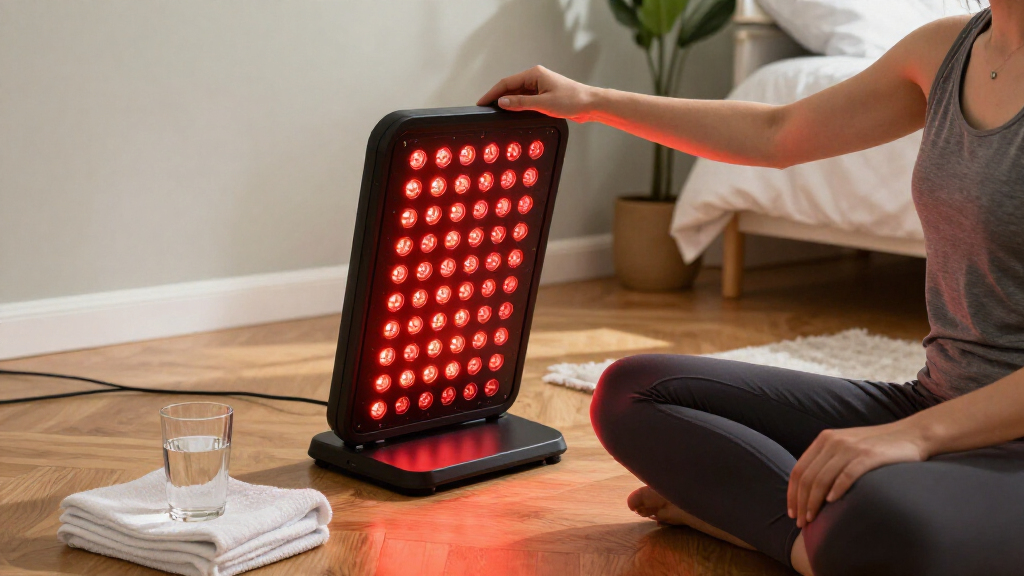
A panel is the broad-format option in this checklist, and the Hooga ULTRA1500 is identified as a red light therapy panel. Its product name lists 630/660nm red and 810/850, but it does not specify the panel’s dimensions, coverage, mounting method, or operating instructions. Confirm those details in current manufacturer information before deciding whether its size and placement suit your space.
A common buying mistake is assuming a panel will fit a room or cover the intended area based on its name. Check the actual measurements, how it is positioned, and whether any included or optional stand is compatible. Consider where it will be stored and whether the setup can be used comfortably and consistently. If more than one person may use it, confirm that the positioning can be adjusted for each user rather than assuming one arrangement works for everyone. Treat the listed wavelengths as product-name information, not a substitute for checking the maker’s guidance on use and operation.
What to look for:
- Confirm panel dimensions and the space needed for placement.
- Check mounting options and stand compatibility.
- Review manufacturer instructions for operation and positioning.
- Verify the listed wavelength details in current product information.
Hooga ULTRA1500 Red Light Therapy Panel with 630/660nm Red and 810/850nm Near-In

The Hooga ULTRA1500 is a large-format home light therapy panel with 300 quad-chip LEDs emitting four red and near-infrared wavelengths. It features adjustable brightness, pulsed mode, a timer, touchscreen and remote controls, flicker-free LEDs, cooling fans, and flexible mounting options.
Pros:
- Four red and near-infrared wavelengths
- Adjustable brightness and pulsed mode
- Touchscreen and remote controls with timer
- Flexible mounting and expandable panel setup
Cons:
- Large-format design may require dedicated space or mounting
- Cooling fans operate during use
Best for: Shoppers who want a panel format and can confirm it fits their space.
Not ideal for: Anyone who needs a compact wearable or cannot accommodate the verified dimensions.
Bottom line: Check the panel’s actual measurements, setup requirements, and manufacturer guidance before choosing the Hooga ULTRA1500.
LED Therapy Mask
The CurrentBody Red Light Therapy LED Face Mask Series 2 is the face-mask pick. A mask format may appeal to shoppers seeking a product designed to be worn on the face, but the product name alone does not confirm its dimensions, fit range, controls, or use instructions. Check the maker’s details for fit and wear guidance before purchasing.
A frequent mistake with wearable products is treating the model name as proof that a particular face shape or routine will be comfortable. Look for the mask’s measurements, how it is secured, and any instructions about positioning or duration. Confirm what comes in the box and whether any required power or connection accessory is included. If you wear glasses, have facial piercings, or prefer not to wear a close-fitting device, review the product guidance carefully and consider whether the mask’s format suits you. Follow the manufacturer’s instructions and check care and cleaning guidance so you understand how the mask is maintained between uses.
What to look for:
- Review the manufacturer’s fit range and mask dimensions.
- Check how the mask is secured and positioned.
- Confirm included accessories and any power requirements.
- Read use, cleaning, and care instructions.
CurrentBody Red Light Therapy LED Face Mask Series 2

This LED face mask uses red, near-infrared, and deep near-infrared light to promote collagen production, reduce fine lines, wrinkles, and redness, resulting in a brighter, smoother complexion. It features an upgraded flexible silicone design with 236 LEDs for maximum coverage and comfort, along with a Veritace NFC card for personalized results.
Pros:
- Promotes collagen production and reduces signs of aging
- Enhanced coverage for effective treatment
- Comfortable, flexible silicone design
Cons:
- Requires careful review of contraindications before use
Best for: Shoppers who prefer a face-mask format and can verify its fit instructions.
Not ideal for: Anyone who finds wearable face devices uncomfortable or needs a different format.
Bottom line: Confirm the mask’s fit, accessories, and use guidance before choosing the CurrentBody Series 2.
Red Light Therapy Belt
The Capillus Body Cordless Red Light Therapy Wrap is the belt or wrap pick in this checklist. Its name identifies a cordless body wrap, but does not give fit measurements, fastening details, battery information, or guidance on which areas it accommodates. Verify these specifics in the manufacturer’s current product information to make sure the wrap format fits your routine.
One common mistake is assuming that “cordless” explains how long a device operates or how it is recharged; check the maker’s documentation for those details. Review the wrap’s length and closure, along with any instructions for positioning and use. Think about whether you want to wear it while seated, standing, or moving, and confirm the product guidance supports your intended setup. Check what’s included and whether charging accessories are supplied. A body wrap can have different sizing needs from a face mask or panel, so do not infer fit from the product category alone. Prioritize dimensions and operating instructions over assumptions based on the name.
What to look for:
- Verify wrap dimensions and fit guidance.
- Check fastening and positioning instructions.
- Review battery, charging, and operation details.
- Confirm which accessories are included.
Capillus Body Cordless Red Light Therapy Wrap

This flexible, cordless wrap uses 360 LEDs with 630 nm red light and 850 nm near-infrared light. It has an adjustable strap for use on areas including the waist, back, shoulders, hips, and legs, plus a rechargeable battery and 15-minute sessions with automatic shutoff.
Pros:
- Cordless design supports use at home, work, or while traveling
- Adjustable wrap fits multiple body areas
- Automatic shutoff after 15-minute sessions
- Combines red and near-infrared light
Cons:
- Session length is fixed at 15 minutes
- No battery runtime or charging time is provided
Best for: Shoppers seeking a body-wrap format and willing to verify fit and charging details.
Not ideal for: Anyone who needs a panel or a product with confirmed sizing before purchase.
Bottom line: Check dimensions, charging information, and positioning guidance for the Capillus wrap before deciding.
Infrared Heating Pad
The Therabody ThermBack LED 4-in-1 Heated Lower Back Relief Wrap is the lower-back wrap listed here. Its name combines LED, heat, and wrap language, but it does not establish how the features work together, what settings are available, or how the item fits different bodies. Read the manufacturer’s instructions for feature and fit details before choosing it.
A common mistake is assuming that a multi-feature product has a particular control scheme or that “4-in-1” spells out the functions without checking. Confirm the listed features, operating instructions, dimensions, closure, and any power requirements from current product information. Consider whether the wrap can be positioned comfortably at the lower back and whether the fastening method suits your clothing and intended use. Check included accessories, care guidance, and any manufacturer cautions. Do not treat the word “infrared” in this checklist category as a complete description of the product’s technology; rely on the maker’s documentation for how to use it.
What to look for:
- Confirm what the product’s “4-in-1” description includes.
- Review heat and LED operation instructions.
- Check wrap dimensions, closure, and positioning guidance.
- Verify power needs, included accessories, and care instructions.
Therabody ThermBack LED 4-in-1 Heated Lower Back Relief Wrap

This cordless, wearable wrap combines heat, far-infrared therapy, vibration, and LED therapy to help relieve lower-back pain, stiffness, and muscle soreness. Treatments can be customized using the built-in controls or Therabody app, and the device automatically shuts off after 20 minutes.
Pros:
- Combines four therapy modes with customizable settings
- Cordless and wearable for use while standing, sitting, or lying down
- App connectivity and saved settings support convenient personalization
- Automatic shutoff and travel lock add practical safety features
Cons:
- Strap extender for waists over 45 inches is not included
- Battery life is limited to up to 180 minutes per charge
Best for: Shoppers considering a lower-back wrap and ready to verify its features and fit.
Not ideal for: Anyone seeking a simple pad without checking its combination of functions.
Bottom line: Use the manufacturer’s details to confirm the ThermBack’s fit, functions, and operating guidance.
Light Therapy Glasses
AYO Blue Light Therapy Glasses are the glasses pick, and their name identifies them as blue light therapy glasses. Glasses are a different product format from a panel or wrap, so check how they fit and what operating setup they require. The name alone does not confirm lens design, adjustment range, power source, or use instructions; verify those details with the manufacturer for fit and compatibility.
A common buying mistake is assuming glasses will fit over prescription eyewear or that any wearable setup will work with a preferred routine. Review the product’s dimensions, adjustment options, and instructions for wearing and operation. If you use prescription glasses, check whether the maker explains compatibility rather than relying on assumptions from product photos or category labels. Confirm any included accessories and charging or power requirements. Read the manufacturer’s guidance on when and how to use the glasses, and consider whether this wearable format suits your day-to-day habits. Choose based on confirmed wearing and setup details, not the product name alone.
What to look for:
- Check fit dimensions and adjustment options.
- Confirm compatibility guidance for prescription eyewear.
- Review operating instructions and power requirements.
- Verify included accessories and care information.
AYO Blue Light Therapy Glasses

AYO wearable light therapy glasses are designed to support sleep quality, energy, and mood by helping reset the body’s circadian rhythm. The lightweight, portable frame is designed for comfortable use at home, at work, or while traveling, and includes an adjustable nosepiece.
Pros:
- Lightweight and portable
- Designed to fit comfortably, including for spectacle wearers
- Allows visibility for other activities while wearing
Cons:
- App access may involve additional charges
- The description does not specify battery life or charging details
Best for: Shoppers who prefer glasses and can confirm their fit and use requirements.
Not ideal for: Anyone whose eyewear compatibility or routine remains unclear after checking the maker’s guidance.
Bottom line: Verify fit, eyewear compatibility, and operating details for the AYO glasses before choosing.
Therapy Panel Stand
No product is specified for this slot, so treat it as a compatibility check rather than a product recommendation. A stand can matter when deciding how a panel will be positioned, but the right option depends on the panel’s dimensions, mounting points, and intended setup. Start by finding the panel manufacturer’s mounting requirements and do not assume a generic stand will fit.
A common mistake is buying a stand before confirming the panel’s weight limits, attachment method, and adjustment needs. Check whether the maker lists a compatible stand or provides mounting specifications, then compare those with the stand documentation. Consider the floor space available, how the panel will be positioned, and whether the setup can be secured as directed. If choosing a third-party stand, confirm the exact compatibility information rather than relying on a similar-looking product. Keep all setup within the manufacturer’s instructions, and make sure the finished arrangement is practical to position and store. The useful decision here is whether a stand is needed at all, based on the panel and room setup.
What to look for:
- Confirm the panel’s mounting points and requirements.
- Check stand capacity against the panel’s documented specifications.
- Verify compatibility with the exact panel model.
- Consider floor space, adjustability, and storage.
If you are buying in stages, begin with the product format that best matches your intended use, then verify its fit and operating details. Next, check what accessories are needed, including a stand for a panel if the setup calls for one. This buying order helps you settle the core device choice before filling in setup pieces.
Take time to compare the manufacturer’s current instructions and measurements, especially when the product name leaves practical details open. A shortlist built around fit, compatibility, and a routine you can maintain is a solid place to start. Use this checklist as a guide, then make the choice that feels clear and workable for your home.