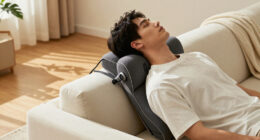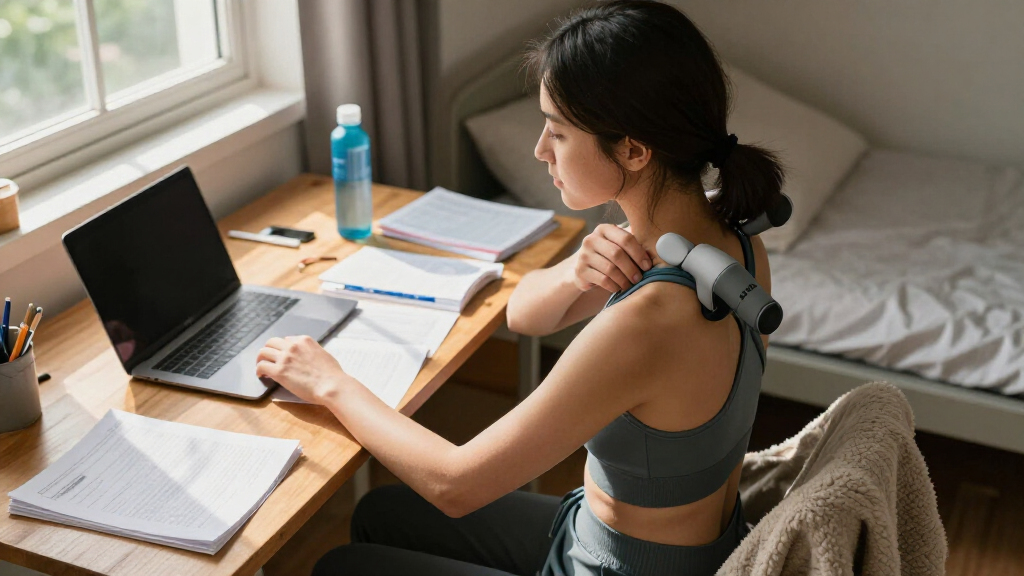

Students carry a unique mix of physical strain: hunched posture from laptop studying, tension headaches from long reading sessions, and tight necks from late-night desk work. The right massage therapy device can ease that tension between classes without the cost of regular massage appointments. My top pick overall is the SKG G7 Pro Fold 3.0, because its folding design fits in a backpack, its heat function targets study-induced neck stiffness, and it’s FSA/HSA eligible. For budget-minded buyers, the AUVON 24 Modes TENS Unit delivers serious pain relief for under $40, while the Comrelax Head and Eye Massager stands out for students who battle screen-related headaches and eye strain. The main tradeoff in this category is between targeted pain relief (TENS pads) and relaxation-focused devices (heat and vibration) — and pulse-based massagers aren’t for everyone. Keep reading for the full breakdown of what each device does well, who it suits, and who should skip it.

Get wellness gear delivered free with Prime
- Fast, free delivery on millions of items
- Prime Video, Amazon Music and more included
- Member-only deals all year
Key Takeaways
- The SKG G7 Pro Fold won best overall because it’s the only device in the lineup purpose-built for students — it folds flat for backpack storage, offers heat plus pulse therapy, and qualifies for FSA/HSA spending.
- Cheap TENS units (AUVON, Wireless TENS) beat expensive massagers on pure pain-relief value, but they require consistent pad replacement, which adds hidden long-term costs.
- The Comrelax eye massager and the neck-focused devices solve completely different problems — matching the device to your actual study strain (eye fatigue vs. neck tension) matters more than price.
- Dual-channel models like the Belifu justify their higher cost only if you need to treat two body areas at once; single-channel or pad-limited options are enough for most students.
- Every device here has real drawbacks: pulse massagers can feel prickly on bare skin, TENS pads lose stickiness within weeks, and heat features drain batteries faster — none of these are flawless all-in-one solutions.
| Comrelax Head and Eye Massager with Heat |  | Best for Study-Headache Relief | Battery Capacity: 2200mAh rechargeable | Heat Settings: 3 levels, 100°F to 122°F | Massage Zones: 6-zone kneading | VIEW LATEST PRICE | See Our Full Breakdown |
| Wireless TENS Unit Muscle Stimulator with 4 Pads |  | Best Cordless Value | Pads: 4 reusable electrode pads | Modes: 8 (knead, massage, acupoint, cupping, activate, shape, pressure, scraping) | Intensity Levels: 19 | VIEW LATEST PRICE | See Our Full Breakdown |
| Neck TENS Machine with Heat, Electric Pulse Neck Massager |  | Best Budget Neck Option | Technology: TENS electric pulse | Modes: Multiple modes | Intensity Levels: 15 | VIEW LATEST PRICE | See Our Full Breakdown |
| SKG G7 Pro Fold 3.0 FSA Neck Massager with Heat |  | Best Overall | Dimensions: 7.1 × 5.8 × 3.2 inches | Weight: 6.6 oz | Battery: 2400mAh, up to 140 minutes | VIEW LATEST PRICE | See Our Full Breakdown |
| AUVON 24 Modes TENS Unit Muscle Stimulator |  | Best for Full-Body Versatility | Modes: 24 pre-programmed | Battery Life: Up to 10 hours | Recharge Time: 1 hour | VIEW LATEST PRICE | See Our Full Breakdown |
| Belifu Dual Channel TENS EMS Unit 24 Modes Muscle Stimulator for Pain Relief |  | Best Full-Body Coverage | Modes: 24 preprogrammed | Channels: Dual (A/B) independent | Intensity Levels: 20 | VIEW LATEST PRICE | See Our Full Breakdown |
| massage therapy devices for student | Modes | Intensity Levels |
|---|---|---|
| Comrelax Head and Eye Massager | — | — |
| Wireless TENS Unit Muscle Stim | 8 (knead, massage, acupoint, cupping, activate, shape, pressure, scraping) | 19 |
| Neck TENS Machine with Heat | Multiple modes | 15 |
| SKG G7 Pro Fold 3.0 FSA Neck M | 9 built-in + 6 app-locked | — |
| AUVON 24 Modes TENS Unit Muscl | 24 pre-programmed | — |
| Belifu Dual Channel TENS EMS U | 24 preprogrammed | 20 |
More Details on Our Top Picks
Comrelax Head and Eye Massager with Heat
Long study sessions tend to show up behind the eyes before anywhere else, and this is the pick that addresses that specific problem. The 6-zone kneading combined with pneumatic compression and adjustable heat (100°F to 122°F) targets tension headaches, sinus pressure, and eye strain in a way neck-focused devices like the SKG G7 Pro simply can’t reach. The remote with illuminated display means a student can adjust settings mid-session without pulling the unit off. The tradeoff is narrow scope: unlike the wireless TENS unit or the AUVON stimulator, this does nothing for shoulders, back, or legs. The pneumatic pressure can also feel aggressive for anyone with sensitive skin around the temples. For students whose pain is concentrated above the neck after screen marathons, though, nothing else in this lineup is as direct a solution.
Pros:- Targets tension headaches, sinus pressure, and dry eyes directly
- Three heat levels and multiple modes for personalized sessions
- Rechargeable and portable with a convenient remote control
- FSA/HSA eligible, which helps stretch a student budget
Cons:- Pneumatic pressure may be uncomfortable for sensitive skin
- Battery life is not specified, so session planning is guesswork
- Useless for any muscle group below the head
Best for: Students who get tension headaches, sinus pressure, or eye strain from long hours of reading and screen work
Not ideal for: Anyone seeking full-body or back muscle relief — this device is strictly head and eye focused
- Battery Capacity:2200mAh rechargeable
- Heat Settings:3 levels, 100°F to 122°F
- Massage Zones:6-zone kneading
- Control:Remote with illuminated display
- Therapy Type:Pneumatic pressure with heat
- Design:Ergonomic, portable
Our verdict“Buy this if your study pain lives in your head and eyes rather than your neck or back.”
Wireless TENS Unit Muscle Stimulator with 4 Pads
What sets this apart from the AUVON 24 Modes unit is the absence of wires — the pads communicate wirelessly, so a student can stick them on a sore shoulder and keep typing, walking, or commuting without tethering to a control box. With 8 modes and 19 intensity levels, it covers most everyday soreness, and the 15-minute auto shut-off programs enforce healthy session limits. Compared with the SKG G7 Pro’s fixed neck placement, this goes wherever pads can stick: lower back, calves, forearms. The compromises are real, though. Four pads is the minimum viable setup, skin must be clean and prepped for good pad adhesion, and 15–30 minute session caps mean it manages pain rather than delivering a satisfying massage experience. It’s relief, not indulgence — but at this price, wireless relief is hard to beat.
Pros:- Fully wireless pads allow use while moving or studying
- 8 modes and 19 intensity levels offer wide customization
- Reusable, easy-to-clean electrode pads keep costs down
- Lightweight and pocketable for campus use
Cons:- Requires clean, prepped skin for the pads to adhere properly
- Sessions capped at 15–30 minutes
- Not effective for all pain types or deeper structural issues
Best for: Budget-conscious students who want hands-free pain relief they can wear during class or study sessions
Not ideal for: Anyone wanting a deep-tissue massage feel — TENS stimulation tingles rather than kneads
- Pads:4 reusable electrode pads
- Modes:8 (knead, massage, acupoint, cupping, activate, shape, pressure, scraping)
- Intensity Levels:19
- Auto Shut-off:Yes, 15-minute programs
- Power:Rechargeable
- Portability:Wireless, lightweight
Our verdict“The most practical pick for students who need wearable relief without wires or a big spend.”
Neck TENS Machine with Heat, Electric Pulse Neck Massager
This is the entry-level gateway into neck therapy — cheaper and simpler than the SKG G7 Pro Fold 3.0, which justifies its place for students watching every dollar. The 15 intensity levels and heat up to 100°F cover the basics of tension relief, and the titanium pads conduct comfortably against skin. Where the SKG pulls ahead is sophistication: red light therapy, near-infrared warmth, an app, and 140-minute battery life. This model counters with straightforward operation and a lower price of admission. The auto shutoff safety feature matters for students who doze off during evening study breaks. Drawbacks: it needs charging before first use, it does nothing outside the neck, and anyone with genuine chronic pain will outgrow it quickly. As a first device for occasional study-neck stiffness, it does the job without requiring much learning or money.
Pros:- Very affordable entry point for neck pain relief
- Heat up to 100°F helps loosen tight muscles
- 15 intensity levels allow gradual comfort adjustment
- Lightweight and ergonomic for use at a desk
Cons:- Requires charging before use, so no instant relief out of the box
- Treats the neck only — no versatility elsewhere
- Underpowered for severe or chronic pain conditions
Best for: First-time buyers with occasional neck stiffness who want a low-cost, simple device
Not ideal for: Students with chronic or severe neck pain — the intensity ceiling is too low to help meaningfully
- Technology:TENS electric pulse
- Modes:Multiple modes
- Intensity Levels:15
- Heat:Up to 100°F
- Charging:Fast charging
- Materials:Titanium pads, sturdy outer shell
- Design:Lightweight, portable, ergonomic
Our verdict“A sensible starter device for mild study-neck tension, as long as expectations stay modest.”
SKG G7 Pro Fold 3.0 FSA Neck Massager with Heat
This earns the top spot because it’s the most complete package for the screen-bound student lifestyle. The foldable 6.6-ounce frame slips into a backpack, the 2400mAh battery delivers up to 140 minutes — roughly five times a typical study-break session cycle — and the therapy stack goes beyond what the basic Neck TENS Machine offers: 9 titanium-coated massage heads, vibration, red light, and near-infrared warmth across 4 heat levels. Compared with the wireless TENS unit, it trades full-body flexibility for a much richer, more massage-like neck experience. Two honest caveats: it’s not a deep-kneading device, so students expecting shiatsu-style pressure will be disappointed, and six of the modes are locked behind the app, which annoys anyone who prefers standalone hardware. The 20-minute auto shutoff also enforces breaks whether you want one or not.
Pros:- Folds down to 6.6 oz for genuine backpack portability
- 140-minute battery life outlasts a full week of study breaks
- Red light and near-infrared therapy go beyond basic heat
- Four heat levels and 9 massage heads for a refined feel
Cons:- Six of fifteen modes require the companion app
- Vibration-based — no deep kneading action
- 20-minute auto shutoff interrupts longer sessions
Best for: Students and desk workers who want premium, travel-friendly neck relief with heat and light therapy built in
Not ideal for: Anyone wanting deep-kneading shiatsu pressure — this is vibration and warmth, not intense massage
- Dimensions:7.1 × 5.8 × 3.2 inches
- Weight:6.6 oz
- Battery:2400mAh, up to 140 minutes
- Heat Levels:4 levels (97–108°F)
- Massage Heads:9 titanium-coated stainless steel
- Modes:9 built-in + 6 app-locked
- Auto Shutoff:20 minutes
- Neck Fit:13.5–21 inches
Our verdict“The best all-around choice for students who live at a desk and want portable, feature-rich neck relief.”
AUVON 24 Modes TENS Unit Muscle Stimulator
When soreness isn’t confined to one spot — shoulders one week, lower back the next — this is the pick that adapts. With 24 pre-programmed modes, 8 pads, and dual lead wires, the AUVON treats two body areas simultaneously, something neither the wireless TENS unit (4 pads, no dual channels) nor any neck-only device can match. The 10-hour battery life on a 1-hour charge makes it the endurance champion of this lineup, ideal for long exam weeks. The cost of that power is the wires: unlike the wireless model, students are tethered to the control unit, which makes mid-lecture use impractical. Safety restrictions are also broader than most picks here — it’s off-limits for anyone with a pacemaker, epilepsy, or during pregnancy, and chronic-condition sufferers should clear it with a doctor first. For dorm-room therapy across multiple muscle groups, though, it’s the most capable tool here.
Pros:- 24 pre-programmed modes cover nearly every pain scenario
- Dual channels with 8 pads treat two muscle groups at once
- Up to 10 hours of battery from a 1-hour charge
- Self-adhesive pads are easy to apply and clean
Cons:- Wired design restricts mobility during sessions
- Strict medical contraindications limit who can safely use it
- More setup and learning curve than single-purpose devices
Best for: Students with recurring soreness in multiple areas who do their recovery sessions at home in the dorm
Not ideal for: Anyone with a pacemaker, epilepsy, or who is pregnant — and students who want wearable relief during class
- Modes:24 pre-programmed
- Battery Life:Up to 10 hours
- Recharge Time:1 hour
- Pads Included:8 self-adhesive pads
- Lead Wires:2 dual-channel
- Power Source:Rechargeable lithium battery
Our verdict“The most versatile at-home option for students whose pain moves around — as long as wires and health restrictions don’t apply.”
Belifu Dual Channel TENS EMS Unit 24 Modes Muscle Stimulator for Pain Relief
While most picks in this roundup target a single zone — the Comrelax eye massager for headaches, the neck units for shoulders — the Belifu works almost anywhere you can stick a pad, making it the most versatile option for students carrying tension in multiple places. The dual A/B channels mean you can run two pad sets at different intensities simultaneously, so lower back and calves can be treated in one session. Its 24 modes and 20 intensity levels outmuscle the wireless TENS unit’s simpler pad setup, and the rechargeable battery plus ten reusable pads keeps running costs near zero on a student budget. The tradeoff: it demands more fiddling than slip-on devices, and pads lose adhesion over time, so it’s a device for buyers willing to learn placement basics rather than someone wanting a passive, hands-off experience.
Pros:- Dual channels let you treat two body areas at once with independent intensity
- 24 modes and 20 intensity levels offer more adjustability than the wireless TENS alternative
- Rechargeable battery with 10 reusable pads keeps long-term costs minimal
- Compact enough to use at a desk, in a library corner, or while commuting
Cons:- Pads lose stickiness over time and need replacement, adding eventual cost
- Requires learning proper pad placement, so first sessions involve trial and error
- Gel pads and wires are less discreet than wearable options like the SKG neck massager
Best for: Students with tension in multiple areas (back, shoulders, legs) who want one affordable device covering everything
Not ideal for: Anyone wanting instant, zero-setup relief — pad placement and mode selection take trial and error before sessions feel effective
- Modes:24 preprogrammed
- Channels:Dual (A/B) independent
- Intensity Levels:20
- Battery:Rechargeable lithium
- Pads Included:10 reusable electrode pads
- Accessories:Drawstring storage bag, fastening cable ties
- Therapy Type:TENS (pain relief) + EMS (muscle stimulation)
Our verdict“Buy this if you want one budget device that handles back, shoulder, and leg tension between classes — skip it if you prefer effortless, targeted wearables.”
How We Picked
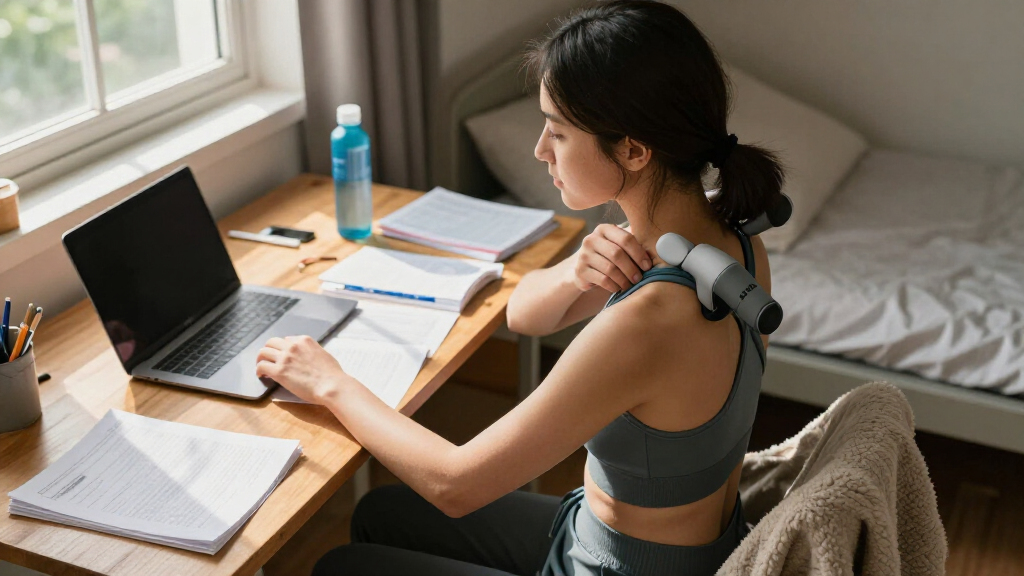
I evaluated these six devices against the realities of student life rather than raw spec sheets. The main criteria were portability (does it fit in a backpack or dorm drawer?), price and recurring costs (including replacement pads and charging frequency), ease of use between classes with no setup time, and relevance to student-specific strain — neck stiffness, eye fatigue, back tension from desk work. I also factored in FSA/HSA eligibility, since students with flexible spending accounts can effectively get these devices at a discount.
The ranking logic favors versatility and student fit over raw power. The SKG G7 Pro took the top spot because it combines heat, portability, and student-focused marketing with genuine functionality, while the AUVON earns best value for delivering dual-channel relief at a fraction of premium prices. Devices that serve narrow use cases — like the Comrelax for eye strain only — rank lower as general recommendations but remain strong picks for specific symptoms. No device ranked highly on features alone; recurring costs and practical usability weighed equally.
Factors to Consider When Choosing Massage Therapy Devices For Students
Before picking a device, it helps to understand what actually drives value in this category — and where students commonly overspend or buy the wrong tool entirely.Match the Device to Your Actual Study Strain
The most common mistake students make is buying a device for pain they don’t actually have. Eye massagers help with screen-induced headaches and eye fatigue but do nothing for shoulder knots; TENS units interrupt pain signals in sore muscles but won’t relax eye strain or tension headaches caused by visual focus. Before purchasing, track where your discomfort actually concentrates during a typical study week. If it’s your neck and upper back from laptop posture, a heated neck massager or TENS pads placed on the trapezius muscles make sense. If it’s behind the eyes and temples after screen sessions, an eye and head massager is the better tool. Buying the wrong type means the device sits in a drawer by midterms — a pattern visible in countless returned units.
Budget for the Hidden Costs, Not Just the Sticker Price
A $30 TENS unit isn’t really a $30 purchase. Adhesive pads lose stickiness within two to four weeks of regular use, and replacement packs cost $8–15 each, which can double your annual spend. Similarly, rechargeable devices with heat functions degrade faster if you run heat at maximum settings constantly, shortening battery lifespan. When comparing prices, calculate a full year of ownership: device cost plus consumables plus any warranty coverage. Sometimes a $70 device with durable construction and a strong warranty beats two cheaper replacements over a degree program. FSA/HSA eligibility also effectively lowers the real cost by 20–30% for students with those accounts — a detail many buyers miss at checkout.
Understand What TENS and EMS Actually Do
Electrical pulse devices are heavily marketed but widely misunderstood. TENS (transcutaneous electrical nerve stimulation) blocks pain signals — it’s relief, not treatment, and the pain often returns shortly after the session ends. EMS (electrical muscle stimulation) contracts muscles actively and is closer to passive exercise. Devices combining both modes, like the Belifu, offer more flexibility but also more settings to confuse first-time users. Students expecting a TENS unit to work like a deep-tissue massage will be disappointed; the sensation is tingling or pulsing, not kneading. If you want a massage-like experience, heated massagers are the honest choice — pulse devices are pain-management tools first.
Portability and Dorm-Room Practicality
Living situations shape which devices get used. Shared dorms mean devices that need privacy, prolonged sessions, or wall outlets during use become inconvenient. Battery life matters more than it seems: a neck massager that dies after 45 minutes can’t cover a full study day in the library. Noise is another overlooked factor — vibrating eye massagers and pulse units vary widely, and a loud device is useless during quiet study hours. Check charging method too; USB-C charging is far more practical in a dorm than proprietary cables or AA batteries. A device that’s awkward to transport or charge simply won’t travel with you, no matter how well it performs at home.
Safety Boundaries Students Should Know
Electrical stimulation devices carry real contraindications that marketing pages bury in fine print. Anyone with a pacemaker, heart condition, or epilepsy should not use TENS or pulse massagers without medical clearance. Pulse devices should never be placed on the front of the neck, over the heart, or on broken skin — placement mistakes are the most common cause of bad experiences. Heat features also pose a risk of low-temperature burns if used at maximum settings for extended sessions, especially on sensitive skin. If chronic pain persists beyond a couple of weeks, these devices are a stopgap, not a substitute for seeing a campus health provider. Spending $40 on a device instead of a $15 clinic visit can delay proper diagnosis of a real injury.
Frequently Asked Questions
Can I use a TENS unit in class or at the library without anyone noticing?
Mostly yes, with caveats. Wireless TENS units like the one in this lineup are discreet under loose clothing and nearly silent, making them practical during lectures. However, sudden intensity adjustments can cause visible twitches, so set your level before class starts rather than fiddling with it mid-lecture. Wired units with clip-on controllers are bulkier and the dangling wires draw attention, so they’re better suited to dorm use. Battery life is the real limiting factor — a unit that dies halfway through a day defeats the purpose, so check runtime specs against your class schedule before buying.
Is FSA/HSA eligibility actually worth prioritizing as a student?
It can save you real money, but only if you already have a qualifying account. FSA and HSA funds are pre-tax dollars, so paying with them effectively discounts the device by your marginal tax rate — typically 20–30%. The catch is that FSA accounts often expire at year’s end with a use-it-or-lose-it rule, so buying an eligible device in December with leftover funds is one of the smartest moves a student can make. If you don’t have an FSA or HSA, eligibility shouldn’t influence your choice at all; two devices with identical features but different eligibility status are otherwise identical purchases. Always keep the receipt, since some accounts require itemized documentation for reimbursement.
Are heated neck massagers safe to use for hours while studying?
No — and this is where expectations need adjusting. Most heated massagers are designed for sessions of 15 to 30 minutes, not continuous use during a four-hour study block. Sustained heat on one area risks low-temperature burns and can actually increase inflammation in already-irritated muscles. The better strategy is using heat in short bursts at the start of a study session to loosen tight muscles, then switching to non-heat mode or removing the device. Devices with auto-shutoff timers are safer for students who lose track of time. Think of these as interval tools, not all-day accessories, and your skin (and battery) will thank you.
Why does my pulse neck massager feel prickly or stingy instead of relaxing?
Pulse massagers use electrical current, and that sensation is inherently different from mechanical massage. A prickly feeling usually means the electrodes aren’t making full contact with your skin — dry skin, hair, or loose positioning all increase resistance and concentrate current painfully. Applying a damp cloth to your neck first or using a conductive gel improves contact dramatically. Intensity matters too: starting at a high level before your skin adapts is a common beginner mistake. If the sensation never becomes tolerable even at low settings, pulse technology may simply not suit you, and a vibration or heat-based massager is the better fit — some people are just more sensitive to electrical stimulation than others.
Should I buy one dual-channel TENS unit or two cheaper single devices?
One dual-channel unit is almost always the smarter buy. A dual-channel device like the Belifu or AUVON lets you treat two areas simultaneously — say, both shoulders or a neck and lower back — using the same controls and battery. Two separate single-channel devices cost roughly the same but mean managing two sets of batteries, two charging routines, and inconsistent intensity between them. The only scenario favoring separate units is if you and a roommate want to use them at the same time. Beyond that, dual-channel wins on convenience and per-session value, especially when pads are placed in pairs around a single pain point for better coverage.
Conclusion
The right choice comes down to what kind of student strain you’re treating and how much you want to spend. For best overall, the SKG G7 Pro Fold 3.0 earns it with its folding portability, combined heat and pulse therapy, and FSA eligibility — the most complete package for neck-dominant study pain. The AUVON 24 Modes TENS Unit is my best value pick, delivering dual-channel relief at a price any student budget can absorb. For beginners hesitant about electrical stimulation, the Comrelax Head and Eye Massager offers gentle, intuitive heat and compression with zero learning curve — ideal for screen-headache sufferers specifically. The Belifu Dual Channel TENS EMS Unit is the best premium option for students who want both pain relief and muscle recovery modes in one device, and the Wireless TENS Unit is the best pick for on-the-go use between classes. Students with purely eye-strain symptoms should skip everything else and get the Comrelax; everyone else should start with the SKG or AUVON depending on budget.
Cold & flu season Picks
humidifiers
As an affiliate, we earn on qualifying purchases.