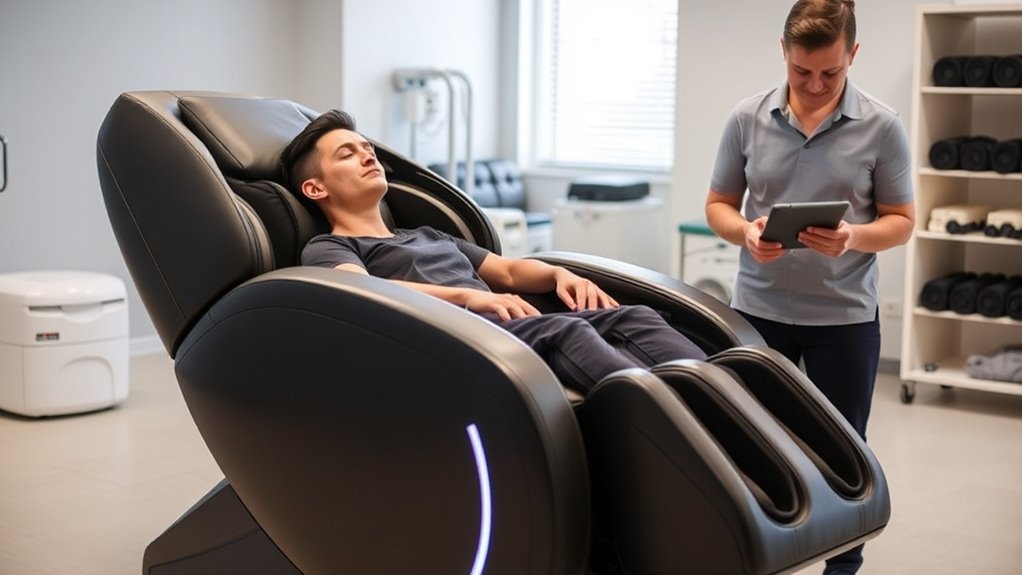

Integrating massage chair sessions into your physical therapy can boost recovery by targeting tight muscles, improving blood flow, and reducing soreness. This allows you to relax more during treatment and enhances overall outcomes. Personalizing massage sessions helps prevent setbacks, increase flexibility, and support faster healing. Plus, advanced features like AI-driven diagnostics guarantee your therapy addresses your specific needs. To discover how to maximize these benefits, keep exploring effective ways to blend massage technology with rehab routines.
Key Takeaways
- Incorporate massage chair sessions post-therapy to enhance muscle relaxation and reduce soreness.
- Customize massage settings to target specific muscle groups involved in the rehab process.
- Use AI-driven diagnostics to personalize massage routines based on real-time feedback and patient needs.
- Schedule regular massage chair sessions to promote blood flow and prevent muscle tightness or spasms.
- Combine massage chair therapy with traditional physical therapy to improve overall recovery outcomes and patient comfort.
Have you ever wondered how massage chair sessions can complement traditional physical therapy? The idea might seem unconventional at first, but integrating massage chairs into your rehab routine could offer a range of benefits. One of the primary advantages is the massage chair benefits, which extend beyond simple relaxation. These chairs are designed to target specific muscle groups, easing tension, reducing stiffness, and increasing blood flow. When combined with your physical therapy, they can help accelerate recovery and improve overall outcomes. The key is understanding how they enhance patient comfort, making your sessions more effective and less stressful.
Patient comfort plays a critical role in your healing process. When you’re comfortable, you’re more likely to stay engaged in therapy and adhere to prescribed exercises. Massage chairs provide a soothing experience that can alleviate soreness and discomfort, which often accompany physical rehabilitation. This comfort encourages you to relax fully during sessions, allowing your muscles to respond better to treatment. Reduced pain and tension mean you’re less likely to resist movement or exercises, facilitating smoother progress. Additionally, the calming effect of a massage chair can help ease anxiety or frustration that sometimes accompanies injury recovery, ensuring you’re mentally prepared to continue your therapy.
Another benefit of incorporating massage chair sessions is the convenience they offer. After a long or intense therapy session, sitting in a massage chair can serve as a quick, efficient way to unwind without needing additional appointments or external providers. This can save you time and make your overall rehab experience more manageable. Plus, modern massage chairs often come with customizable settings, allowing you to tailor the massage to your specific needs—whether you require deep tissue work or gentle relaxation. This personalization enhances the effectiveness of each session, ensuring you’re addressing your unique muscle issues.
Furthermore, the use of massage chairs can help prevent common setbacks like muscle tightness or spasms that might hinder recovery. By regularly incorporating these sessions, you promote better muscle elasticity and flexibility, which are essential for regaining strength and mobility. The soothing, targeted massage can also reduce swelling and inflammation, common barriers to healing. When you’re able to move more freely and with less pain, your physical therapy sessions become more productive, helping you reach your recovery goals faster. Additionally, AI-driven diagnostics and monitoring can optimize your treatment plan, ensuring that each massage session targets the most problematic areas for faster results.
Frequently Asked Questions
Are Massage Chairs Suitable for All Physical Therapy Patients?
Massage chairs aren’t suitable for all physical therapy patients. You should consider contraindications like skin infections, open wounds, or recent surgeries before use. Accessibility considerations also matter—patients with limited mobility or certain health conditions may find it hard to use the chair safely. Always consult a healthcare professional to determine if massage chair sessions are appropriate for individual needs, ensuring safety and effectiveness in your treatment plan.
How Do Massage Chair Sessions Complement Traditional Rehab Exercises?
Research shows that combining massage chair sessions with traditional rehab can boost recovery by 30%. You’ll find that massage chairs complement traditional exercises by reducing muscle tension and improving blood flow, which accelerates healing. When you schedule sessions strategically, you enhance the overall benefit comparison, making your rehab more effective. This integration helps you stay relaxed and motivated, ultimately supporting quicker and more comfortable recovery.
Can Massage Chairs Help Reduce Medication Dependence During Therapy?
Yes, massage chairs can help reduce medication dependence during therapy by enhancing pain management naturally. They promote relaxation and improve circulation, which can alleviate discomfort and muscle tension. As your pain lessens, you might find you don’t need as much medication to manage symptoms. Incorporating regular massage chair sessions can support your overall recovery, making pain more manageable and potentially decreasing your reliance on medication.
What Precautions Should Be Taken Before Integrating Massage Chairs?
Don’t put all your eggs in one basket—safety first when integrating massage chairs. Before starting, perform thorough contraindication screening to spot any health issues like blood clots or skin infections. Check for safety considerations, ensuring the chair’s settings suit the patient’s condition. Consult with healthcare professionals to avoid adverse effects. Taking these precautions helps you maximize benefits while minimizing risks during therapy sessions.
How Often Should Patients Use Massage Chairs During Rehab Programs?
You should follow appropriate frequency guidelines for massage chair use during rehab, typically starting with 2-3 sessions per week. Monitor your patient closely for any adverse reactions or discomfort, and adjust the frequency accordingly. Consistent patient monitoring ensures safety and maximizes benefits, allowing you to tailor sessions to individual needs. Always consult with your healthcare team to determine the most suitable schedule based on your specific rehab program.
Conclusion
By weaving massage chair sessions into your physical therapy, you’re opening a gateway to smoother recovery—like adding gentle rain to a parched garden. These sessions act as a soothing breeze, easing tension and inviting your muscles to relax and heal. Embrace this harmony of technology and therapy, and watch your progress blossom. With each session, you’re not just healing—you’re nurturing a resilient, vibrant foundation that transforms setbacks into stepping stones toward renewed strength.