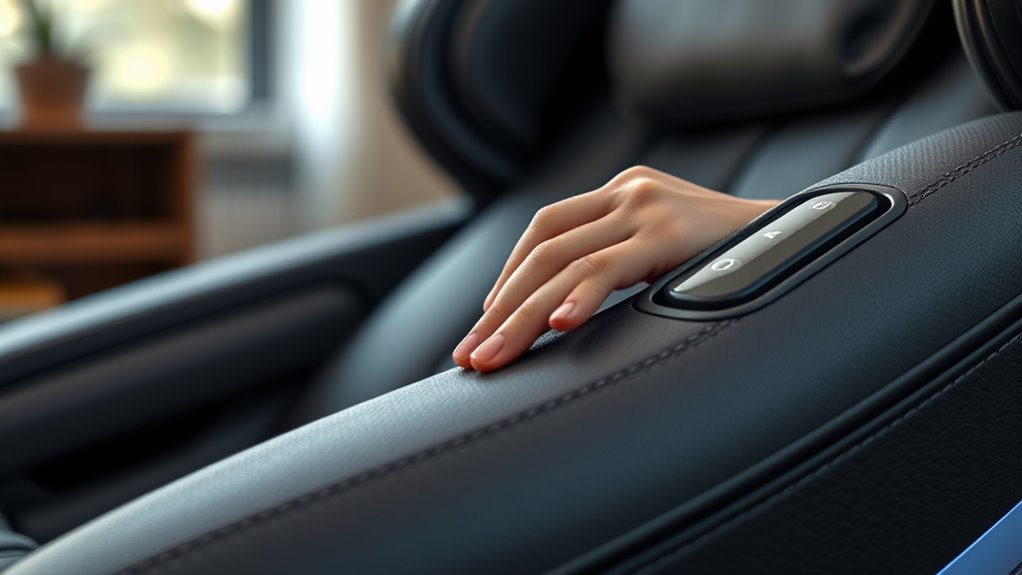

Many people mistakenly think you can use a massage chair anytime, but timing truly matters. You should avoid it right after eating, during illness, or when you’re very tired. It’s also unsafe during or immediately after exercise, if you’re dizzy or on certain meds, or with specific health conditions. Plus, late at night, massage sessions can disturb your sleep. Keep these guidelines in mind, and you’ll discover more about safe massage timing and common misconceptions.

Get wellness gear delivered free with Prime
- Fast, free delivery on millions of items
- Prime Video, Amazon Music and more included
- Member-only deals all year
Key Takeaways
- Avoid using massage chairs immediately after eating to prevent digestion disruption.
- Do not use when sick, especially with fever or contagious conditions, to avoid worsening symptoms.
- Refrain from massage if feeling very tired or fatigued to prevent injury and ensure effectiveness.
- Skip sessions during or right after intense exercise to allow muscles to recover properly.
- Avoid using massage chairs when experiencing dizziness, pain, or injuries to prevent complications.
When to Avoid Using a Massage Chair Right After Eating
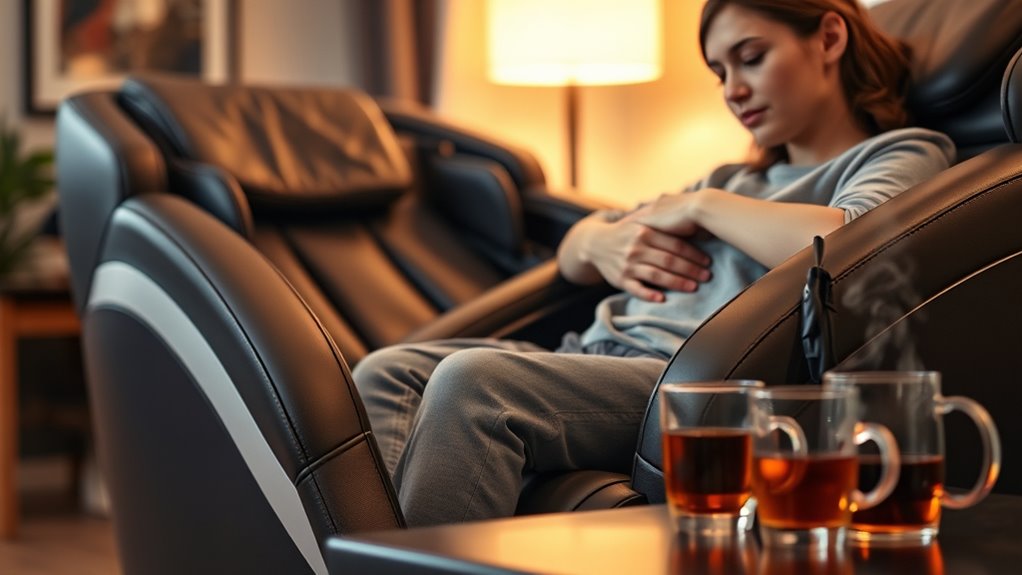
You should avoid using a massage chair immediately after eating because your body is focused on digestion during this time. Post-meal relaxation might sound appealing, but using a massage chair can cause digestion disruption. When you sit or recline right after eating, your body shifts blood flow toward your stomach, aiding digestion. Sitting in a massage chair can interfere with this process by stimulating your muscles and altering circulation. This may lead to bloating, discomfort, or even indigestion. To ensure your digestion proceeds smoothly, wait at least 20 to 30 minutes after a meal before using a massage chair. Giving your body this time helps prevent digestion disruption and allows you to enjoy the full benefits of your massage later.
The Risks of Using a Massage Chair When You’re Sick
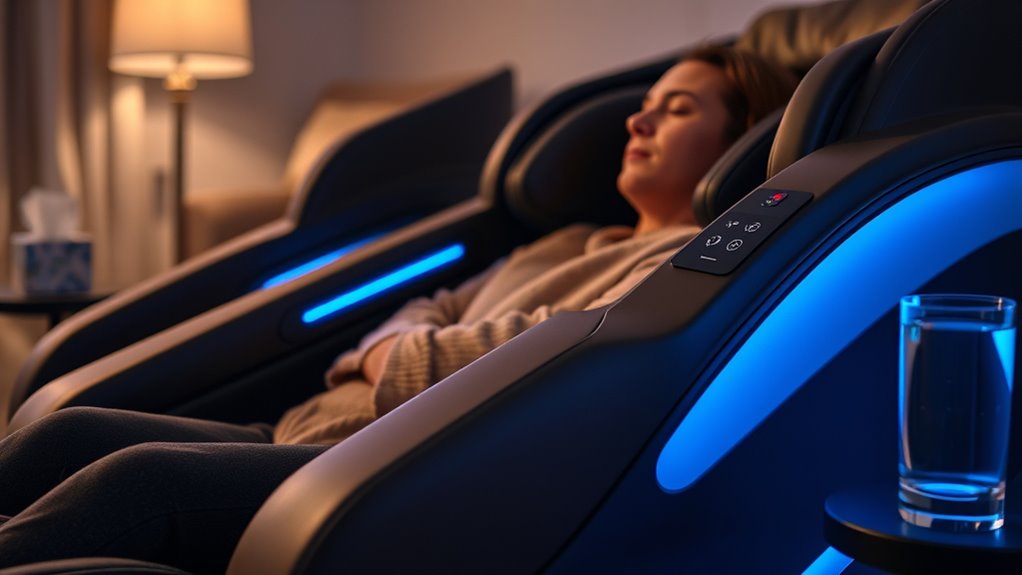
Using a massage chair while you’re sick can pose significant health risks. Your body is already fighting an illness, and the added stimulation from a massage chair might overwhelm your immune system. Ignoring health precautions could worsen symptoms or prolong recovery. For example, if you have a fever, using a massage chair can increase your body temperature further, leading to dehydration or dizziness. It’s essential to follow safety guidelines and avoid massage therapy when you’re unwell. Your body needs rest, not additional stress from mechanical stimulation. Consulting your healthcare provider is wise before using a massage chair during illness. Prioritizing your health and adhering to safety guidelines guarantees you don’t unintentionally hinder your recovery or cause unnecessary discomfort.
Why You Should Not Use a Massage Chair When You’re Very Tired

Using a massage chair when you’re very tired can increase your risk of injury or dizziness. It might also make the treatment less effective, as your body isn’t fully alert or responsive. Plus, overexerting your body when exhausted can lead to more fatigue or soreness afterward. Additionally, your body’s response to stimuli may be diminished, reducing the benefits of the massage.
Increased Injury Risk
When you’re very tired, your muscles are often already strained and less receptive to additional manipulation. Using a massage chair at this point can increase injury risk because your muscles may not respond well, leading to overstretching or strain. Poor posture alignment during a session can worsen discomfort or cause muscle imbalances. Additionally, fatigue can make your skin more sensitive, heightening the chance of skin irritation or even minor abrasions from the chair’s surfaces or massage nodes. Pushing through tiredness may mask pain signals, causing you to ignore warning signs of injury. It’s best to rest and recover first, ensuring your muscles are ready to benefit from massage therapy safely. Otherwise, you risk doing more harm than good. Being aware of proper posture and listening to your body’s signals can help prevent injury.
Reduced Effectiveness
Muscles that are already tired or strained don’t respond as well to massage. When you’re very exhausted, your body’s response to massage therapy diminishes, making it less effective. Instead of promoting posture correction or relaxation techniques, a tired state can lead to superficial relief that doesn’t last. If you’re overly fatigued, your muscles may be too sensitive or unresponsive, reducing the benefits of the massage chair. This lack of effectiveness can leave you feeling disappointed rather than refreshed. To get the most out of your session, wait until you’re rested and alert. Using a massage chair when you’re tired may not only waste your time but also prevent you from experiencing the full benefits massage therapy offers. Additionally, high-quality equipment can improve results, but only if your muscles are receptive.
Body Overexertion
Overexertion can leave your body in a state of fatigue that diminishes the benefits of a massage chair session. When you’re extremely tired, muscle fatigue sets in, making your muscles more vulnerable to strain rather than relief. Using a massage chair during this time can overstimulate your muscles, possibly leading to soreness or discomfort. The overexertion warning is clear: avoid massage chairs when you’re very exhausted, as they won’t help you recover and might even worsen fatigue. Additionally, consistent maintenance of your massage chair ensures it operates safely and effectively, preventing unnecessary strain on your muscles. Instead, wait until you feel more rested, allowing your muscles to relax and respond positively. Ignoring this warning can hinder your recovery process and leave you feeling more drained. Always listen to your body and skip the massage if you’re overly tired or physically exhausted.
The Inappropriate Times to Use a Massage Chair During or Immediately After Exercise
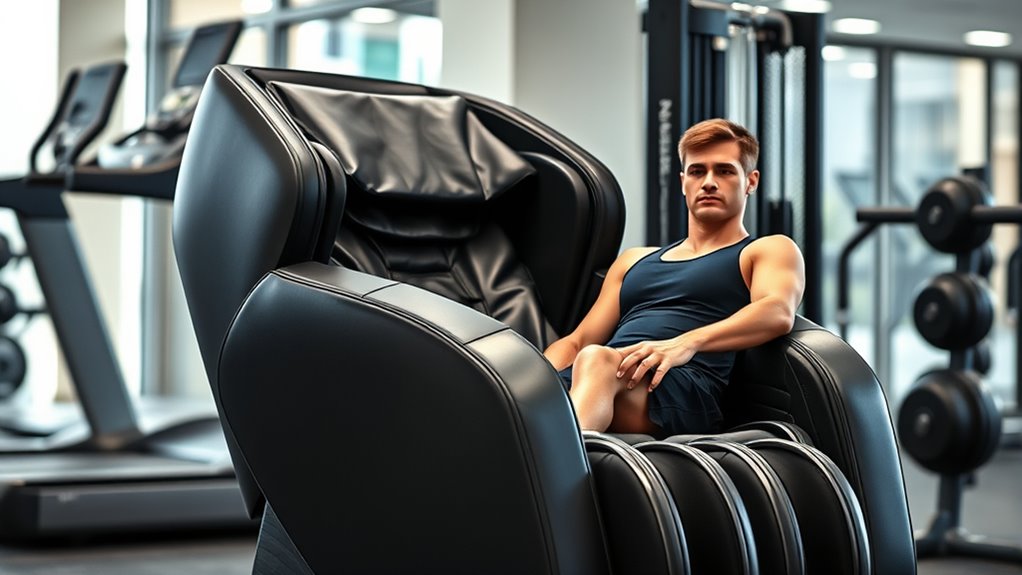
Exercising places stress on your muscles, making it essential to give your body time to recover before using a massage chair. Using one immediately after or during exercise can interfere with post-work recovery, potentially causing more harm than good. Your muscles need time to cool down and restore balance, which massage chairs can disrupt if used too soon. During or right after a workout, your muscles are inflamed and sensitive, so applying pressure might increase soreness or cause injury. Instead, prioritize routine relaxation after an appropriate cooling-down period, allowing your body to naturally recover. Additionally, understanding muscle recovery is vital to ensure safe and effective use of massage chairs. Save massage chairs for later, when your muscles are no longer inflamed, to maximize their benefits and support healthy recovery.
Avoiding Massage Chairs When You Have Certain Medical Conditions
If you have certain medical conditions, using a massage chair might do more harm than good. Medical contraindications, such as blood clots, heart issues, or skin infections, can worsen with massage therapy. For instance, people with blood clotting disorders should avoid massage chairs to prevent dislodging clots. Additionally, allergy considerations are important—if you’re sensitive to materials in the chair or have skin allergies, the upholstery or lotions used could trigger reactions. Always consult your healthcare provider before using a massage chair if you have any chronic illnesses or medical concerns. Ignoring these precautions might lead to complications or delayed treatment. Prioritizing your health means understanding your medical contraindications and allergy considerations before enjoying massage chair benefits. Being aware of Medical contraindications and carefully evaluating your health status can help prevent adverse effects.
The Importance of Not Using a Massage Chair When You’re Under the Influence of Alcohol or Drugs
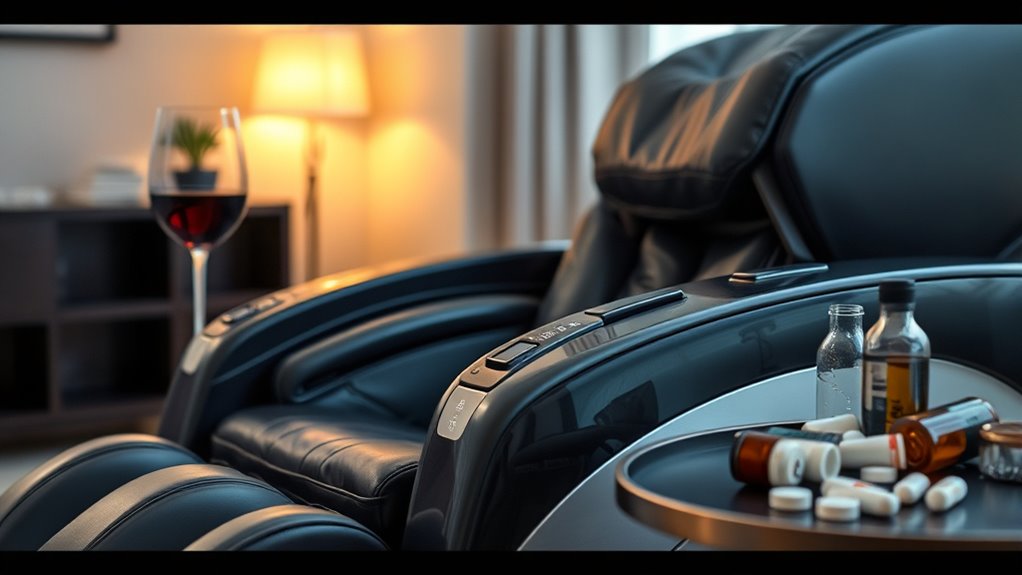
Using a massage chair while you’re under the influence of alcohol or drugs can be risky because these substances impair your judgment, coordination, and sensitivity. Alcohol impairment and drug influence can make you less aware of your body’s signals, increasing the risk of injury or discomfort. Your muscles may relax unexpectedly, and you might not respond quickly to any sensations or discomfort. To visualize this, consider the following:
| Feeling | Effect of Alcohol/Drugs |
|---|---|
| Dizziness | Increased risk of falling or losing balance |
| Numbness | Reduced sensation, making pain harder to notice |
| Relaxed muscles | Over-relaxation leading to injury |
| Impaired judgment | Poor decision-making about comfort or safety |
| Delayed reactions | Slower response to discomfort or issues |
Avoid using a massage chair until you’re sober to protect yourself. Additionally, safety precautions should always be prioritized when using home furnishings like massage chairs.
When to Steer Clear of Massage Chairs If You’re Pregnant

During pregnancy, it’s important to be cautious with massage chairs because certain massage techniques and positions can pose risks to both you and your developing baby. You should avoid using massage chairs if you’re not adhering to pregnancy precautions or prenatal massage guidelines. For example, lying flat on your back for extended periods can restrict blood flow, so avoid reclining positions that put pressure on your abdomen. Also, steer clear of massage chairs that target your abdomen or lower back intensely. Always consult your healthcare provider before using a massage chair during pregnancy, especially if you have complications or high-risk pregnancy. Additionally, understanding proper massage techniques can help ensure you don’t accidentally cause discomfort or harm. Following proper prenatal massage guidelines helps ensure you enjoy safe relaxation without risking your health or your baby’s development.
The Best Times to Refrain From Using a Massage Chair If You’re Experiencing Pain or Injury
Pain or injury can critically affect how your body responds to massage chairs, so it’s essential to recognize when using one might do more harm than good. If you’re experiencing persistent pain, swelling, or recent injuries, exercise caution before using a massage chair. In these situations, it’s best to seek medical consultation first, as massage might aggravate your condition. Avoid massage chairs if you’ve had surgery or suffer from conditions like fractures, hernias, or blood clots. Using a massage chair during these times can delay healing or worsen injuries. Always listen to your body and prioritize professional advice. Refraining from massage chair use during pain or injury ensures you don’t inadvertently cause further harm. Additionally, understanding the importance of proper heat pump maintenance can help prevent issues that might exacerbate your discomfort or injury.
Why Not Use a Massage Chair When You Feel Dizzy or Lightheaded
Feeling dizzy or lightheaded can substantially increase the risk of injury or adverse reactions if you use a massage chair. Dizziness precautions are essential because using the chair during these episodes may cause you to lose balance or faint, leading to falls or other injuries. Your lightheadedness safety should always come first—wait until your symptoms subside before resuming massage therapy. Massage chairs stimulate circulation and relax muscles, but if your blood pressure is unstable, this can worsen your condition. Ignoring dizziness precautions may result in dizziness worsening or feeling faint while seated. Always listen to your body—if you feel lightheaded, it’s best to pause and consult a healthcare professional before resuming use. Proper blood pressure management is crucial for safe massage chair use, especially if you experience symptoms of dizziness. Prioritizing safety ensures you enjoy the benefits without unnecessary risks.
The Wrong Times to Use a Massage Chair Around Certain Medications
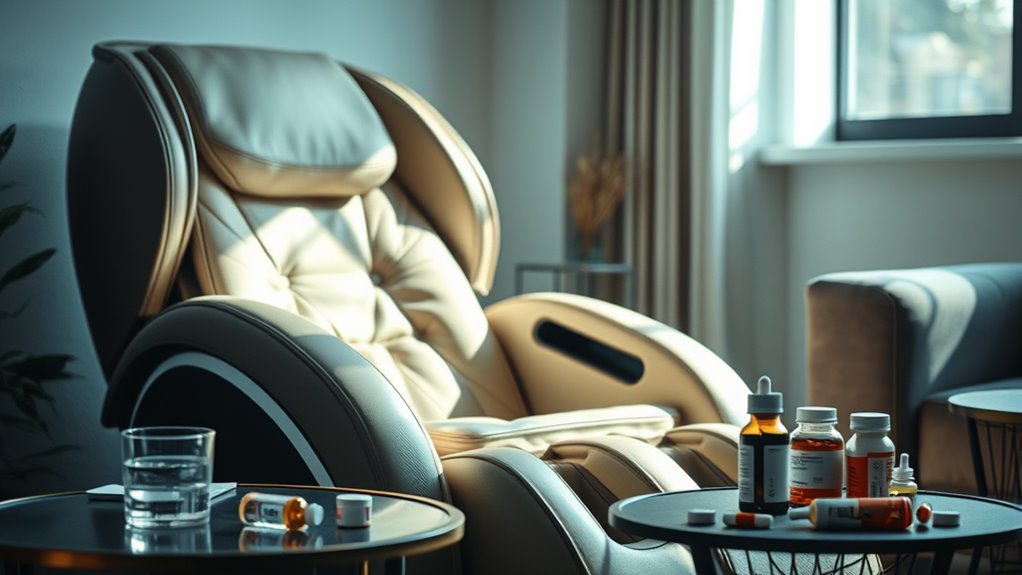
Certain medications can interact with massage chairs, so you need to be cautious about when you use them. Timing is key, especially if drugs cause dizziness, numbness, or blood pressure changes. Knowing when to avoid massage sessions can help prevent adverse effects and guarantee your safety.
Medication Interactions to Watch
While massage chairs can provide relief and relaxation, it’s important to be cautious if you’re taking specific medications. Certain drugs, like blood thinners or muscle relaxants, can interact with massage therapy, leading to unexpected side effects. Medication interactions might increase your risk of bleeding, dizziness, or discomfort. Avoid using a massage chair immediately after taking medications that affect your blood flow or nerve sensitivity, as the timing of drug intake can influence how your body responds. Always consult your healthcare provider about the appropriate drug timing and whether massage therapy is safe for you. Being aware of these interactions helps prevent adverse effects and ensures you enjoy the benefits of massage without risking your health.
Timing Risks With Drugs
Timing is crucial when it comes to using a massage chair around certain medications because doing so at the wrong times can increase health risks. Poor timing can lead to adverse drug interactions or amplify side effects, especially with medications that affect blood pressure, blood thinning, or cause drowsiness. For example, using a massage chair shortly after taking sedatives or blood pressure meds may cause dizziness or fainting due to sudden circulation changes. Being aware of timing risks helps prevent unexpected complications. Always check your medication instructions and consult your healthcare provider before scheduling a massage session. Knowing when to avoid massage chairs ensures you don’t unintentionally interfere with medication effectiveness or safety, keeping your health protected while enjoying relaxation.
When to Hold Off on Using a Massage Chair If You Have a Fever or Illness Symptoms
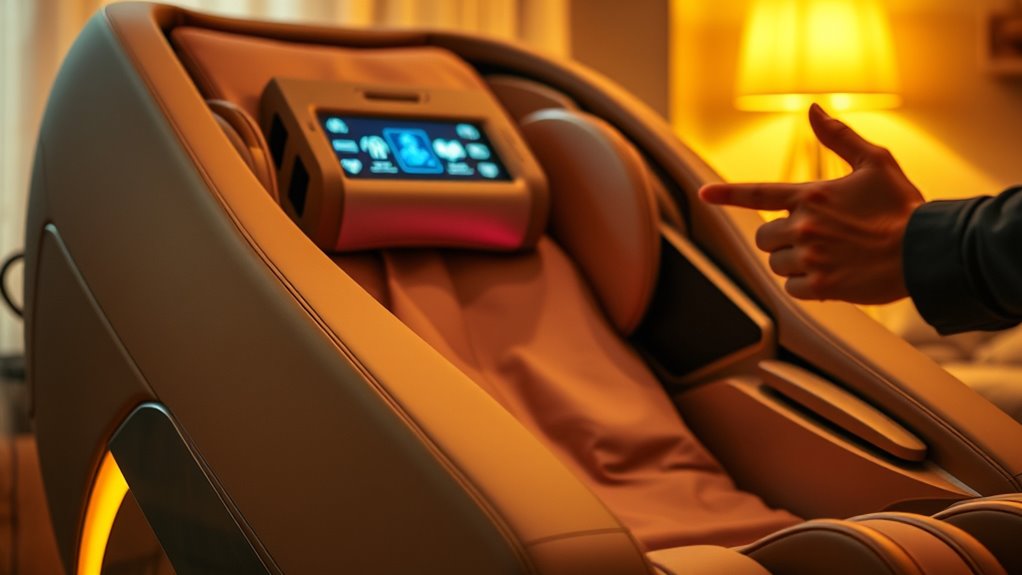
If you’re experiencing a fever or other illness symptoms, it’s best to skip using a massage chair until you recover. Fever precautions are important because your body is already fighting off an infection, and massage therapy could worsen your condition. Using a massage chair during illness symptoms might increase circulation too much or cause dehydration. Additionally, your immune system is vulnerable, and overstimulation could delay recovery.
- Avoid massage chairs if you have a high fever or chills
- Don’t use if you experience body aches or fatigue
- Skip if you’re feeling dizzy or lightheaded
- Refrain during any contagious illness to prevent spreading
- Wait until your fever subsides and symptoms improve before resuming use
Avoiding Use of Massage Chairs During Certain Times of the Day or Night
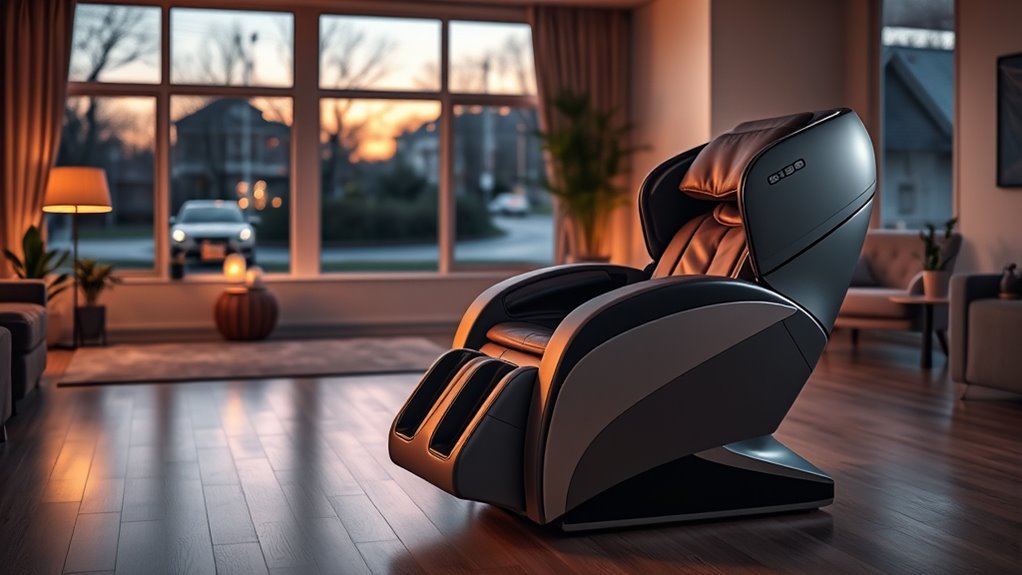
Using a massage chair early in the morning might make you feel too relaxed to start your day effectively. Late at night, it could interfere with your sleep or cause discomfort. Being mindful of these times helps you enjoy the benefits without unwanted side effects.
Morning Use Caution
Morning can be a tricky time to use a massage chair, especially if your body hasn’t fully woken up yet. Dawn caution is important because your muscles may be stiff or sensitive. Using the chair too early might cause discomfort or strain. To guarantee morning safety, avoid using the chair immediately upon waking. Instead, give yourself time to hydrate and stretch.
Consider these precautions:
- Don’t use the chair if you’re feeling dizzy or lightheaded
- Avoid intense massages right after waking
- Limit sessions to short, gentle massages
- Skip use if you have any morning pain or stiffness
- Wait at least 30 minutes after waking for better safety
Being cautious in the morning helps prevent strain and ensures a relaxing experience.
Late Night Risks
Are late-night sessions with a massage chair truly a good idea? Not necessarily. Using a massage chair late at night can interfere with your sleep safety and disrupt your nighttime routines. The stimulation from a massage may boost alertness, making it harder to wind down and fall asleep. Additionally, it might cause discomfort or overstimulation before bed, especially if you have underlying health conditions. To promote restful sleep, it’s best to avoid massage chairs during late hours. Instead, incorporate relaxing activities into your nighttime routine, like gentle stretching or deep breathing, that won’t interfere with your sleep quality. Prioritizing sleep safety helps ensure you wake up refreshed and avoids any potential risks associated with late-night use.
Frequently Asked Questions
Can Children Safely Use Massage Chairs?
Children can safely use massage chairs if you prioritize child safety and follow guidelines. Always supervise their massage chair use and make certain they’re of appropriate age, usually over 8 or 10, depending on the model. Keep sessions short to prevent overstimulation or discomfort. Avoid using the chair if they have health issues or skin sensitivities. With proper precautions, massage chair use can be a safe and relaxing experience for kids.
Is It Safe to Use a Massage Chair With a Pacemaker?
You might wonder if using a massage chair with a pacemaker is safe. The truth is, most experts advise against it because of pacemaker safety concerns. The powerful electrical pulses from a massage chair could interfere with your device, risking complications. So, before you sit down, check with your doctor. Protect your health by ensuring that a massage chair won’t jeopardize your pacemaker’s function.
Should Seniors Avoid Certain Massage Chair Features?
Seniors should be cautious about certain massage chair features to prioritize safety. For example, intense rollers or high-pressure massage settings might not be suitable for individuals with limited mobility or underlying health conditions. To guarantee senior safety, always consult a healthcare provider before using a massage chair and choose models with gentle, customizable options. Recognizing massage limitations helps prevent discomfort or injury, ensuring a relaxing, safe experience.
Are There Specific Times of Day Best for Massage Chair Use?
You should consider timing considerations when using your massage chair to fit into your daily routines effectively. The best times are usually in the evening or after workouts, as they help relax muscles and reduce stress. Avoid using it immediately after meals or late at night to prevent discomfort. Listening to your body and scheduling sessions at consistent times guarantees you maximize relaxation benefits without disrupting your daily rhythm.
How Long Should I Wait Before Using a Massage Chair After Medication?
You should wait at least 30 minutes to an hour after taking medication before using a massage chair. This waiting period helps prevent potential medication interaction issues, such as dizziness or increased blood flow, which could be harmful. Always check your medication’s side effects and consult your doctor for personalized advice. Being cautious guarantees you enjoy the benefits of massage without risking adverse reactions or discomfort.
Conclusion
Knowing when to skip the massage chair is like steering clear of stormy seas—you’ll enjoy the calm much more. By avoiding it during certain times, like after eating or when you’re sick, you protect yourself from unnecessary risks. Listen to your body and trust your instincts—your health is the guiding star. When used wisely, your massage chair becomes a soothing sanctuary rather than a gamble with your well-being.
Halloween Picks
halloween
As an affiliate, we earn on qualifying purchases.