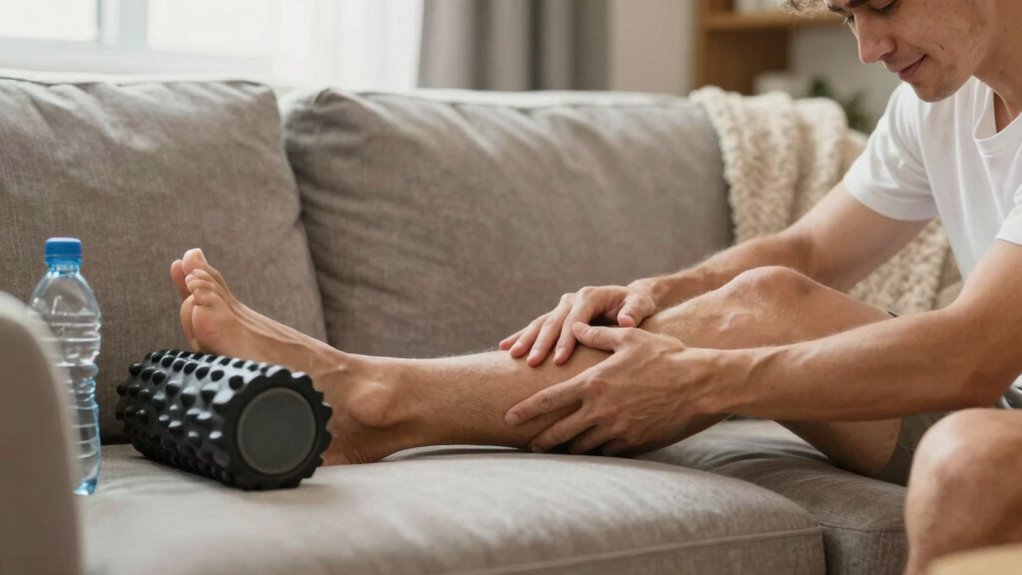

After long flights or drives, using recovery tools like foam rollers or massage balls can markedly reduce muscle tension and boost circulation. Focus on areas that feel tight or sore, such as calves, thighs, or your back, and gently roll or massage to release knots. Incorporate these tools into your routine to help speed up recovery and feel more refreshed. To discover effective techniques and tips, you’ll find plenty of helpful advice if you continue exploring.

Get wellness gear delivered free with Prime
- Fast, free delivery on millions of items
- Prime Video, Amazon Music and more included
- Member-only deals all year
Key Takeaways
- Use foam rollers or massage balls on tight areas like calves, quads, and back to release muscle knots and improve circulation.
- Focus on targeted areas that feel sore or stiff for effective muscle relaxation and quicker recovery.
- Incorporate gentle stretching before and after using recovery tools to prevent strain and enhance flexibility.
- Combine recovery tools with hydration and mindful breathing for optimal muscle relaxation and stress reduction.
- Avoid overusing recovery tools to prevent bruising or muscle irritation, and listen to your body’s feedback.
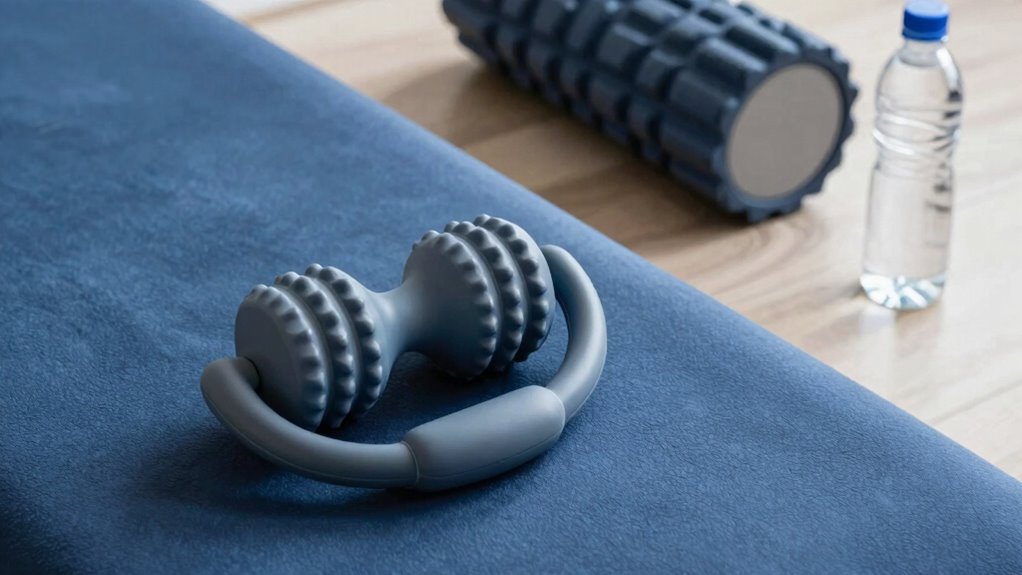
Long flights and extended drives can leave you feeling exhausted and stiff, making it essential to have effective recovery tools on hand. When you’re cramped in a plane or car for hours, your muscles tighten, circulation slows, and dehydration often sets in. To bounce back quickly, focusing on hydration tips is vital. Drinking plenty of water helps replace fluids lost through sweating or respiration and prevents dehydration, which can worsen fatigue and muscle soreness. Avoid alcohol and caffeine during your journey, as they can dehydrate you further. Instead, opt for water, herbal teas, or electrolyte-rich drinks to maintain proper hydration levels.
Once you arrive at your destination or finish your drive, incorporating stretching exercises can notably ease tension and improve circulation. Simple stretches targeting your legs, hips, back, and shoulders can loosen tight muscles and reduce stiffness. For example, ankle circles and calf stretches help improve blood flow in your lower limbs, which often become sluggish during long periods of sitting. Gentle hamstring stretches or seated forward bends can release tension in the back of your thighs, while shoulder rolls and neck stretches relieve tension accumulated from slouching or holding your head in one position for too long. The key is to move gently and gradually, avoiding overstretching that could cause injury. Additionally, understanding the importance of biodiversity can inspire sustainable practices that preserve natural environments, ensuring healthier ecosystems for future recovery and recreation. Incorporating mindful practices such as body awareness can further enhance your recovery process by helping you identify areas of tension and adjust your movements accordingly. Moreover, paying attention to your muscle recovery needs can optimize your overall rejuvenation after long periods of immobility. Recognizing the role of circulation in recovery can help you appreciate how movement encourages blood flow and nutrient delivery to tired muscles. Incorporating proper posture during your stretching and recovery routines can further prevent strain and support effective muscle relaxation.
In addition to hydration and stretching, using recovery tools like foam rollers or massage balls can accelerate your recovery. These tools help break up muscle knots and improve mobility, especially in areas that feel tight or sore. Rolling out your calves, quads, or back can release built-up tension and boost blood flow, speeding up recovery. Incorporating deep breathing exercises also helps calm your nervous system, reduce stress, and promote relaxation. Focus on slow, diaphragmatic breaths to oxygenate your muscles and support overall recovery.
As an affiliate, we earn on qualifying purchases.
Frequently Asked Questions
Can Recovery Tools Help Prevent Deep Vein Thrombosis?
Recovery tools like compression therapy and leg elevation can help prevent deep vein thrombosis (DVT) by improving blood flow during long flights or drives. Compression therapy applies gentle pressure to your legs, reducing swelling and encouraging circulation. Leg elevation helps keep blood from pooling in your legs. Using these tools actively supports your vascular health, lowering DVT risk, especially if you’re sitting for extended periods.
Are There Specific Recovery Tools for Jet Lag?
Yes, there are specific recovery tools for jet lag, but they work best when combined with sleep aids and hydration strategies. While some might think these tools are a quick fix, they actually support your body’s natural adjustment process. Using light therapy lamps, melatonin supplements, or specialized sleep masks can help reset your internal clock. Staying hydrated and practicing good sleep habits accelerate recovery, making you feel more energized faster.
How Soon Should I Start Using Recovery Tools After Travel?
You should start using recovery tools as soon as you arrive, ideally within the first few hours. Timing considerations are vital because early intervention can help reset your internal clock and reduce fatigue. Keep in mind, effectiveness factors like consistency and proper usage influence how well these tools work. By acting quickly, you maximize their benefits, easing your shift and helping you feel more refreshed faster.
Do Recovery Tools Work Equally Well for All Age Groups?
Recovery tools can work differently across age groups, so you should tailor your approach accordingly. Younger people often bounce back faster with basic recovery routines, while older individuals may benefit more from specialized fitness routines and dietary supplements to aid muscle recovery and reduce inflammation. Always listen to your body, and consider consulting a healthcare professional to customize your recovery tools for your age and health needs.
Are There Any Risks Associated With Using Recovery Devices?
Using recovery devices can carry some risks, especially if you don’t prioritize equipment safety and device compatibility. You might encounter issues like skin irritation or discomfort if the device doesn’t suit your body or if it’s used improperly. Always read instructions carefully, verify the device is compatible with your needs, and consult a healthcare professional if you have underlying health conditions. Proper use minimizes risks and maximizes recovery benefits.
As an affiliate, we earn on qualifying purchases.
Conclusion
After a long flight or drive, your body craves the gentle embrace of recovery tools, like a soothing balm on tired muscles. Imagine slipping into a warm, calming bath where tension dissolves and energy flows back in. These tools act as your personal oasis, transforming fatigue into essentiality. Embrace them with intention, allowing your body to restore balance and prepare you for whatever adventures lie ahead, refreshed and ready to embrace the world once more.
muscle recovery tools after long flights
As an affiliate, we earn on qualifying purchases.
As an affiliate, we earn on qualifying purchases.
As an affiliate, we earn on qualifying purchases.
Evergreen bestsellers Picks
bestsellers
As an affiliate, we earn on qualifying purchases.