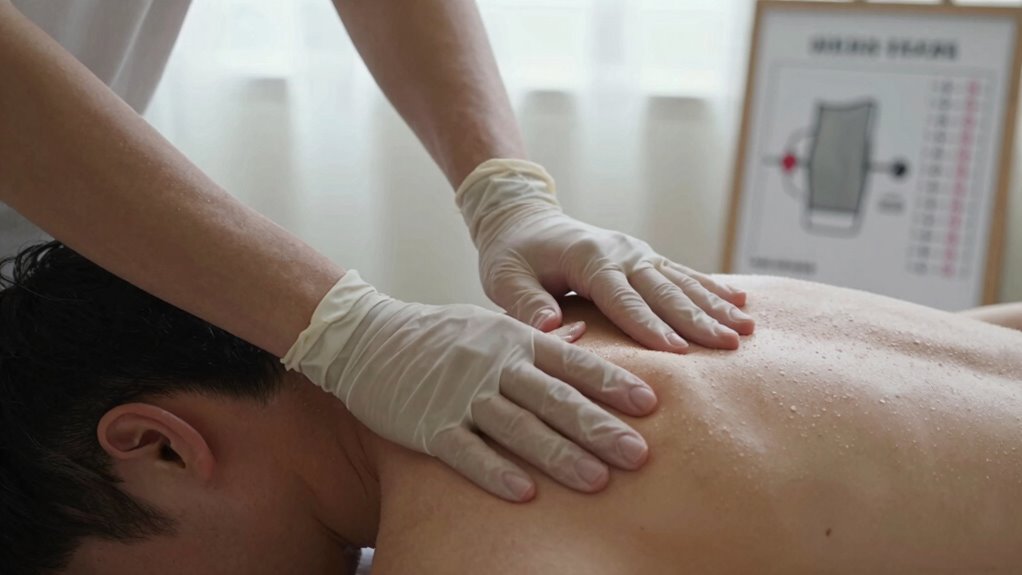
If you have high blood pressure, avoid unqualified massage therapists or aggressive techniques that can cause spikes in your blood pressure, increasing stroke risk. Gentle, controlled massages help reduce stress and support relaxation, but improper pressure or deep tissue work may worsen your condition. Always consult your doctor first and communicate your blood pressure concerns clearly to guarantee safe treatment. To learn how to protect your health while enjoying massage benefits, keep exploring this topic.
Key Takeaways
- Applying deep or vigorous massage techniques can cause blood pressure spikes in hypertensive individuals.
- Failing to communicate blood pressure concerns with the therapist may lead to unsafe treatment choices.
- Ignoring the need for a qualified therapist familiar with hypertension increases risk of adverse effects.
- Rapid postural changes during massage sessions can trigger sudden blood pressure increases.
- Not monitoring or recognizing signs like headaches or dizziness during massage can result in serious complications.
Is Massage Safe for People With High Blood Pressure?

If you have high blood pressure, you might wonder whether massage is safe for you. The good news is that massage benefits can include reducing stress and promoting relaxation techniques, which may help lower blood pressure levels. Gentle massages can improve circulation and ease muscle tension, contributing to overall well-being. Additionally, incorporating modern smart massage devices can offer customized treatments tailored to your needs. However, it’s essential to choose a trained massage therapist familiar with hypertension concerns. Some massage techniques, especially deep tissue, might cause your blood pressure to spike temporarily, so it’s wise to consult your healthcare provider beforehand. When performed properly, massage can be a safe and effective way to relax, but always communicate your condition clearly to your therapist. Being aware of blood pressure fluctuations and how different massage techniques affect your body can help you enjoy the benefits while minimizing potential risks. Furthermore, understanding how massage pressure impacts your cardiovascular health can guide your choices and ensure a safe experience.
What Are the Risks of Massage for Hypertensive Patients?

You should be aware that massage can sometimes cause blood pressure spikes in hypertensive patients. These increases may elevate your risk of complications like a stroke if not managed carefully. It is crucial to understand these potential risks before proceeding with massage therapy. Additionally, understanding blood pressure management strategies can help mitigate these risks, especially since proper technique during massage can influence blood pressure responses. Being aware of credit card security measures can also ensure your financial safety if unexpected health expenses arise. Incorporating natural pool features and maintaining a balanced environment may also help support overall cardiovascular health. Recognizing safety precautions during massage can further reduce the chance of adverse effects and promote a safer experience.
Risk of Blood Pressure Spikes
While massage therapy offers many benefits, it can also pose risks for hypertensive patients by potentially causing blood pressure spikes. These pressure fluctuations happen when certain techniques stimulate the nervous system unexpectedly. To minimize risks, you must follow strict massage precautions, especially for those with high blood pressure. Here’s a quick look at how pressure changes can affect you:
| Risk Factors | Effects |
|---|---|
| Rapid pressure changes | Sudden BP spikes |
| Deep tissue work | Overstimulation of nervous system |
| Massage duration | Longer sessions increase risk |
| Positioning | Improper positioning causes stress |
| Technique selection | Aggressive methods can backfire |
Potential for Stroke Risk
High blood pressure already increases the risk of stroke, and massage therapy can influence this danger if not approached carefully. If blood pressure fluctuations occur during a massage, they can potentially trigger a stroke, especially in hypertensive patients. That’s why understanding massage contraindications is vital. Certain techniques or excessive pressure may cause sudden changes in blood flow, elevating stroke risk. Before scheduling a massage, you should consult your healthcare provider to identify any specific risks. Be cautious of massages that involve intense pressure or deep tissue work, which could disturb your blood pressure stability. Always inform your massage therapist about your condition so they can modify techniques accordingly. Proper precautions help minimize the potential for stroke and ensure a safe, relaxing experience. Additionally, awareness of massage techniques can help guide safer treatment options for hypertensive individuals. Recognizing blood pressure fluctuations and their impact is essential for safe massage practices in hypertensive patients. Monitoring client responses during treatment can further reduce risks and promote safety. Understanding blood pressure monitoring techniques can also enhance safety during massage therapy. Being aware of health condition contraindications is crucial to prevent adverse effects during treatment.
Which Massage Techniques Might Raise Your Blood Pressure?
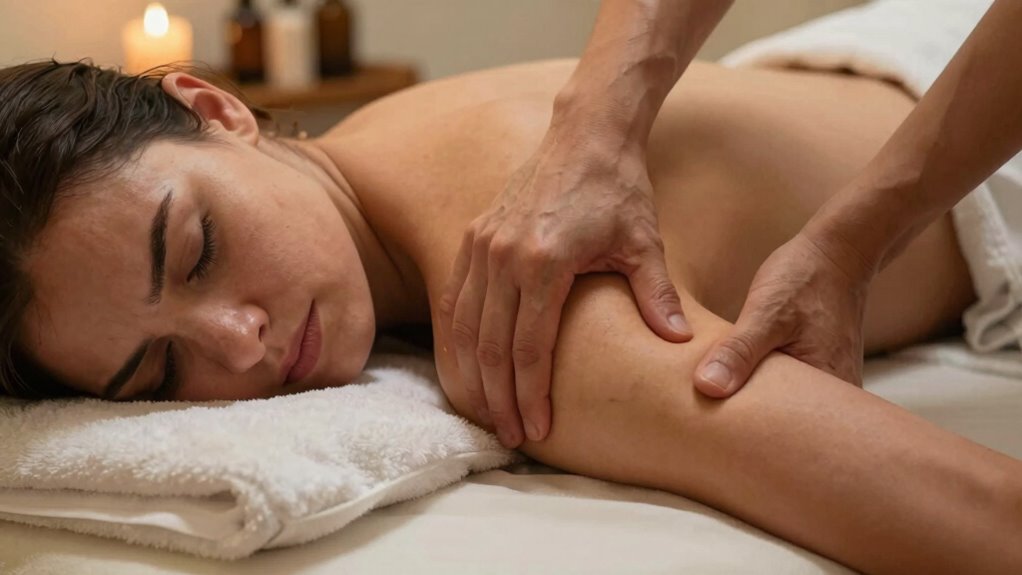
Certain massage techniques, like deep tissue pressure, can temporarily increase your blood pressure. Sudden postural changes during a session might also cause spikes. Knowing these risks helps you choose safer approaches for managing hypertension. Additionally, selecting appropriate massage styles tailored for sensitive individuals can help prevent unintended blood pressure fluctuations. Incorporating proper technique selection based on individual needs can further reduce these risks and promote safer treatment outcomes. Being aware of piercing-related factors is also crucial, as certain jewelry or recent piercings might influence circulation and pressure responses during massage. Utilizing travel-friendly techniques can also ensure safer and more comfortable sessions, especially when receiving massage therapy away from home.
Deep Tissue Pressure
Deep tissue pressure involves applying firm, targeted force to muscles and connective tissues, which can sometimes cause a temporary increase in blood pressure. If you have high blood pressure, this technique might trigger a spike, especially when working on trigger points or performing fascia release. Trigger points are sensitive areas that, when pressed, release tension but can also induce a stress response. Fascia release aims to loosen tight connective tissue, but the intense pressure may elevate blood pressure temporarily. If you’re prone to hypertension, deep tissue work should be approached cautiously. Communicate with your massage therapist about your blood pressure concerns, and avoid excessive pressure that could cause unnecessary stress or a sudden rise in your blood pressure levels. Additionally, incorporating ventilation considerations can help create a more comfortable environment and reduce physiological stress during massage. Being aware of your blood pressure status can help prevent adverse effects and ensure a safer massage experience. Recognizing how massage techniques influence your blood pressure can also guide you in choosing appropriate therapies. Understanding the physiological responses to different massage methods can further enhance safety and efficacy. Being mindful of pressure intensity during massage sessions is crucial, especially for individuals with existing hypertension.
Sudden Postural Changes
Did you know that sudden postural changes during a massage can temporarily raise your blood pressure? When you quickly shift positions, your body experiences postural adjustments that can lead to blood pressure fluctuations. These rapid changes can cause your blood vessels to constrict or dilate unexpectedly, putting extra stress on your cardiovascular system. If you have high blood pressure, these fluctuations might increase the risk of complications. To minimize this, communicate with your massage therapist about your condition, and ask for slow, controlled movements. Staying seated or lying still for a few moments after a change can help your body adjust gradually. Being aware of how postural adjustments impact blood pressure can help you enjoy massage therapy safely. Understanding blood pressure fluctuations is essential for managing health during massage. Additionally, understanding the effects of postural changes on blood pressure can help you better prepare for safe therapy sessions.
Why Should You Talk to Your Doctor Before Booking a Massage?

Before booking a massage, it’s important to talk to your doctor, especially if you have high blood pressure. Your doctor can advise if massage is a safe option or suggest alternative therapies that better suit your condition. High blood pressure can respond unpredictably to certain massage techniques, so professional guidance helps prevent complications. Additionally, your doctor can recommend stress reduction strategies that complement massage and support overall health. Open communication ensures you’re making informed choices about treatment options. Consulting your healthcare provider also helps identify any underlying issues that could affect your safety during massage therapy. Ultimately, a quick discussion with your doctor can give you peace of mind and ensure you enjoy the benefits of massage safely.
Mistakes to Avoid When Choosing a Massage Therapist for Hypertension

Choosing the right massage therapist is essential if you have hypertension, but many people make the mistake of selecting someone without verifying their experience with high blood pressure. This often stems from common massage misconceptions about relaxation and blood flow. To avoid risks, always check therapist qualifications and guarantee they understand hypertension’s impact. Here’s a quick comparison:
| Aspect | What to Look For |
|---|---|
| Therapist Qualifications | Certification in medical or therapeutic massage |
| Experience with Hypertension | Knowledge of blood pressure considerations |
| Approach to Treatment | Gentle techniques that don’t increase blood pressure |
Skipping these steps can backfire, so be diligent. Properly qualified therapists can tailor treatments safely, avoiding the mistake of relying solely on general massage misconceptions.
How Can You Tell If a Massage Is Raising Your Blood Pressure?
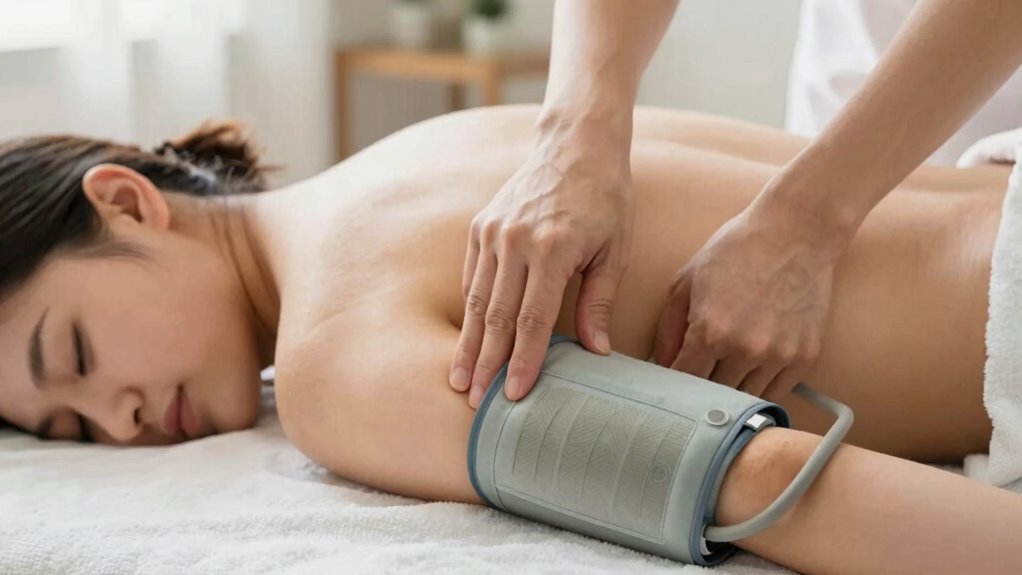
You should stay alert for sudden spikes in your blood pressure during or after a massage. Pay attention to symptoms like headaches, dizziness, or a racing heartbeat, which can indicate your blood pressure is rising. Recognizing these signs helps you determine if the massage is doing more harm than good.
Sudden Blood Pressure Spikes
While massage can promote relaxation, it can sometimes cause sudden spikes in blood pressure, especially if your body reacts unexpectedly. If you notice your blood pressure rising sharply during or immediately after a session, it could be a reaction to the massage or stress reduction techniques used. Your body might respond with increased heart rate or tension, counteracting the relaxation benefits. To prevent this, communicate openly with your massage therapist about your blood pressure concerns. Pay attention to how your body feels during the massage—any sudden discomfort or increased alertness could signal a spike. Remember, even relaxing techniques can sometimes trigger unexpected responses. Staying aware of these signs helps you decide if a massage is safe or needs adjustment.
Symptoms to Watch
How can you tell if a massage is causing your blood pressure to rise? One sign is feeling unusually tense, anxious, or dizzy after the session. You might notice headaches or a pounding sensation in your head, which can indicate increased blood pressure. Pay attention to your body’s responses—if you experience discomfort or rapid heartbeat, it could be a sign that the massage triggered a spike. These symptoms highlight the importance of proper stress management and lifestyle modifications to keep blood pressure in check. Always communicate with your massage therapist about your health concerns, especially if you’re managing high blood pressure. Recognizing these symptoms helps you prevent potential risks and ensures you choose relaxation methods that support your overall well-being.
Safe Massage Methods to Help Manage High Blood Pressure
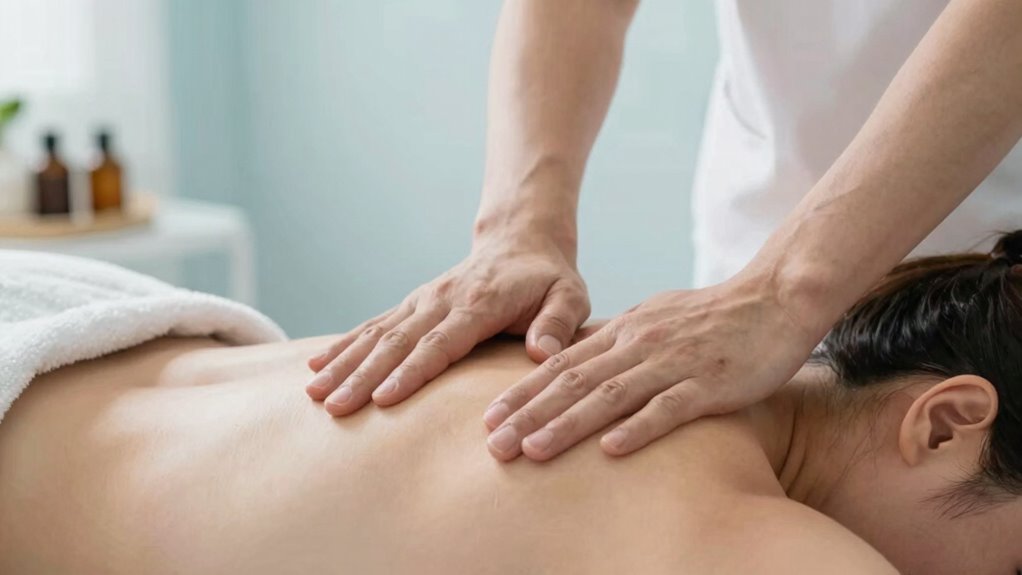
Are there safe massage techniques that can help manage high blood pressure? Yes, gentle methods focused on stress reduction and easing muscle tension can be beneficial. Opt for slow, smooth strokes that avoid deep pressure, especially around sensitive areas like the neck and shoulders. Techniques such as light Swedish massage promote relaxation without overstimulating your nervous system. You might also try self-massage using a foam roller or massage tools, but keep the pressure light. Avoid vigorous or deep tissue work, which can increase blood pressure temporarily. Always communicate with your massage therapist about your condition and comfort levels. The goal is to relax your muscles and calm your mind, helping to lower your stress and support healthy blood pressure levels safely.
How to Communicate Your Blood Pressure Concerns to Your Therapist
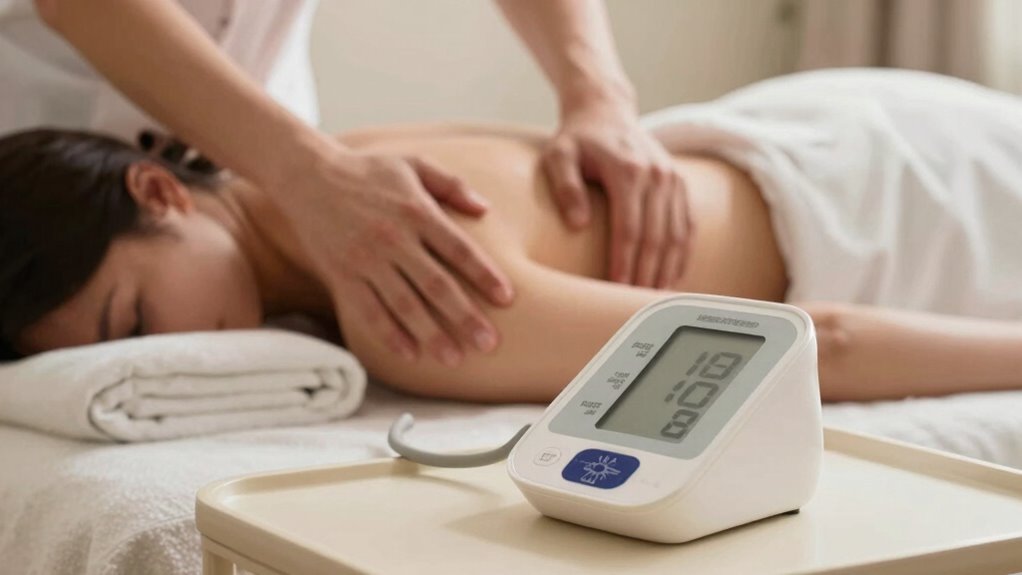
Effective communication with your massage therapist about your blood pressure concerns guarantees your safety and comfort during sessions. Start by informing them about your recent blood pressure readings and any monitoring you’ve done. This helps your therapist understand your condition and adjust their techniques accordingly. Be clear about your comfort levels and any symptoms you experience, so they can modify pressure or avoid certain areas. Practice good massage etiquette by speaking up if you feel uneasy at any point. Don’t hesitate to remind your therapist of your blood pressure concerns before and during the session. Open dialogue ensures they’re aware of your needs, reducing risks and making your massage both relaxing and safe. Clear communication is key to a positive experience.
When Should You Skip Massage and Try Other Hypertension Treatments?
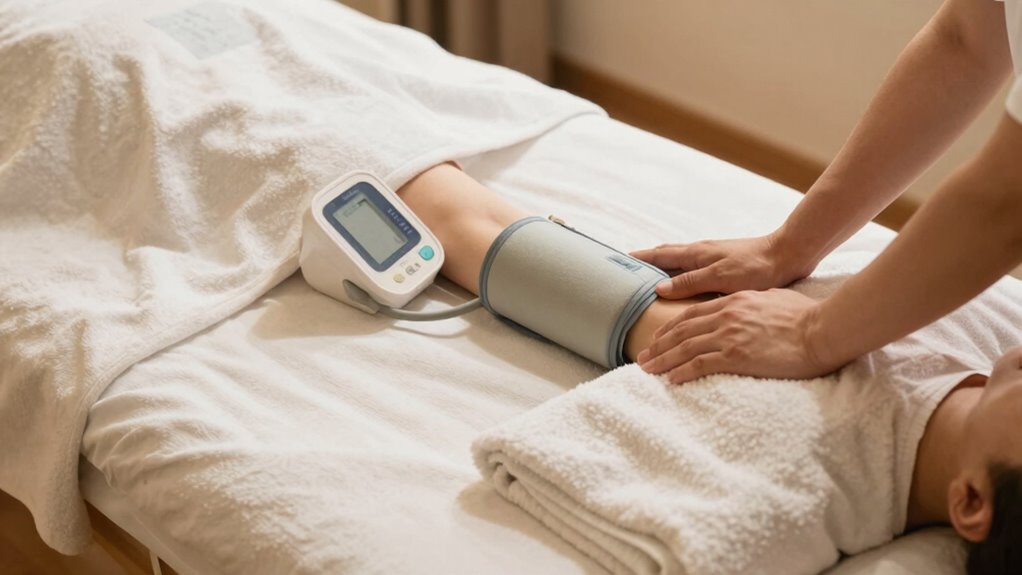
Knowing when to skip massage and seek other hypertension treatments is essential for your safety. If your blood pressure remains consistently high despite regular massages, it’s time to contemplate alternative therapies or lifestyle changes. Severe hypertension, especially readings above 180/120 mm Hg, warrants immediate medical attention rather than massage. If you experience symptoms like chest pain, dizziness, or shortness of breath, consult a healthcare professional before attempting massage. Relying solely on massage when your blood pressure is dangerously elevated can backfire. Instead, incorporate proven lifestyle changes such as a balanced diet, regular exercise, and medication prescribed by your doctor. These approaches, combined with medical guidance, are more effective in managing high blood pressure safely and sustainably.
How Massage Supports Relaxation and Blood Pressure Control

Massage promotes relaxation by reducing muscle tension and calming the nervous system, which can directly influence blood pressure levels. When you engage in relaxation techniques like massage, your body decreases stress hormones and activates the parasympathetic nervous system, fostering calm. This process helps lower your blood pressure naturally.
| Relaxation Techniques | Stress Reduction | Blood Pressure Control |
|---|---|---|
| Gentle strokes | Deep breathing | Improved vascular health |
| Aromatherapy | Meditation | Reduced arterial stiffness |
| Progressive muscle relaxation | Mindfulness | Better sleep quality |
| Soothing touch | Visualization | Heart rate stabilization |
| Guided imagery | Biofeedback | Overall cardiovascular health |
Frequently Asked Questions
Can Massage Cure or Significantly Lower High Blood Pressure?
Massage can’t cure or considerably lower high blood pressure, but it can help by promoting stress reduction and improving blood circulation. When you get a massage, you relax more, which may temporarily ease your tension and lower your blood pressure. However, it’s essential to combine massage with other treatments recommended by your healthcare provider. Always consult them before using massage as a method to manage your blood pressure.
Are There Specific Massage Oils to Avoid With Hypertension?
You should avoid certain essential oils, like rosemary or eucalyptus, if you have hypertension, as they may elevate blood pressure. Always check massage contraindications before using oils, especially if your condition is sensitive. Opt for calming oils like lavender or chamomile instead. Consulting with a healthcare professional or qualified massage therapist guarantees you choose safe options, reducing risks and making your massage session beneficial rather than risky.
How Often Should Hypertensive Patients Get Massages?
You should consider moderate massage frequency, perhaps every few weeks, to minimize hypertensive risks. Regular sessions can be beneficial, but overdoing it might lead to unintended strain. Listen to your body and consult your healthcare provider for personalized advice. By balancing massage frequency thoughtfully, you support your well-being without risking the delicate balance your blood pressure requires. Always prioritize safety and professional guidance in your routine.
What Signs Indicate Massage Is Negatively Affecting Blood Pressure?
You’ll want to watch for signs that massage impacts your blood pressure negatively, such as blood pressure fluctuations or unusual symptoms like dizziness, headaches, or nausea. If you notice these, it could mean your blood pressure isn’t responding well to massage. Stop the session and consult your healthcare provider. Pay attention to how your body reacts during and after massage to make sure it remains safe and beneficial.
Is There a Recommended Age or Condition for Massage Therapy With Hypertension?
Ever wondered if massage therapy suits someone with hypertension? Generally, age considerations matter, and it’s best to consult a healthcare professional first. For those with high blood pressure, a contraindications checklist helps identify risks, especially for older adults or individuals with severe hypertension. You should avoid massage if you have uncontrolled blood pressure or related complications. Always get medical clearance and work with a trained therapist familiar with your condition.
Conclusion
Think of managing high blood pressure like steering a delicate boat through choppy waters. With the right guidance, safe techniques, and open communication with your therapist, you can steer smoothly toward relaxation and health. Ignoring caution is like sailing into a storm unprepared—risking setbacks. Stay informed, talk to your doctor, and choose your massage carefully. That way, you’ll keep your voyage steady, calm, and on course toward better blood pressure control.