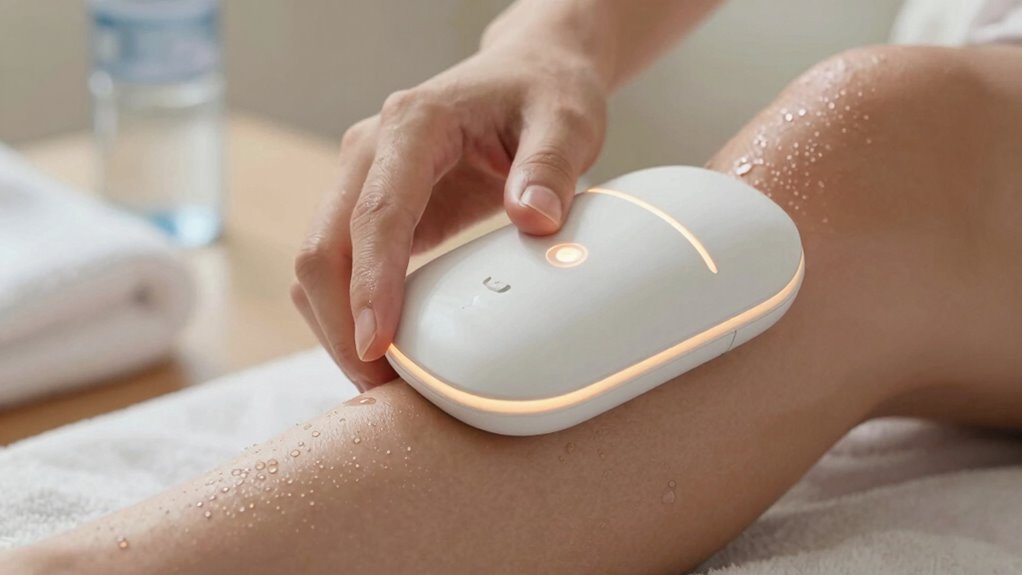

After exercise, wait until your body cools slightly before using heat features to prevent overheating and burns. Keep the temperature moderate and apply heat for only 15-20 minutes, placing a cloth between the heat source and your skin. Avoid heat over inflamed or swollen areas, and stop if you notice redness or discomfort. If you want to discover more tips on safe heat use after exercise, continue exploring these guidelines.

Get wellness gear delivered free with Prime
- Fast, free delivery on millions of items
- Prime Video, Amazon Music and more included
- Member-only deals all year
Key Takeaways
- Wait until your body cools slightly before applying heat to avoid overheating.
- Use moderate heat settings and limit application to 15-20 minutes to prevent skin damage.
- Place a cloth or towel between the heat source and your skin for safe insulation.
- Avoid heat application over areas that are still swollen, inflamed, or tender from exercise.
- Monitor your body’s response and remove heat immediately if you experience redness, discomfort, or sensation changes.
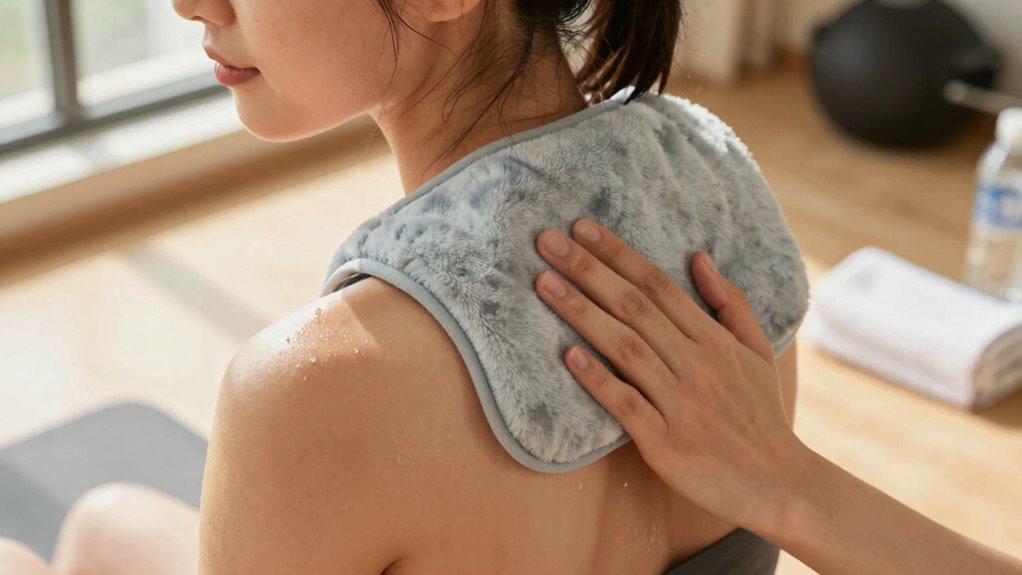
After a workout, your body is already warm, which can make adding heat features like heating pads or hot baths tempting. While heat can enhance muscle relaxation and help soothe soreness, it’s important to use these methods safely, especially when your body is already heated from exercise. Applying heat too soon or for too long can sometimes do more harm than good, increasing the risk of injury or skin irritation. The key is to balance the benefits of heat with cautious application.
Using heat after exercise can relax muscles but requires caution to prevent injury or skin irritation.
When you’re already warm from physical activity, heat can deepen muscle relaxation, easing tightness and reducing stiffness. This can make recovery more comfortable and promote better flexibility. However, since your muscles are more pliable post-exercise, adding heat should be done carefully to avoid overstretching or aggravating any minor strains. Keep your heat sources at a moderate temperature and limit the duration to avoid overheating your skin or tissues. Usually, 15 to 20 minutes is enough to enjoy the benefits without risking burns or excessive swelling.
Injury prevention is another critical reason to use heat wisely. While heat can help loosen muscles and improve blood flow, applying it too soon after intense activity might mask pain or discomfort, leading you to push too hard or ignore signs of potential injury. If you’re dealing with a recent injury, it’s best to wait until swelling subsides, then utilize heat to promote healing and reduce muscle tension. Make sure to place a cloth or towel between the heat source and your skin to prevent burns, especially since your skin may be more sensitive after sweating or exercise. Additionally, understanding body temperature regulation can help you better gauge when to apply heat and avoid overheating. Recognizing how your body responds to heat and exercise can help you prevent overheating and other discomforts. Listening to your body is essential. If you notice any discomfort, tingling, or redness, remove the heat immediately. Never fall asleep with a heating pad on, as prolonged exposure can cause burns or skin damage. It’s also wise to avoid applying heat directly over areas that are visibly swollen, inflamed, or injured, as this can worsen inflammation. Using proper heat application techniques can further reduce the risk of adverse effects and improve your recovery process.
electric heating pad for muscle recovery
As an affiliate, we earn on qualifying purchases.
As an affiliate, we earn on qualifying purchases.
Frequently Asked Questions
Can I Use Heat Features Immediately After Intense Exercise?
You can use heat features immediately after intense exercise, but do so carefully. Applying heat helps with muscle relaxation and can prevent injuries by increasing blood flow. However, if your muscles are still painfully sore or inflamed, wait until the discomfort subsides. Always listen to your body, use moderate heat, and limit application time to avoid burns or overheating, ensuring safe and effective recovery.
How Long Should I Wait Before Applying Heat Post-Workout?
Like a wise old sage, you should wait at least 15-20 minutes after exercise before applying heat. This pause allows your muscles to cool slightly, reducing the risk of overheating or burns. Applying heat too soon can hinder muscle relaxation and pain relief. Giving your body this brief rest guarantees your muscles recover effectively, promoting pain relief and helping to prevent injury.
Is It Safe to Use Heat on Sore Muscles Right After Exercising?
It’s generally safe to use heat on sore muscles right after exercising, as it promotes muscle relaxation and helps ease stiffness. Applying heat can also aid in injury prevention by increasing blood flow. However, make sure your muscles aren’t inflamed or swollen, and avoid applying heat for too long. Always listen to your body and stop if you experience discomfort, ensuring safe and effective relief.
What Temperature Settings Are Safest for Post-Exercise Heat Therapy?
The safest temperature settings for post-exercise heat therapy are between 104°F and 113°F (40°C to 45°C). You should prioritize temperature regulation to prevent burns or skin sensitivity issues. Always test the heat source first, keep the heat on for no more than 15-20 minutes, and avoid extreme temperatures. If your skin feels uncomfortable or begins to turn red, reduce the heat immediately. This approach guarantees safe, effective relief.
Can Heat Therapy Replace Stretching or Other Recovery Methods?
Heat therapy can’t replace stretching or other recovery methods, but it complements them by promoting muscle relaxation and improving blood circulation. When you use heat, you loosen tight muscles, reducing soreness and stiffness. However, stretching and active recovery are essential for restoring flexibility and preventing injuries. Combining heat therapy with these methods enhances overall recovery, making your post-exercise routine more effective. Always listen to your body and avoid overusing heat.
As an affiliate, we earn on qualifying purchases.
Conclusion
Using heat features after exercise can soothe muscles and boost recovery, but safety is key. Remember, overusing heat can cause burns or dehydration, so always follow instructions and limit your sessions. Did you know that heat therapy can increase circulation by up to 30%? This highlights how beneficial proper heat use can be for healing, but only if done responsibly. Stay mindful, listen to your body, and enjoy the benefits safely for a quicker, more comfortable recovery.
hot water bottle with cloth cover
As an affiliate, we earn on qualifying purchases.
As an affiliate, we earn on qualifying purchases.
infrared heat wrap for sore muscles
As an affiliate, we earn on qualifying purchases.
As an affiliate, we earn on qualifying purchases.
Fall Picks
fall essentials
As an affiliate, we earn on qualifying purchases.