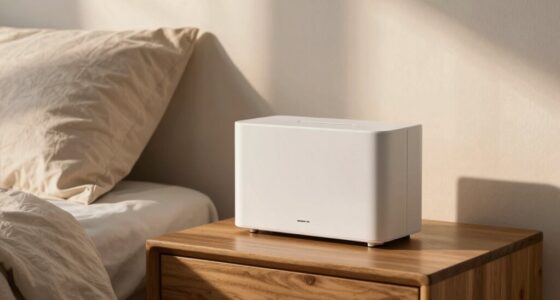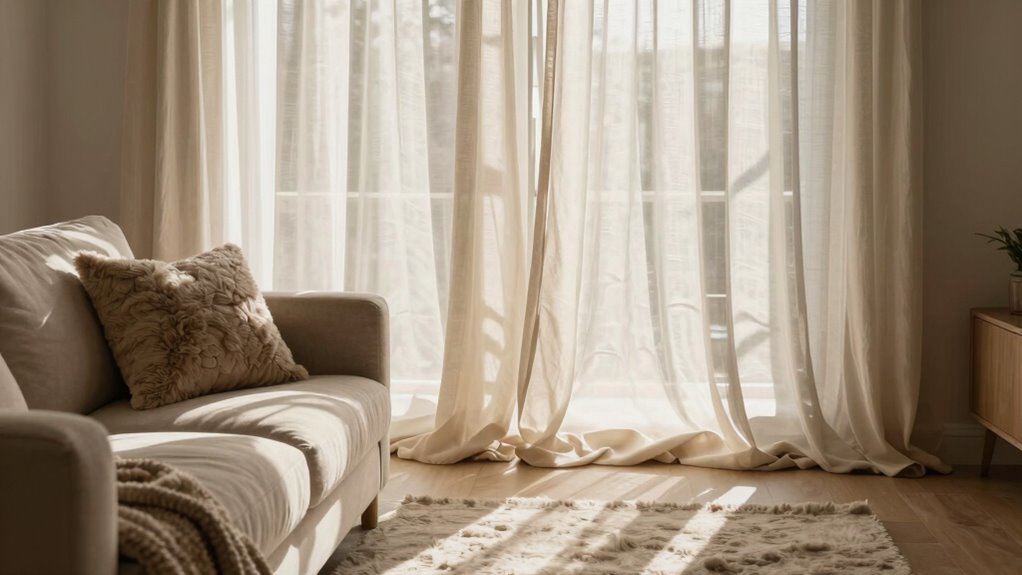

To calm a bright, loud room, layer thick, dark curtains made from materials like velvet or blackout fabric to block light and absorb sound. Add soft surfaces such as rugs, plush furniture, or fabric wall hangings to dampen noise and reduce echo. Combining these with diffused lighting creates a cozy, tranquil atmosphere. By implementing these strategies, you’ll transform the space into a peaceful retreat—continue to discover how to optimize your room’s comfort.

Get wellness gear delivered free — and shop member deals
- Fast, free delivery on millions of items
- Access to Prime Big Deal Days deals on October 6–7
- Prime Video, Amazon Music and more included
Key Takeaways
- Hang thick, layered blackout curtains to block out excessive light and absorb sound vibrations efficiently.
- Incorporate soft furnishings like rugs, plush furniture, and fabric wall hangings to dampen echo and noise.
- Use adjustable curtains and dimmable lighting to control brightness and minimize external noise interference.
- Combine curtains with acoustic panels or foam to enhance sound absorption and create a calmer environment.
- Opt for eco-friendly, sustainable materials in curtains and soft surfaces for a healthier, more calming space.
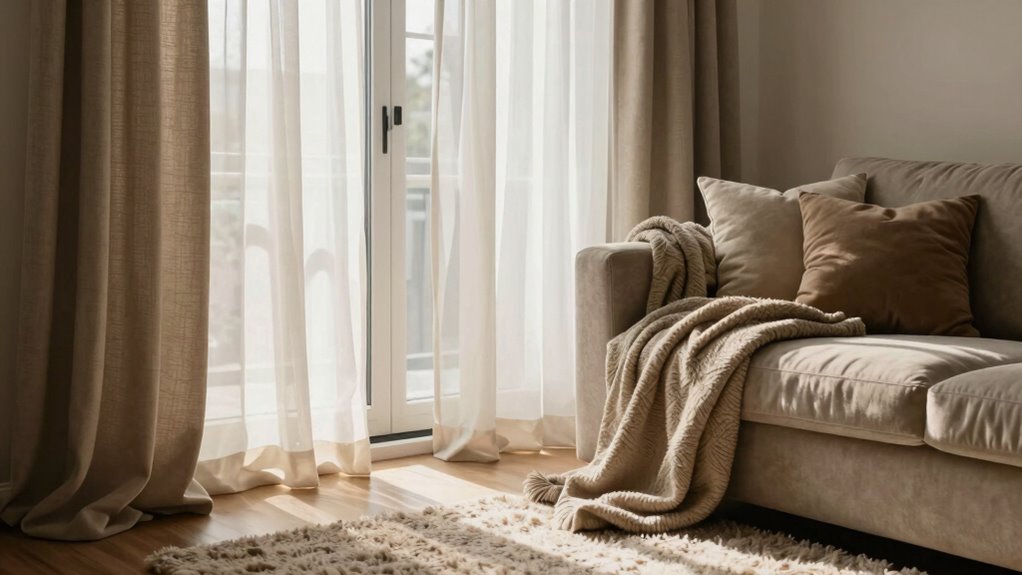
When a room feels too bright and noisy, adding curtains and soft surfaces can make a significant difference in creating a calmer, more comfortable space. To effectively reduce noise and control light, you should focus on soundproofing techniques and light control strategies. These methods work together to diminish external distractions and create a more peaceful environment.
Adding curtains and soft surfaces helps create a calmer, more peaceful room by reducing noise and controlling light.
For soundproofing, start by installing thick, heavy curtains made from dense materials like velvet or blackout fabric. These curtains absorb sound waves and prevent noise from bouncing around the room. Consider layering curtains—placing a blackout curtain behind a decorative one—so you maximize sound absorption and light blocking. Additionally, soft surfaces like rugs, plush furniture, and fabric wall hangings help dampen sound by absorbing vibrations. You might also add acoustic panels or foam to walls or ceilings if noise pollution is significant, further reducing echo and external sounds. Understanding sound absorption techniques can help you choose the most effective materials for your space. Incorporating soundproofing materials that are eco-friendly and sustainable can also enhance your room’s comfort while supporting environmentally conscious choices. Using eco-friendly soundproofing options can contribute to a healthier indoor environment. Moreover, selecting sustainable materials for your soft furnishings ensures your efforts to calm the room are environmentally responsible.
Light control strategies are equally important for calming a bright room. Use window treatments that can be easily adjusted to block out sunlight or diffuse harsh rays. Blackout curtains or shades are excellent choices because they not only darken the room but also contribute to soundproofing. When choosing curtains, look for those with thermal or insulating properties, which help regulate temperature and block noise more effectively. If you want to fine-tune lighting, incorporate dimmable bulbs or soft, warm-colored lamps. These options allow you to create a cozy atmosphere that’s less overwhelming visually and emotionally.
Combining soundproofing techniques with light control strategies amplifies the calming effect in your space. For example, closing blackout curtains during the day minimizes sunlight and external noise, creating a more subdued environment. During quieter hours, opening these curtains slightly or using sheer curtains lets in natural light without inviting too much noise or brightness, giving you control over the room’s ambiance. Soft surfaces like cushions, throw blankets, and padded furniture also help absorb sound, reducing echo and making the room feel more intimate and relaxed.
Ultimately, the goal is to layer these approaches to craft a space that’s both visually and acoustically soothing. By focusing on effective soundproofing techniques and light control strategies, you transform a loud, glaring room into a tranquil retreat. Incorporating biodiversity principles and sustainable materials in your choice of curtains and soft furnishings can also enhance the overall comfort and eco-friendliness of your space. The right combination of curtains and soft surfaces not only muffles unwanted noise but also diffuses light, helping you feel more centered and at ease in your environment.
As an affiliate, we earn on qualifying purchases.
Frequently Asked Questions
Can Curtains Help Reduce Heat in Addition to Noise?
Yes, curtains can help reduce heat in addition to noise. Thermal curtains, also known as curtain insulation, are designed with thick, insulating fabrics that block out heat. When you close them, they prevent warm air from escaping in winter and keep heat out during summer, making your room more energy-efficient. So, by using thermal curtains, you can enjoy a quieter, cooler, and more comfortable space.
What Materials Are Best for Sound Absorption?
Did you know soft materials can absorb up to 80% of sound? For the best sound absorption, choose fabrics with varied textures like velvet or heavy drapes. Acoustic panels made from foam or mineral wool are also highly effective, especially in larger rooms. Combining these materials with curtains and soft surfaces creates a layered approach, markedly reducing noise and making your space calmer and more comfortable.
How Do I Choose the Right Curtain Length and Width?
To choose the right curtain length and width, start by measuring your window accurately for proper curtain installation. For full coverage and better sound absorption, opt for curtains that extend beyond the window frame on all sides. Select fabric that’s thick and soft, like velvet or heavy cotton, which helps dampen sound and light. Make certain the curtains are wide enough—about 1.5 to 2 times the window width—for a full, plush look.
Do Soft Surfaces Affect Indoor Air Quality?
Soft surfaces can influence indoor air quality by trapping dust, allergens, and VOC emissions from furniture and fabrics. While they help reduce noise and improve acoustics, they may also harbor pollutants if not cleaned regularly. You should vacuum and dust soft surfaces frequently to maintain air filtration and minimize allergen buildup, ensuring your space stays healthier and fresher. Proper maintenance keeps soft surfaces beneficial without negatively impacting indoor air quality.
How Often Should I Clean or Replace Soft Furnishings?
Did you know soft furnishings can trap up to 87% of airborne particles? You should follow a regular cleaning schedule—vacuum curtains and upholstery weekly to keep allergens at bay. Replace soft surfaces like rugs and cushions every 3-5 years, or sooner if they show signs of wear or stains. Staying consistent with cleaning and knowing replacement frequency helps maintain a calmer, healthier space.
As an affiliate, we earn on qualifying purchases.
Conclusion
By adding curtains and soft surfaces, you transform a noisy, bright room into a cozy retreat. Think of these elements as the room’s calming lullaby, gently muffling echoes and softening harsh light. With a few simple touches, you create a sanctuary that feels as warm and inviting as a hug. So, don’t wait—let your space breathe easier and turn chaos into calm, making your room a peaceful haven you’ll love coming home to.
soft area rugs for noise reduction
As an affiliate, we earn on qualifying purchases.
As an affiliate, we earn on qualifying purchases.
As an affiliate, we earn on qualifying purchases.
Fall Picks
fall essentials
As an affiliate, we earn on qualifying purchases.