To reduce massage chair noise at home, start by tightening loose screws and securing motor mounts to prevent rattling. Lubricate moving parts like rollers and belts with silicone-based lubricant for smoother, quieter operation. Place your chair on a soft surface such as a rubber mat to dampen vibrations and position it away from walls to reduce sound reflection. Use soundproofing options like acoustic panels or heavy curtains. Keep low settings for speed and intensity, and make certain all components are properly assembled. These tips can help create a quieter, more relaxing environment.
Key Takeaways
- Regularly tighten screws and secure motor mounts to minimize vibrations and rattling sounds.
- Lubricate rollers, belts, and moving parts with silicone-based lubricant for smoother, quieter operation.
- Place the chair on a soft surface and position it away from walls to absorb vibrations and reduce noise reflection.
- Use acoustic panels, foam padding, or heavy curtains in the room to dampen sound and prevent echo.
- Lower massage intensity and speed settings during use or maintenance to decrease operational noise levels.
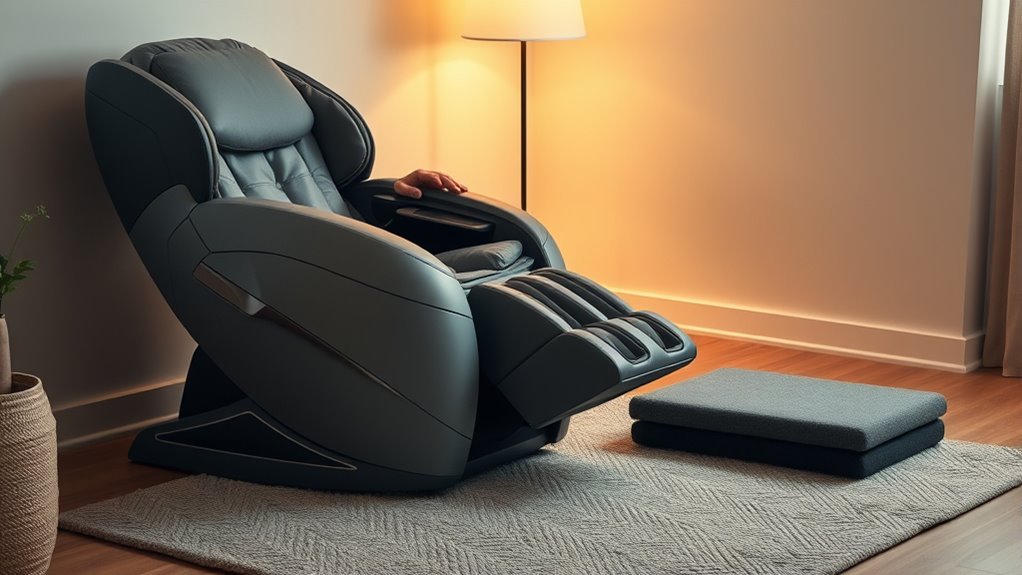
If your massage chair is making more noise than usual, it can disrupt your relaxation and become frustrating. Fortunately, there are practical ways to reduce the noise, especially by focusing on your chair’s massage technology and soundproofing methods. First, understanding how your massage technology operates can help you identify potential sources of noise. Many massage chairs use motors, rollers, and air pressure systems, all of which can generate sound over time. Regular maintenance, such as tightening loose screws or lubricating moving parts, can considerably cut down on unnecessary noise. Applying a silicone-based lubricant to the rollers and tracks keeps the mechanical components running smoothly and quietly. Additionally, checking the motor mounts and ensuring they are secure can prevent vibrations that amplify noise. Incorporating positive energy and a calm mindset during maintenance can also contribute to a quieter experience. Soundproofing methods are also essential in creating a more peaceful environment. If your space allows, placing the chair on a soft surface like a rubber mat or a thick rug can dampen vibrations that travel through the floor and increase noise levels. You might also consider positioning the chair away from shared walls or partitions, which can act as soundboards, amplifying the noise. Using acoustic panels or foam padding around the area can absorb sound and prevent it from echoing, making your massage sessions quieter. Even simple measures like closing doors and windows or adding heavy curtains can help contain the noise within your space. Another effective tip involves inspecting and replacing worn-out parts. Over time, components like rollers or belts may become worn or loose, resulting in louder operation. Replacing these parts with manufacturer-approved replacements can restore quiet performance. If your massage chair has a feature for adjusting massage intensity or speed, try lowering these settings. Sometimes, higher intensity or faster movements can produce more noise, so dialing back the settings might make a noticeable difference. Additionally, ensure that the chair is placed on a level surface; uneven positioning can cause unnecessary vibrations and rattling sounds. Finally, consider investing in additional soundproofing accessories designed specifically for electronic devices. Some companies sell enclosures or covers that can be placed around the chair to contain noise. While this might involve some initial setup, it can provide a more insulated environment, especially if you’re sensitive to noise or want a more serene space. By combining proper maintenance of your massage technology with effective soundproofing methods, you can enjoy the benefits of your massage chair without the distraction of excess noise. This way, your relaxation remains uninterrupted and truly soothing.
Frequently Asked Questions
Can Soundproofing Materials Effectively Quiet My Massage Chair?
Soundproofing materials can effectively reduce your massage chair noise if you choose the right ones. Look for materials with high soundproofing effectiveness, like dense foam or mass-loaded vinyl, which absorb and block sound. Additionally, opt for durable materials that withstand wear and won’t deteriorate over time. Proper installation is key; when done correctly, soundproofing can markedly quieter your massage chair and improve your overall experience.
How Often Should I Perform Maintenance to Minimize Noise?
Don’t wait for problems to pile up; a consistent maintenance schedule keeps noise levels down. You should perform routine checks and lubricate moving parts every 3 to 6 months, depending on usage. Incorporate noise reduction techniques like tightening loose screws or replacing worn components. Regular upkeep prevents small issues from becoming loud, ensuring your massage chair remains quiet and relaxing. Staying proactive is the best way to keep noise at bay.
Are Certain Massage Chair Models Quieter Than Others?
Yes, some massage chair models are quieter than others. Look for models with advanced massage technology designed for smooth, silent operation, and good noise insulation to minimize sound during use. Reading reviews and product specifications helps identify these quieter options. Choosing a chair with noise-reducing features guarantees a more relaxing experience without disruptive noise, especially if you value peace and quiet in your home.
Does the Placement of the Chair Affect Noise Levels?
Yes, the placement of your massage chair affects noise levels. You should place it on a stable, flat surface at surface level to minimize vibrations and noise. Avoid uneven floors or placing it on thick carpets, which can amplify sound. By ensuring the chair sits firmly on a level floor, you’ll reduce rattling and operational noise, making your massage experience quieter and more enjoyable.
Can Using Additional Padding Reduce Massage Chair Noise?
Think of your massage chair as a delicate instrument, where extra padding acts like a soft whisper. Using a massage pad or cushioning material can absorb vibrations, reducing noise. Just like adding a plush layer to a drum, this extra layer dampens sound, making your experience quieter. Place padding under or around the chair’s base to effectively minimize noise and enjoy peaceful, relaxing massages at home.
Conclusion
Imagine sinking into your massage chair, feeling the gentle hum now softened to a whisper. With a few simple tips, you can transform your space into a peaceful retreat, free from distracting noises. Picture yourself relaxing fully, the soothing silence wrapping around you like a warm blanket. By taking these steps, you’ll create a serene haven where every massage feels even more calming and restorative. Enjoy your quiet, blissful moments at home.