To guarantee effective noise levels and placement safety, regularly record noise data with calibrated sound meters and document high-risk zones. Use your field notes to identify problem areas, then strategically position safety signage and barriers at eye level and clear spots. Implement soundproofing solutions and maintain equipment to keep noise manageable. Consistent documentation and tailored safety measures are key—continue exploring how to optimize your workplace safety strategies for long-term success.
Key Takeaways
- Systematically record noise levels and source locations during various shifts to identify consistent patterns and high-risk areas.
- Document placement of safety signage and barriers, noting visibility, accessibility, and effectiveness in real operational contexts.
- Use field notes to track equipment noise emissions and maintenance impacts over time, informing targeted noise reduction measures.
- Record staff observations and responses to noise hazards to evaluate communication effectiveness and safety training outcomes.
- Regularly review and analyze field notes to adjust noise mitigation strategies and enhance overall safety protocols.
Understanding the Importance of Noise Monitoring in the Workplace

Understanding the significance of noise monitoring in the workplace is essential for maintaining a safe and healthy environment. Noise pollution can cause serious health issues, including hearing loss, stress, and reduced concentration. By actively monitoring noise levels, you can identify areas where exposure exceeds safe limits and take necessary precautions. Proper noise monitoring helps you implement effective hearing protection measures, ensuring workers are safeguarded against long-term damage. It also supports compliance with safety regulations, preventing costly fines or shutdowns. Recognizing the importance of continuous noise assessment enables you to create a safer workspace. When you stay aware of noise levels, you empower your team to use hearing protection correctly and consistently, reducing health risks and fostering a culture of safety. Regular assessments ensure ongoing compliance and help detect evolving hazards before they become serious issues.
Essential Equipment for Accurate Noise Measurement
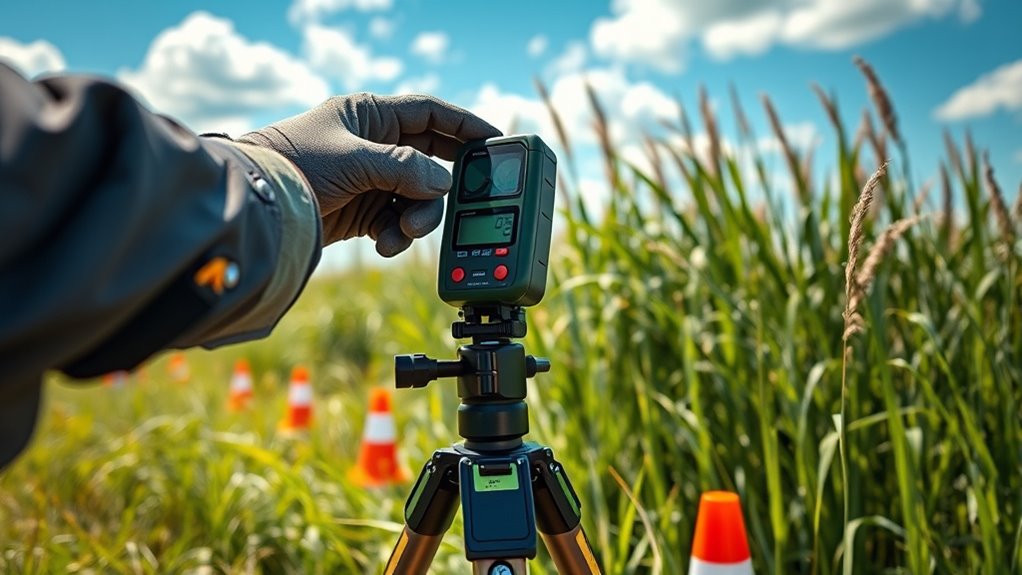
To get accurate noise measurements, you need the right equipment. Calibrated sound level meters guarantee your readings are precise, while proper microphone placement is key to reliable data. Don’t forget to wear protective gear to stay safe during your measurements. Using appropriate calibration ensures your device remains accurate over time.
Calibrated Sound Level Meters
Calibrated sound level meters are vital tools for guaranteeing accurate noise measurements in any environment. To maintain their precision, you need to follow proper calibration procedures regularly. This process adjusts the device to a known standard, preventing measurement drift over time. When calibrating, pay close attention to sound frequency, ensuring the meter responds correctly across the spectrum. Accurate calibration helps you trust the readings, especially when evaluating compliance or safety thresholds. Using a reliable calibration method, such as a calibrator device, guarantees your measurements are consistent and precise. Regularly checking and calibrating your sound level meter is essential to avoid errors caused by environmental factors or device wear. This diligence ensures your noise assessments are both accurate and trustworthy. Additionally, incorporating AI-driven solutions in calibration processes can further enhance measurement reliability and efficiency.
Proper Microphone Placement
Proper microphone placement is crucial for obtaining accurate noise measurements, as even small differences in position can substantially impact the results. You should carefully consider microphone positioning to guarantee ideal sound capture. Place the microphone at the appropriate height and distance from the noise source, avoiding obstructions or reflective surfaces that could distort readings. Keep it steady and at a consistent angle to prevent variations in sound capture. Position the microphone close enough to capture the true noise level but not so close that it causes distortion or overload. Remember, accurate sound capture depends on precise placement. Adjust and test the microphone’s position before recording to ensure you’re capturing the most representative noise data possible. Proper placement guarantees reliable, meaningful measurement results. Additionally, be mindful of headphone jacks and their compatibility to ensure clear audio monitoring during testing.
Use of Protective Gear
Using protective gear is essential to guarantee your safety and the accuracy of noise measurements. Ear protection, such as earplugs or earmuffs, helps prevent hearing damage from high noise levels and minimizes measurement interference caused by ambient sounds. Safety gear like gloves, helmets, and eye protection can shield you from physical hazards in noisy environments. Always wear ear protection when working near loud machinery or construction sites, as prolonged exposure can harm your hearing. Proper safety gear ensures you remain focused and safe, allowing you to take precise readings without distractions or risk. Remember, safeguarding yourself with the right equipment not only protects your health but also enhances the reliability of your noise data. Prioritize safety gear to conduct accurate, safe noise measurements. Additionally, understanding noise levels and proper placement techniques can significantly improve measurement accuracy.
Establishing Effective Noise Level Baselines
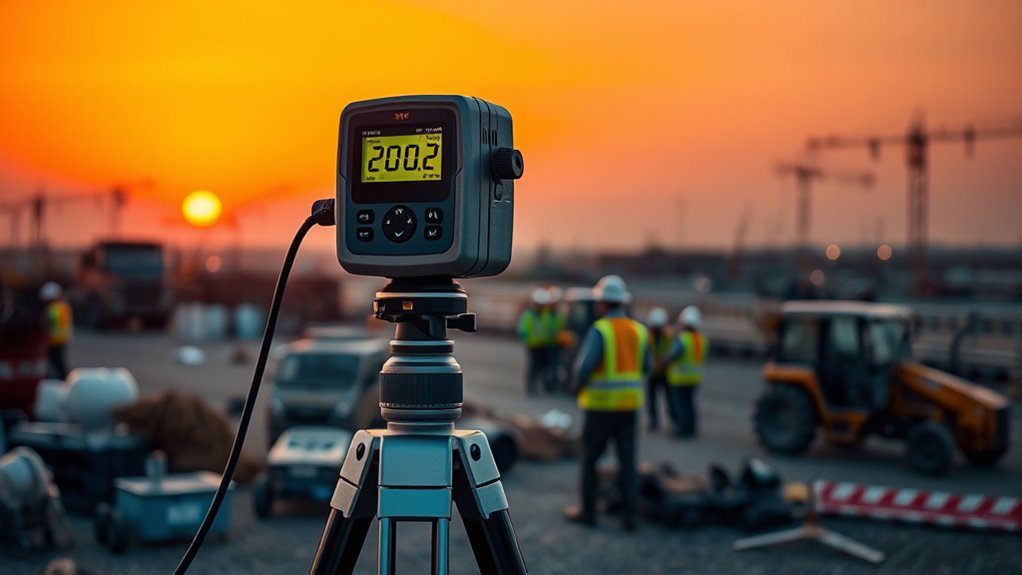
Before setting noise level standards, you need to establish accurate baselines that reflect your actual environment. This means measuring the typical noise pollution levels during different times and activities. Use reliable sound level meters to gather data across various locations and conditions, ensuring your readings represent real-world conditions. These baselines help you understand the ambient noise and identify potential problem areas. Incorporate acoustic design principles to optimize your environment, reducing unnecessary noise and creating safe, comfortable spaces. Accurate baselines also provide a reference point for future comparisons, guiding adjustments and improvements. Without a solid understanding of existing noise levels, your efforts to manage noise pollution and enhance safety won’t be effective. Proper baseline data is the foundation for effective noise control strategies. Additionally, understanding how AI security vulnerabilities could impact environmental monitoring systems emphasizes the importance of robust data collection and analysis methods.
Best Practices for Recording and Analyzing Field Data

To guarantee your field data accurately reflects environmental noise levels, it’s essential to follow best practices in recording and analyzing the data. Use quality sound meters with proper calibration to measure noise pollution effectively. Position your devices away from sources of interference, and ensure they’re placed in locations that represent typical sound environments. Record at consistent times and conditions to allow for reliable comparisons. When analyzing data, focus on identifying patterns and peak noise levels, paying attention to how sound insulation might influence measurements. Document all settings and environmental conditions, so your findings are transparent and reproducible. Proper recording and analysis help you distinguish real noise pollution issues from temporary anomalies, enabling more accurate assessments of safety and placement strategies. Incorporating advanced automation technologies can further enhance the accuracy and efficiency of your data collection process.
Identifying High-Risk Areas for Placement Safety Concerns

Identifying high-risk areas for placement safety concerns requires a targeted approach to pinpoint locations where hazards are most likely to occur. Focus on high risk zones by analyzing past incident reports, noting recurring issues, and observing environmental factors. Look for hazard hotspots such as uneven surfaces, restricted access points, or areas with poor visibility. Use data and visual inspections to map out these zones clearly, prioritizing areas where accidents or near-misses have happened. Regularly update your assessments, especially after changes in layout or operations. By accurately identifying these danger zones, you can implement focused safety measures that reduce risks and protect everyone involved. This proactive approach guarantees that safety concerns are addressed before incidents happen, creating a safer environment for all.
Strategies for Communicating Noise Risks to Staff

Effective communication of noise risks is essential for ensuring staff awareness and safety. To achieve effective noise communication, use clear, direct language when discussing potential hazards. Incorporate visual aids like signage or charts to reinforce key messages and make risks more tangible. Regular staff education sessions help keep everyone informed about noise levels and safety protocols, fostering a proactive safety culture. Encourage open dialogue so staff feel comfortable voicing concerns or asking questions about noise hazards. Consistent messaging across all communication channels ensures everyone receives the same information, reducing misunderstandings. Additionally, utilizing effective communication methods can significantly improve staff understanding and retention of safety information. By prioritizing staff education and transparent communication, you create an environment where noise risks are understood and managed effectively, minimizing accidents and promoting a safer workplace.
Implementing Practical Noise Mitigation Solutions
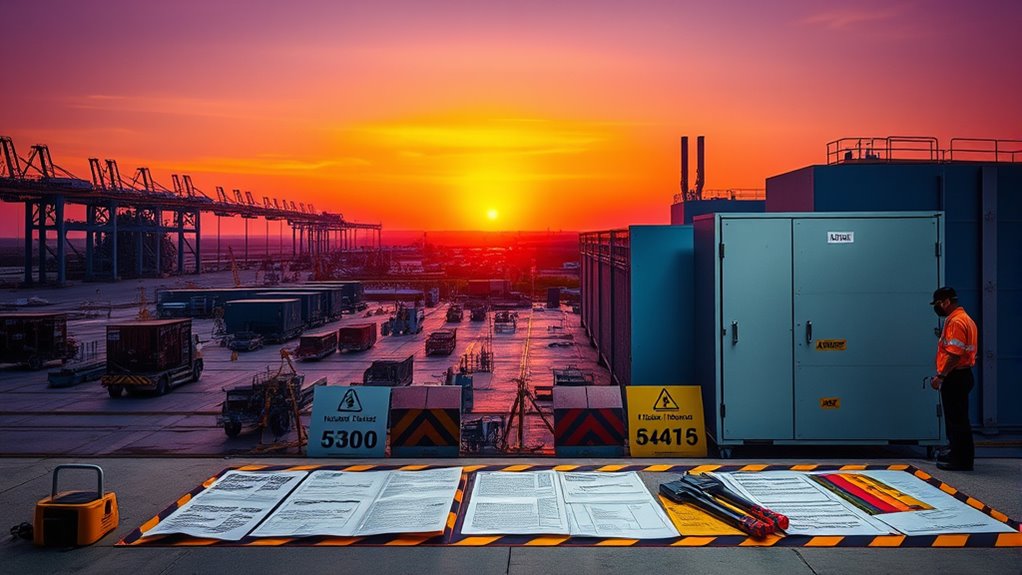
Building on your efforts to communicate noise risks clearly, implementing practical noise mitigation solutions can considerably reduce hazards in the workplace. Start by evaluating noise levels and identifying the main sources of sound. Use effective soundproofing techniques, such as installing acoustic panels, barriers, or enclosures, to contain loud machinery or equipment. Consider adding soft materials like carpets, curtains, or foam to absorb sound and minimize reverberation. Regular maintenance of machinery also plays a crucial role in noise reduction, as worn-out parts often produce more noise. Additionally, strategic placement of noisy equipment away from high-traffic or quiet zones can help. These measures not only protect staff but also create a safer, more comfortable environment conducive to productivity. Incorporating environmental considerations into your planning can further enhance the sustainability and safety of your workspace.
Ensuring Proper Placement of Safety Equipment and Signage

Proper placement of safety equipment and signage is essential to guarantee quick access and visibility during emergencies. You should position visual signage at eye level and in high-traffic areas, ensuring workers can easily identify hazards even amid noise. Safety barriers should be placed around dangerous zones, clearly marking boundaries and preventing accidental entry. Use contrasting colors and large fonts on signs to enhance visibility, especially in noisy environments. Regularly inspect safety barriers to confirm they remain sturdy and correctly positioned. Avoid cluttering spaces with multiple signs; instead, prioritize key information where it’s needed most. Proper placement not only facilitates rapid response but also reinforces safety protocols, reducing accidents and ensuring everyone knows where safety equipment is located when seconds count. Additionally, understanding the safety of electric heated mattress pads can help avoid potential hazards related to electrical safety in the workplace.
Training Staff to Recognize and Respond to Noise-Related Hazards
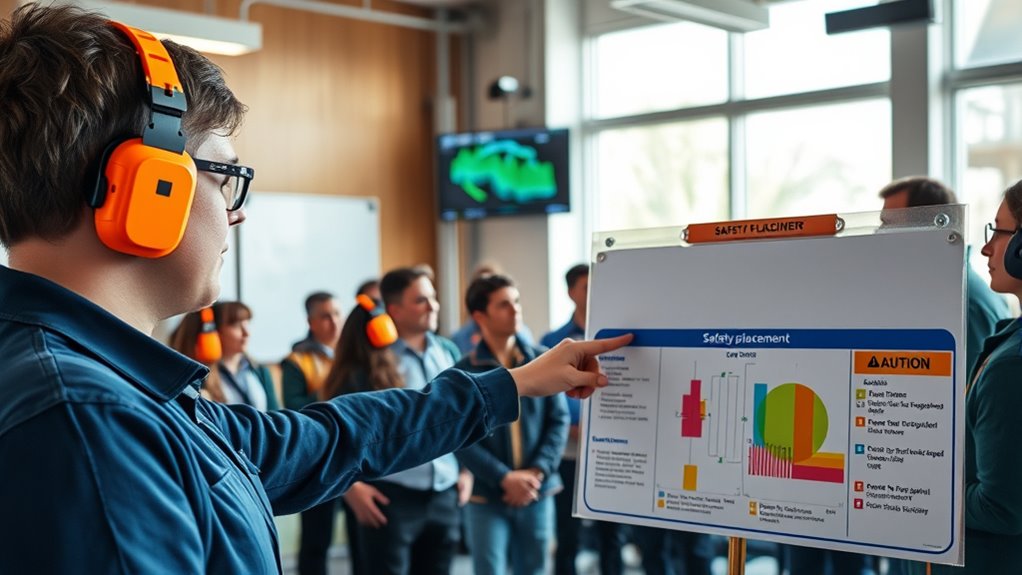
Clear signage and strategic placement of safety barriers help prevent accidents, but they only work if your team knows how to recognize and respond to noise-related hazards. Staff training is essential for building noise hazard awareness, ensuring everyone understands potential risks. Conduct regular training sessions that cover identifying loud sounds, understanding their impact, and prompt response actions. Use practical exercises to simulate real noise hazards, reinforcing learning. To help your team stay prepared, consider this approach:
| Idea | Implementation |
|---|---|
| Recognize noise hazards | Identify signs of dangerous noise levels |
| Respond promptly | Use communication tools and safety barriers |
| Reinforce training | Regular refreshers and scenario drills |
Using Field Notes to Improve Long-Term Safety Policies
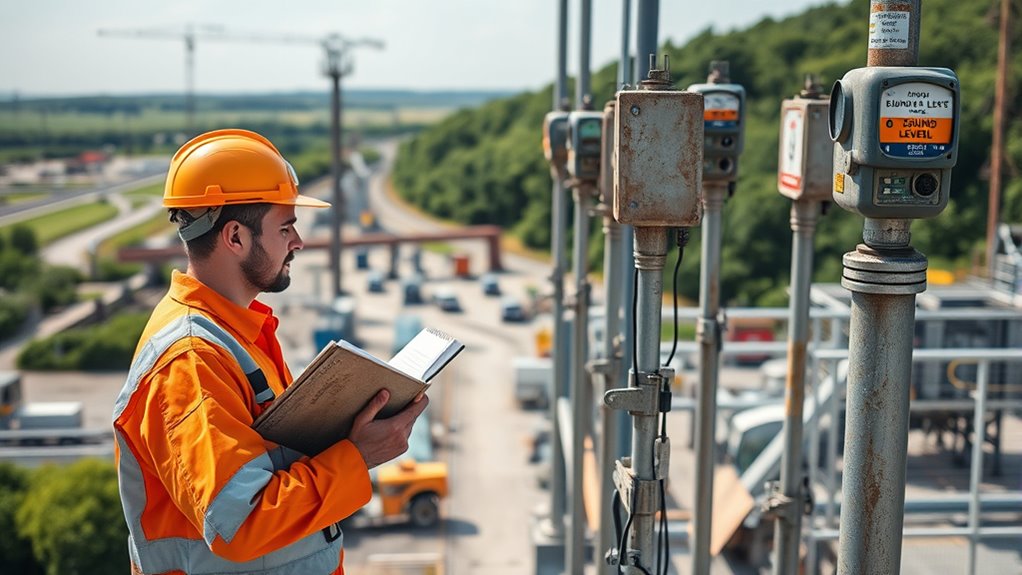
Using field notes effectively transforms everyday observations into valuable data that can shape and strengthen your long-term safety policies. By systematically recording noise levels and placement issues, you identify patterns that highlight where noise reduction measures are most needed. These notes also reveal gaps in communication strategies, helping you develop clearer, more effective ways to inform staff about hazards. Incorporate this data into your policies to prioritize noise mitigation and ensure proper placement safety protocols. Regularly reviewing your field notes allows you to refine procedures, making safety measures more proactive rather than reactive. Over time, this approach fosters a safer environment, improves communication, and reduces noise-related hazards, supporting sustained safety improvements across your operations.
Frequently Asked Questions
How Often Should Noise Levels Be Re-Evaluated in the Workplace?
You should re-evaluate noise levels through regular noise monitoring and safety audits at least every six months or whenever there’s a significant change in your workplace, such as new equipment or layout adjustments. Frequent re-evaluations ensure ongoing compliance and safety. Keep a proactive approach by documenting findings and adjusting noise controls as needed, helping protect your team from noise-related hazards and maintaining a safer, healthier environment.
What Are the Best Methods to Train Staff on Noise Safety?
You should train staff on noise safety using clear communication strategies and visual cues. Start with hands-on demonstrations, emphasize the importance of hearing protection, and use signs or color-coded visual cues to reinforce safety messages. Regularly review procedures and encourage questions. Incorporate visual cues into daily routines, so staff quickly recognize hazards. Consistent training keeps everyone aware and prepared, ensuring a safer work environment.
How Can Field Notes Help in Long-Term Safety Policy Development?
Field notes are essential for long-term safety policy development because they document noise mapping and safety audits over time. By tracking noise levels and safety issues, you can identify patterns and areas needing improvement. These notes help you make informed decisions, refine safety protocols, and guarantee policies adapt effectively. Regularly reviewing your field notes ensures your safety strategies stay relevant, all-encompassing, and proactive, ultimately protecting your team better.
What Specific Signs Indicate Potential Placement Safety Hazards?
Like a warning light on a dashboard, signs of wear on equipment or sudden malfunctions signal potential placement hazards. You should watch for frayed wires, loose fittings, or unusual noises, which often indicate underlying safety issues. These signs act as red flags, prompting you to inspect the area thoroughly before proceeding. Recognizing these indicators helps prevent accidents, ensuring a safer environment for everyone involved.
How Do Different Environments Impact Noise Measurement Accuracy?
Different environments can substantially impact noise measurement accuracy because environmental interference, like wind, echoes, or background sounds, distorts readings. You need to make certain your device is properly calibrated for each setting, adjusting for specific environmental factors. By doing so, you minimize measurement errors, guaranteeing your noise levels are precise. Always check calibration regularly and account for environmental interference to get the most accurate data possible.
Conclusion
By monitoring noise levels, mapping hazards, and meticulously managing placements, you create a safer, sounder workspace. Stay vigilant, validate your measures, and voice concerns early. Implementing insightful inspections and intelligent interventions transforms chaos into clarity. Remember, consistent communication and careful calibration cultivate confidence and control. Ultimately, your proactive approach promotes peace, prioritizes protection, and paves the way for a safer, sounder site—because safety starts with your diligent, determined dedication.