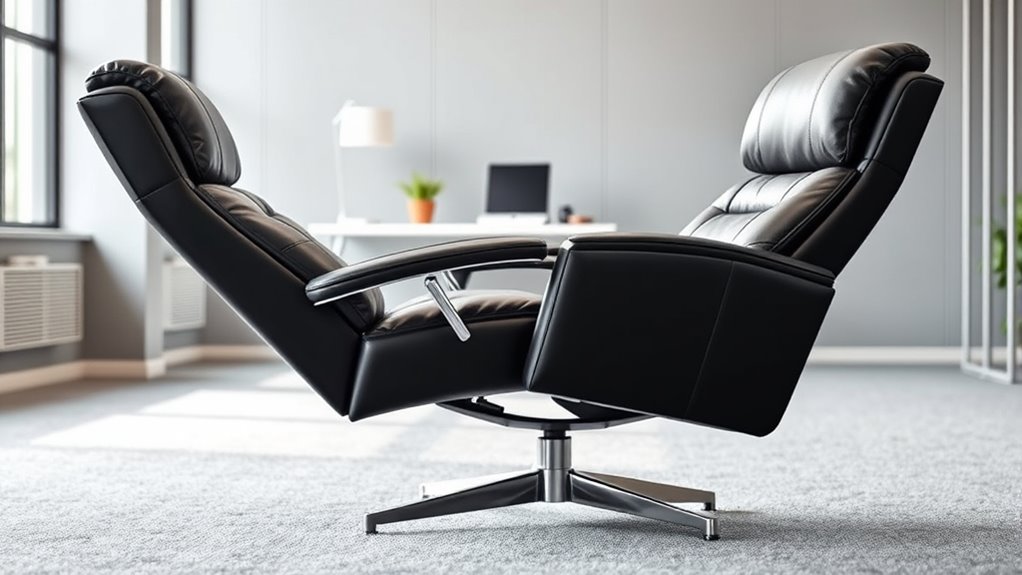

To guarantee your recliner operates safely and smoothly, you should leave at least 12 to 18 inches of space behind it. This clearance allows the chair to fully recline without hitting nearby furniture or walls and provides enough room for adjustable headrests and lumbar supports to move properly. Proper space also helps avoid damage to the mechanism and reduces safety risks. Continue exploring to find out how to measure your space accurately and optimize comfort.
Key Takeaways
- Leave at least 12 to 18 inches of space behind the recliner for smooth operation and full recline.
- Ensure sufficient clearance for adjustable headrests and lumbar supports to extend fully without obstruction.
- Consider the recliner’s size and features; complex functions may require extra space.
- Avoid placing furniture or objects too close behind the chair to prevent interference with movement.
- Proper space planning reduces wear on mechanisms and enhances safety during adjustment.
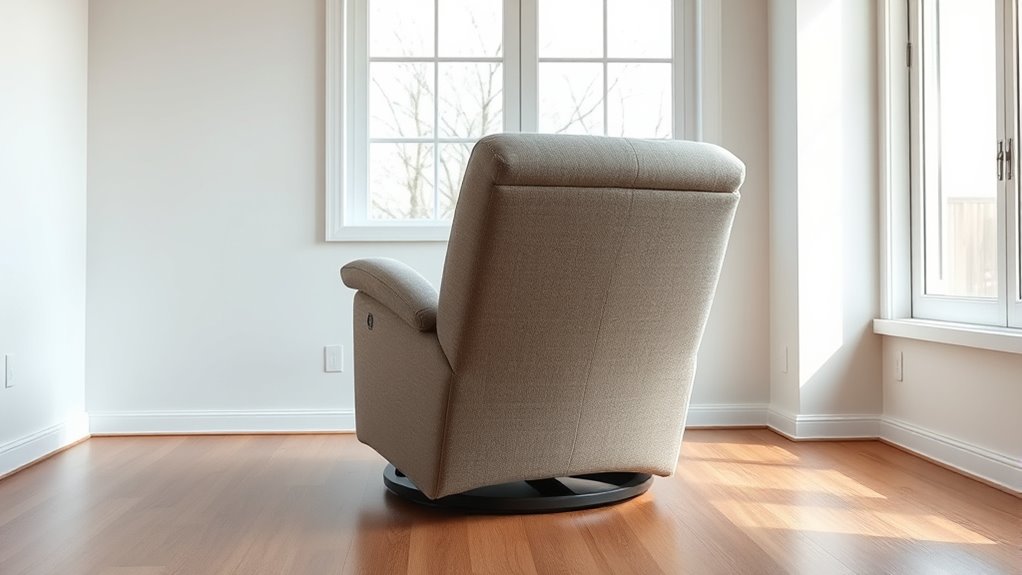
Recline clearance is the essential space needed behind a recliner to guarantee smooth operation and safe movement. When you’re setting up your seating area, understanding how much space to leave behind your chair can prevent frustrating accidents and ensure your recliner functions perfectly. If your recliner has adjustable headrests, you’ll want to make sure there’s enough room for them to extend fully without hitting the wall or nearby furniture. Adequate clearance allows you to adjust the headrest to your preferred height comfortably, which is especially important if you like to read or watch TV while reclining. Without proper space, you might find it difficult to fully extend or adjust these features, limiting your comfort and convenience.
In addition to headrests, lumbar support is a key feature that can influence how much room you need behind your recliner. Many modern recliners come with built-in or adjustable lumbar support to provide better back comfort, especially during long periods of sitting. When you set up your chair, consider that the lumbar support mechanism may extend or move when you adjust the seat or recline. This means you need enough clearance not just for the chair’s physical movement but also for the additional components that support your lower back. If the space behind your recliner is too tight, the lumbar support could get restricted, reducing its effectiveness and your overall comfort.
The general rule of thumb is to leave at least 12 to 18 inches of space behind the recliner. This distance allows the chair to fully recline without obstruction and gives you room to access adjustment features like the headrest and lumbar support controls. When measuring, keep in mind that some recliners with complex features, such as built-in massage functions or adjustable headrests, may require even more space. Also, if your setup includes furniture or other objects close by, factor in their size and how they might interfere with the recliner’s movement. Additionally, considering the mechanisms involved in recliner operation can help ensure your setup accommodates all moving parts comfortably.
Proper recline clearance isn’t just about comfort; it’s also about safety. A lack of space can cause the chair to jam or damage the mechanism, which might lead to costly repairs or accidents. By taking the time to measure and plan your space, you ensure that your recliner’s adjustable headrests, lumbar support, and reclining functions work smoothly and safely. Ultimately, having enough room behind your chair enhances your overall experience, making every moment of relaxation more enjoyable and stress-free.
Frequently Asked Questions
Can Recline Clearance Vary for Different Chair Types?
Yes, recline clearance can vary based on different chair types. You need to take into account chair stability and the specific recline mechanisms involved. For example, ergonomic office chairs with advanced recline functions might need more space to operate smoothly, while simpler models require less. Always check the manufacturer’s guidelines for your chair’s recline range and make sure you have enough space behind to prevent tipping or damage when reclining.
How Do I Measure the Correct Clearance for My Space?
To measure the correct clearance for your space, start by using measurement tips like a tape measure or ruler. Check the clearance guidelines for your specific chair type, which usually recommend 4 to 6 inches behind the recliner. Make certain you account for the chair’s maximum recline angle and any nearby furniture. This way, you’ll have enough space to recline comfortably without hitting obstacles.
Does Recline Clearance Affect Overall Room Layout?
Imagine your room’s harmony—recline clearance plays a subtle yet important role in your furniture arrangement and room aesthetics. When you plan enough space behind your chair, it guarantees smooth reclining and avoids clutter, making your space feel open and inviting. Proper clearance helps you optimize layout, maintaining a balanced, cozy atmosphere without sacrificing function. So, yes, it greatly influences how your room looks and feels.
Are There Safety Concerns With Insufficient Recline Clearance?
Yes, insufficient recline clearance can pose safety concerns. When your chair is too close to the wall, your wall proximity limits the recline, risking damage or tipping. It also affects furniture compatibility, making it harder to fully recline without hitting obstacles. To stay safe, make certain there’s enough space behind your chair, especially around walls, so you can recline comfortably without risking injury or damaging your furniture.
How Often Should I Check My Recline Clearance?
Check your recline clearance regularly to guarantee chair stability and ergonomic benefits. Aim for a monthly inspection, especially if you move your chair often or change the environment. This helps prevent safety concerns and maintains proper support. By staying vigilant, you keep your workspace safe and comfortable, avoiding potential accidents. Consistent checks promote ideal posture and prolong your chair’s lifespan, making sure your ergonomic setup stays secure and sound over time.
Conclusion
Now that you know how much space to leave behind your chair, you can guarantee comfort and safety. Did you know that a proper recline clearance can improve your posture and reduce strain? In fact, studies show that maintaining the right distance can boost your overall well-being and prevent accidents. So, take a moment to measure your space—it’s a small change that makes a big difference in your daily comfort and safety.