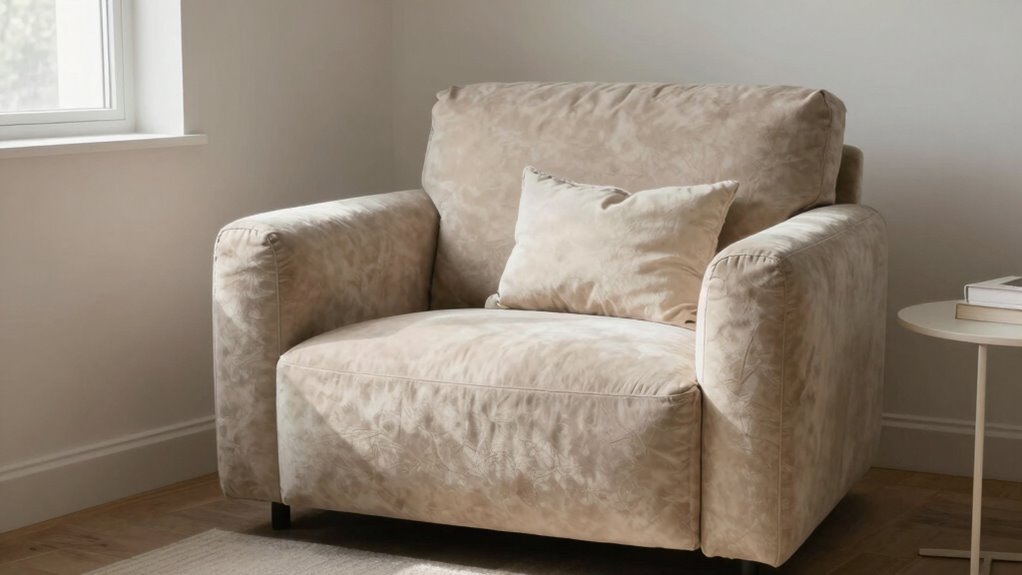

To make a large chair feel less heavy in a small room, match its color with the walls or surrounding furniture to soften its impact and add light accessories like cushions for balance. Choose a chair with a slim silhouette or open design to create a sense of airiness. Place it against a wall or corner, and keep surrounding space open. Using subtle contrast and proportion tricks helps the chair blend in. If you want more tips, keep exploring ways to create harmony.

Get wellness gear delivered free with Prime
- Fast, free delivery on millions of items
- Prime Video, Amazon Music and more included
- Member-only deals all year
Key Takeaways
- Match the chair’s color with the walls or surrounding furniture to blend seamlessly.
- Choose a chair with a streamlined silhouette and slender arms for visual lightness.
- Position the chair against a wall or corner to minimize its visual dominance.
- Incorporate lighter accessories like cushions or throws to soften its appearance.
- Ensure the chair’s proportion is suitable for the room size, avoiding overly wide or deep designs.
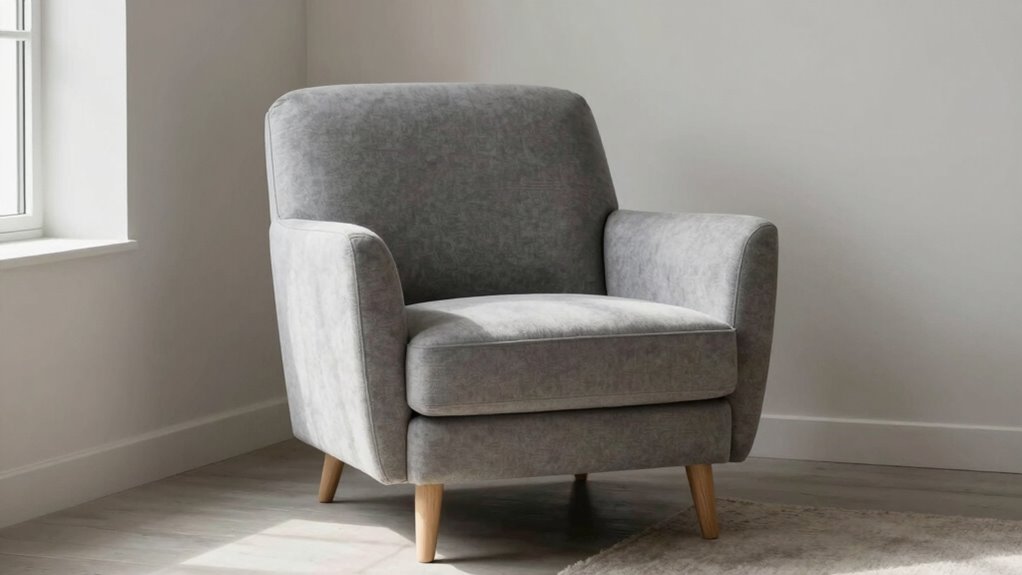
Have you ever felt overwhelmed by a bulky chair in a small room? It’s a common challenge—large furniture can dominate a space, making it feel cramped and cluttered. But there are simple ways to make a big chair seem less heavy visually, without sacrificing comfort or style. One effective trick is to focus on color contrast. If your chair’s color closely matches the walls or surrounding furniture, it tends to blend in, creating a more cohesive and less imposing look. Conversely, choosing a color that sharply contrasts with the walls can make the chair stand out as a focal point, but it won’t necessarily feel overwhelming if you balance it with other design elements. For example, a large dark leather chair might seem intimidating in a small, dimly lit room. Adding lighter accessories—such as cushions, throws, or even painting the wall behind the chair in a softer hue—can soften its visual weight. This contrast draws the eye without making the furniture feel oppressive. Additionally, understanding furniture scale is crucial to creating harmony in a small space. When you’re working with a large chair, consider how its size relates to the rest of the room. Oversized furniture can dwarf a small space, so opt for a chair with a more streamlined silhouette or with legs that elevate it slightly off the ground. Raising the chair visually reduces its bulk, making it feel lighter and less dominant. Additionally, selecting furniture with slender arms, a less bulky back, and a compact footprint can help maintain balance in a small room. Keep in mind that the scale of your furniture should complement the room’s dimensions—if your chair is too wide or deep, it can feel intrusive. Choosing a chair with a more open, airy design helps it blend more seamlessly into the space. Proper furniture proportion ensures your furniture fits well without overwhelming the room’s layout. Finally, the placement of your chair plays a significant role. Positioning it toward the corner or against a wall, rather than in the middle of the room, minimizes its visual impact. Surrounding the chair with open space or lighter-colored, minimal accessories can also help it feel less heavy. Incorporating visual weight considerations when arranging your furniture can further enhance the feeling of openness. Being mindful of room proportions can help you select furniture that fits well without overwhelming the space. Combining these strategies—thoughtful color contrast, appropriate furniture scale, and smart placement—allows you to enjoy a large, comfortable chair without sacrificing the sense of openness in your small room. You’ll create a balanced, inviting space where even the biggest piece of furniture feels just right.
As an affiliate, we earn on qualifying purchases.
Frequently Asked Questions
Can Color Change Make a Large Chair Appear Lighter?
Yes, changing the color can make a large chair appear lighter by leveraging color psychology. Opt for light, neutral hues like soft grays, beiges, or pastels, which reduce visual weight. These colors reflect more light and create a calming effect, making the chair blend better with the room. By choosing lighter shades, you help the chair feel less dominant, opening up space and creating a more balanced, airy atmosphere.
What Lighting Techniques Help Reduce Visual Weight of Furniture?
You can use lighting techniques like layered lighting to reduce the furniture’s visual weight. Incorporate decorative accessories that reflect light, such as metallic or glass pieces, to brighten the space. Additionally, wall textures like subtle patterns or light-colored paint help bounce light around the room, making large furniture feel less dominant. Aim for soft, diffused lighting to create an open, airy atmosphere that balances your furniture’s size.
How Does Furniture Placement Affect Perceived Room Size?
Did you know that strategic furniture placement can make a room feel 30% larger? You should position your large chair so it doesn’t block pathways or window views. Add wall art nearby to draw the eye upward and create a sense of height. Layer a rug under the chair to define the space and add depth. This arrangement tricks the eye into perceiving more space, making your room seem bigger and more open.
Are There Specific Fabrics That Make Chairs Look Less Bulky?
You can make chairs look less bulky by choosing fabrics with fine textures like linen or lightweight cotton, which create a sleek appearance. Opt for upholstery patterns such as small-scale prints or solid colors that blend into the room rather than stand out. Avoid heavy, plush fabrics or large patterns, as they can add visual weight. These choices help your large chair feel more balanced and less overwhelming in a small space.
Can Mirrors Create an Illusion of More Space Around Large Furniture?
Mirrors can indeed create an illusion of more space around large furniture, especially when paired with strategic placement. They reflect light and decorative accessories, amplifying the sense of openness. Use mirrors with texture contrasts or decorative accessories nearby to enhance this effect. By doing so, you draw attention away from the chair’s bulk and make the room feel larger, brighter, and more inviting—perfect for small spaces.
As an affiliate, we earn on qualifying purchases.
Conclusion
By choosing lighter-colored upholstery, adding slim legs, or placing the chair at an angle, you can make a large chair feel less overwhelming in a small room. Imagine a cozy apartment where a bulky armchair feels too dominant—by swapping it for a sleek, pastel-colored one and angling it toward the window, the space instantly feels more open and inviting. Small tweaks like these truly transform a heavy-looking piece into a balanced part of your room’s harmony.
As an affiliate, we earn on qualifying purchases.
As an affiliate, we earn on qualifying purchases.
Cold & flu season Picks
humidifiers
As an affiliate, we earn on qualifying purchases.