
To prevent floor scratches, regularly clean your wheels and casters by removing dirt, hair, and debris with a stiff brush or cloth. Keep them lubricated with a high-quality lubricant to reduce friction and guarantee smooth movement. Choose materials like rubber or polyurethane wheels for gentle flooring. Routine maintenance not only protects your floors but also extends the lifespan of your equipment. Keep going to discover more tips on keeping your casters in top condition.
Key Takeaways
- Regularly inspect and remove dirt, hair, and debris from wheels to prevent floor scratches and ensure smooth movement.
- Use stiff brushes or cloths to clean wheels and assemblies, clearing buildup that causes wobbling or grinding.
- Apply high-quality, floor-friendly lubricants to bearings and axles to reduce friction and prevent damage.
- Choose rubber or polyurethane wheels for gentle contact with floors, minimizing the risk of scratches.
- Maintain routine cleaning and lubrication schedules to preserve caster and floor integrity over time.

Cleaning wheels and casters is vital to keep your equipment moving smoothly and prevent unnecessary wear. When you regularly maintain your casters, you extend their lifespan and protect your floors from scratches and damage. Proper wheel maintenance involves more than just wiping off dirt. It’s about guaranteeing that each component functions at its best, reducing friction and preventing debris from causing harm. One key aspect of this is caster lubrication, which keeps the moving parts operating quietly and efficiently. When you keep your casters well-lubricated, you minimize resistance, making it easier to move heavy objects without risking damage to your flooring.
Regularly cleaning and lubricating casters prevents wear and floor damage, ensuring smooth, efficient movement.
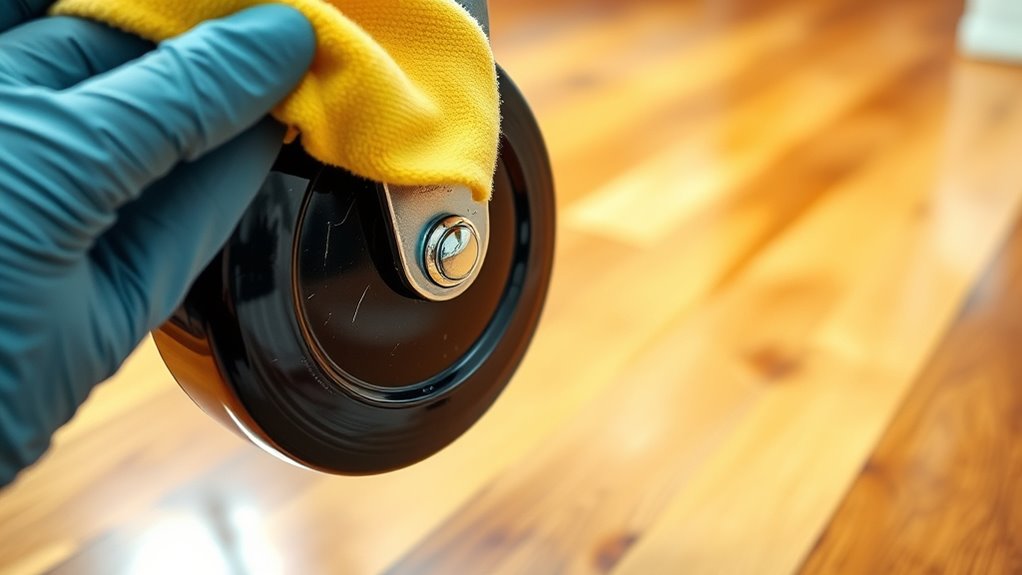
To start, inspect your wheels regularly for dirt, hair, or debris that can get tangled and cause uneven wear or scratches. Using a stiff brush or a cloth, remove loose dirt from the wheels and the caster assembly. You want to clear any buildup that could cause the wheels to wobble or grind against the floor. Once clean, check the tires for cracks or flat spots that might contribute to floor scratches if left unaddressed. If you notice any damage, replace the wheel promptly to avoid further harm.
Caster lubrication is a vital step in maintaining smooth operation. Apply a high-quality lubricant designed for caster parts, focusing on the bearings and axles. This reduces metal-on-metal friction, allowing the wheels to turn more freely and quietly. Regular lubrication prevents the parts from seizing up, which could cause uneven rolling and increase the risk of scratches or gouges on your floor. When applying lubricant, make sure to wipe away excess to prevent it from attracting dirt or debris that could cause further abrasive damage over time.
Keep in mind that not all wheels are created equal. Some caster wheels are made of rubber or polyurethane, which are gentle on floors and less likely to cause scratches. Others, such as metal wheels, require more diligent maintenance to avoid floor damage. For all types, clean and lubricate your casters at least once a month, especially if they’re used frequently or in dusty environments. Doing so will guarantee they remain in top condition, providing smooth mobility and protecting your flooring investment.
Additionally, choosing wheels with floor-friendly materials can significantly reduce the risk of scratches and make maintenance easier.
Finally, remember that simple, routine maintenance goes a long way. By taking the time to clean and lubricate your wheels and casters regularly, you greatly reduce the risk of scratches and floor damage. Proper wheel maintenance combined with caster lubrication ensures your equipment rolls smoothly without causing harm, saving you money and effort in the long run. Staying proactive with your caster care keeps everything functioning efficiently, so your floors stay pristine and your equipment lasts longer.
Frequently Asked Questions
How Often Should I Clean My Wheels and Casters?
You should clean your wheels and casters weekly to prevent dirt buildup and floor damage. Use gentle cleaning agents like mild soap and water, avoiding harsh chemicals that could harm the surfaces. When storing equipment, make certain wheels are free of debris and stored in a dry area. Regular cleaning keeps your wheels smooth, reduces floor scratches, and extends their lifespan. Stay proactive for a cleaner, safer environment.
Can I Use Harsh Chemicals on Wheel Surfaces?
You shouldn’t use harsh chemicals on wheel surfaces because it can damage the material and compromise chemical safety. Check your wheels’ material—rubber, nylon, or polypropylene—since each reacts differently to cleaners. Use gentle, compatible cleaning solutions to preserve the integrity of your wheels and prevent floor scratches. Avoid strong solvents or abrasives that could degrade wheel material or harm your flooring, ensuring safe and effective cleaning.
What Types of Floors Are Most Vulnerable to Caster Damage?
You should know that soft, polished floors like hardwood, tile, and laminate are most vulnerable to caster damage. To guarantee floor protection, regularly inspect and maintain your casters, making sure they’re free of debris and in good condition. Use appropriate cleaning methods and avoid harsh chemicals that can weaken caster wheels or floor surfaces. Proper caster maintenance helps prevent scratches and prolongs the lifespan of both your floors and casters.
Are There Specific Wheels for Different Flooring Materials?
Did you know that using the wrong wheels can cause floor damage within hours? Yes, specialized wheel materials are designed for specific flooring types, ensuring ideal floor compatibility. For instance, rubber or polyurethane wheels work best on delicate surfaces like hardwood and tile, preventing scratches and scuffs. Always choose caster wheels tailored to your floor to protect it and extend the life of your flooring investment.
How Do I Prevent Wheels From Collecting Debris?
To prevent wheels from collecting debris, you should regularly perform debris removal and wheel maintenance. Check your wheels often for dirt, hair, or grit, and remove debris promptly with a brush or compressed air. Keep wheels clean and lubricated to guarantee smooth movement. Regular maintenance prevents buildup, reduces wear, and helps protect your flooring from scratches caused by debris or rough wheel surfaces.
Conclusion
So, next time you roll those wheels with reckless abandon, remember that a quick clean could save your beautiful floors from scratches. Ironically, the very wheels that make your life easier can also be the culprits behind damage they’d rather ignore. Keep them spotless and free of debris, and you’ll enjoy smooth rolling and pristine floors—no magic required. After all, a little maintenance now prevents a lot of frustration later. Who knew cleaning could be so clever?