

To fix strange noises in your massage chair, start by pinpointing where the sounds come from—whether it’s the footrest, backrest, or rollers. Regularly tighten loose bolts and screws, and apply silicone lubricant to moving joints and hinges to reduce squeaks. Check for loose panels or covers and secure them. Using anti-vibration pads or placing the chair on a soft surface can also help minimize noise. Keep exploring for detailed steps to restore peace and quiet.
Key Takeaways
- Determine if the noise originates from the footrest, backrest, or rollers to target the specific issue.
- Inspect and tighten loose bolts, screws, and panels to eliminate rattles and squeaks.
- Apply silicone lubricant to moving joints and hinges to reduce squeaking and grinding sounds.
- Check rollers and motors for wear or damage, replacing parts as needed to restore quiet operation.
- Use anti-vibration pads or place the chair on a soft surface to dampen vibrations and minimize noise transmission.
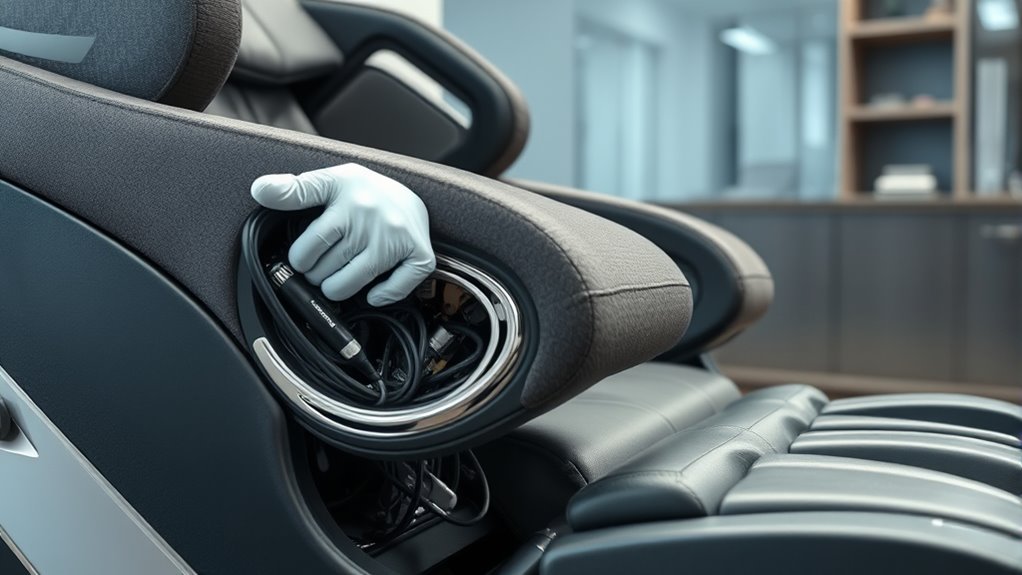
Strange noises from your massage chair can be both distracting and concerning, but many issues are simple to diagnose and fix. The first step is understanding that regular chair maintenance plays a vital role in preventing unwanted sounds. Over time, parts can loosen or shift, causing squeaks, rattles, or grinding noises. To minimize these problems, make it a habit to inspect your chair periodically, tightening bolts and screws that may have come loose. Proper chair maintenance not only extends the lifespan of your device but also keeps noise levels down, guaranteeing a more peaceful massage experience.
When you notice unusual sounds, start by identifying where they’re coming from. Is it a squeak from the footrest, a rattle near the backrest, or a grinding noise from the rollers? Once you pinpoint the source, you can apply specific noise reduction techniques. For example, if squeaks are frequent, applying a silicone-based lubricant to moving joints and hinges can work wonders. Just remember to wipe away excess lubricant to avoid attracting dust or dirt, which can worsen the noise over time. For rattling sounds, check that all panels and covers are securely fastened; loose panels can vibrate during operation, creating disruptive noises. Tightening or reattaching these covers often resolves the problem quickly.
Sometimes, the noise stems from debris or dust buildup inside the chair’s mechanisms. In such cases, cleaning the internal parts carefully can make a significant difference. Turn off and unplug your massage chair before opening any panels, and use a soft cloth or compressed air to remove dust and dirt from the motors and rollers. Regular cleaning is an essential part of chair maintenance, helping to keep components running smoothly and quietly. If the noise persists despite these efforts, it might be worth checking the rollers or motors for signs of wear or damage. Replacing worn-out parts can restore your chair’s quiet operation and avoid further damage.
In addition to routine maintenance, adopting noise reduction techniques like placing the chair on a soft surface or using anti-vibration pads can dampen vibrations that cause noise. These simple steps can make a noticeable difference, especially if your chair is situated on a hard floor. Remember, most noise issues are fixable with a combination of basic chair maintenance and the right noise reduction techniques. Keeping your massage chair well-maintained not only improves its performance but also guarantees you enjoy a serene, relaxing massage without disruptive sounds. Additionally, choosing high-quality dampening materials for the chair’s base can further minimize vibrations and enhance quiet operation.
Frequently Asked Questions
Can Strange Noises Indicate a Safety Hazard?
Strange noises can indeed indicate a safety concern, so you should take noise diagnosis seriously. If your massage chair makes loud or odd sounds, it might signal mechanical issues or loose parts that could pose hazards. Don’t ignore these warning signs; stop using the chair and inspect it or call a professional. Addressing strange noises early helps prevent potential accidents and ensures your massage chair remains safe to enjoy.
How Often Should I Perform Maintenance on My Massage Chair?
Imagine your massage chair as a trusted companion that needs regular care. You should perform maintenance every 3 to 6 months, including routine lubrication to keep moving parts smooth and filter cleaning to maintain air quality. Regular upkeep prevents strange noises and prolongs its lifespan. By staying consistent, you guarantee your chair remains quiet, comfortable, and ready to relax you whenever you need it most.
Are Noise Issues Covered Under Warranty?
Yes, noise issues are often covered under warranty coverage, but it depends on the repair policies of your manufacturer. If your massage chair makes strange noises within the warranty period, you should contact the seller or manufacturer for repairs or replacements. Make sure to review your warranty details, as some repairs may be covered free of charge, while others might require a fee or specific conditions.
What Tools Are Needed for Repairs?
For repairs, you’ll need a basic tools checklist including screwdrivers, pliers, and possibly a multimeter for electrical checks. Always prioritize repair safety by unplugging the chair before starting, wearing gloves if necessary, and working in a well-lit area. Having these tools ready guarantees you can address common issues efficiently and safely, preventing further damage or injury during the repair process.
Can I Fix the Noise Myself or Should I Call a Technician?
Think of your massage chair like a delicate instrument—sometimes it’s best to let a pro handle the tune-up. For strange noises, DIY troubleshooting can solve minor issues if you’re comfortable with basic repairs. However, if the noise persists or involves complex parts, it’s smarter to opt for professional repair options. This approach keeps your chair in harmony and prevents further damage, saving you time and money in the long run.
Conclusion
By paying close attention to the strange noises in your massage chair, you can often catch issues before they become costly repairs. Regular maintenance and timely fixes keep your chair running smoothly, ensuring you get the relaxation you deserve. Remember, a stitch in time saves nine—address problems early on, and you’ll extend the life of your chair while enjoying countless soothing sessions. Don’t let small issues snowball into bigger headaches down the road.