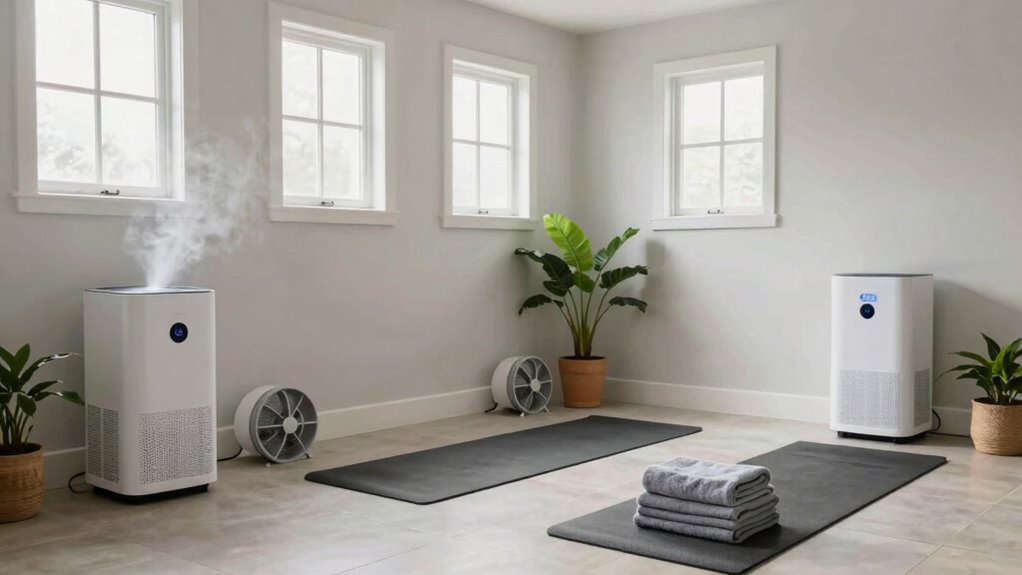

To keep your basement wellness room drier and easier on equipment, use a dehumidifier suited to your space to maintain humidity around 50%, which prevents mold and damage. Guarantee proper ventilation with exhaust fans or air exchange systems to remove stale air and regulate humidity. Regularly clean and check filters to keep air quality high. Consistent monitoring of temperature and humidity levels will help you adjust systems early, making maintenance smoother and your space more comfortable. Curious about more tips?

Get wellness gear delivered free with Prime
- Fast, free delivery on millions of items
- Prime Video, Amazon Music and more included
- Member-only deals all year
Key Takeaways
- Install a appropriately sized dehumidifier and regularly maintain it to keep humidity around 50%.
- Ensure proper ventilation with adjustable exhaust fans to promote airflow and remove excess moisture.
- Use HEPA air purifiers and monitor air quality to prevent mold growth and reduce humidity-related issues.
- Regularly check and clean vents, filters, and equipment to maintain optimal system performance.
- Integrate humidity, temperature, and ventilation controls for a coordinated, efficient climate management system.
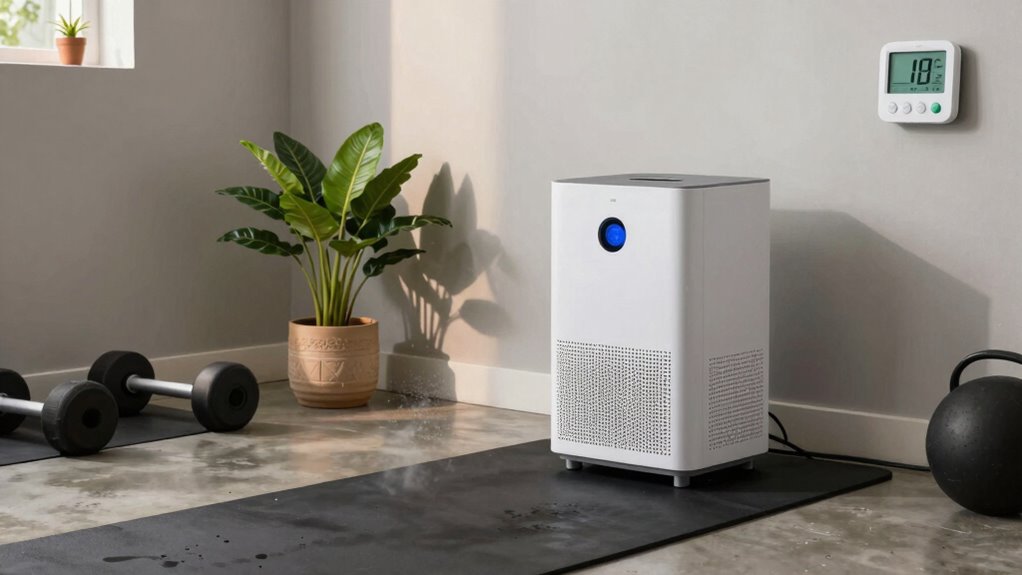
Creating a dedicated wellness room in your basement can be a game-changer for your health and relaxation routines. To guarantee this space remains comfortable and equipment stays in top shape, managing humidity and ventilation is essential. High humidity levels can lead to mold growth, musty odors, and damage to electronic equipment or gym gear. Conversely, too-dry air can cause discomfort and static buildup. Finding the right balance starts with effective humidity control. Installing a dehumidifier is one of the simplest, most reliable solutions. Choose a unit suited to your room’s size, and set it to maintain humidity levels around 50%. This keeps the air comfortable without making it too dry or damp. Regularly emptying or maintaining your dehumidifier is vital to prevent it from becoming ineffective or overworking, which could lead to increased energy costs or equipment failure.
In addition to a dehumidifier, your ventilation system plays an essential role. Proper airflow prevents stale air from lingering and helps regulate moisture. Consider installing an exhaust fan or an air exchange system that pulls in fresh air and pushes out humid or stale air. Ventilation systems help maintain a consistent indoor climate, reducing the likelihood of mold and mildew growth. When choosing a ventilation system, opt for one that can be easily controlled and adjusted based on your needs. You might also consider an air purifier with HEPA filters to improve air quality further and reduce allergens, dust, and bacteria that can thrive in humid environments. Regularly monitoring your basement’s humidity levels with a hygrometer can help ensure your system remains effective and prevents potential issues. Understanding indoor air quality can also guide you in selecting the best filtration and ventilation options for your space. Incorporating proper ventilation strategies can significantly enhance overall air circulation, making the environment more comfortable and healthier. Additionally, knowing how to assess air quality can help you troubleshoot issues before they become problematic. Routine checks are also crucial to ensure vents are unobstructed and filters are cleaned or replaced regularly. To optimize your space’s climate, consider the benefits of climate control systems that integrate humidity and temperature management. If your basement tends to trap heat and moisture, a combination of a dehumidifier and a ventilation system can work synergistically to keep the space dry and fresh. You should also monitor the room’s temperature and humidity levels using a hygrometer and thermostat, making adjustments as necessary. This proactive approach helps prevent issues before they escalate.
basement dehumidifier for wellness room
As an affiliate, we earn on qualifying purchases.
As an affiliate, we earn on qualifying purchases.
Frequently Asked Questions
How Often Should I Check for Mold in My Basement Wellness Room?
You should check for mold in your basement wellness room every few months, especially if there’s high humidity. Keep ventilation tips in mind by ensuring proper airflow and using exhaust fans. Regularly inspect moisture barriers and seals around windows and floors for any breaches. If you notice a musty smell or visible mold, act immediately. Consistent checks help prevent mold growth and keep your wellness space safe and dry.
What Is the Best Dehumidifier for a Large Basement Space?
Did you know that a properly chosen dehumidifier can reduce basement moisture by up to 50%? For large basement spaces, look for a dehumidifier with high capacity, ideally 70 pints or more per day. Focus on dehumidifier selection that suits your room’s size and humidity levels. This guarantees your wellness room stays dry, equipment lasts longer, and you maintain a healthier environment.
Can Plants Help Reduce Humidity in the Wellness Room?
Plants can help reduce humidity in your wellness room, especially when paired with good air circulation and strategic plant placement. They absorb moisture through their leaves and roots, which can lower overall humidity. To maximize this effect, place plants away from windows and vents where air moves freely, and guarantee they’re not overcrowded. Regular watering and maintenance also keep plants healthy and effective at managing moisture levels.
How Do I Prevent Musty Odors From Forming Over Time?
To prevent musty odors from forming, you should improve air circulation and use moisture barriers. Keep the room well-ventilated with fans or dehumidifiers, ensuring fresh air flows regularly. Install moisture barriers on floors and walls to prevent dampness from seeping in. Regularly clean the space, and check for leaks or condensation. These steps reduce humidity and inhibit mold growth, keeping your wellness room smelling fresh and healthy.
Are There Eco-Friendly Options for Controlling Humidity?
Yes, there are eco-friendly options for controlling humidity in your basement wellness room. You can use eco-friendly dehumidification methods like natural desiccants such as silica gel or activated charcoal, which absorb moisture sustainably. Opt for sustainable humidity control systems that utilize energy-efficient dehumidifiers with eco-conscious features. These solutions reduce your environmental impact while keeping your space dry, fresh, and comfortable without relying on harsh chemicals or excessive energy use.
adjustable exhaust fan for basement
As an affiliate, we earn on qualifying purchases.
As an affiliate, we earn on qualifying purchases.
Conclusion
Think of your basement wellness room as a delicate plant—you need to nurture it with the right environment. I once met someone whose wellness space was constantly damp, and soon, mold took hold, choking their progress. By keeping humidity in check and ensuring proper ventilation, you’re giving your space the perfect climate to thrive. A dry, well-maintained room isn’t just more comfortable; it’s a sanctuary that supports your health and well-being for years to come.
HEPA air purifier for indoor air quality
As an affiliate, we earn on qualifying purchases.
As an affiliate, we earn on qualifying purchases.
hygrometer for humidity monitoring
As an affiliate, we earn on qualifying purchases.
As an affiliate, we earn on qualifying purchases.
Fall Picks
fall essentials
As an affiliate, we earn on qualifying purchases.