TL;DR

Get wellness gear delivered free with Prime
- Fast, free delivery on millions of items
- Prime Video, Amazon Music and more included
- Member-only deals all year
A blogger’s report describes running a set of self-hosted services on a $10 OpenStick, a small ARM device with 512 MB of RAM and 4 GB of storage. The setup uses Debian and lightweight software for DNS filtering, monitoring, RSS reading, archived bookmarks and other tasks; the report is one person’s experience, not an independent performance test.
A blogger has described running a collection of self-hosted services on a $10 OpenStick, a compact device with 512 MB of RAM, four 1 GHz ARM Cortex-A53 cores and 4 GB of eMMC storage. The report shows how the device can serve as a low-cost, passively cooled Debian home server, while also making clear that its limited memory and storage favor lightweight applications.
In a post on the Bosscher blog, the author says the OpenStick cost $10 including shipping. The device has about 450 MB of usable RAM, Wi-Fi, a 4G modem, GPS and one programmable LED, according to the report. It is passively cooled, which the author says makes it silent. The author notes that installation takes some work; once set up, the device runs Debian, including systemd and Podman.
The reported services include AdGuard Home for DNS-based domain blocking, a Google Cast tool called CastSponsorSkip, and Zeroclaw, an AI agent used to check the device’s status through Telegram. The author reports Zeroclaw uses about 3 MB of resident memory while idle and says it has access to the OpenStick, but not to other systems. The post describes this as effectively granting it a root shell on the device, a security trade-off the author accepted because the access is limited.
For operations, the author runs Beszel to chart system use and send alerts, Dozzle to view Podman logs, and Gatus to check whether services are responding. The remaining listed applications include Fusion, an RSS reader reported to use 22 MB of RAM, and Shiori, a bookmark manager that can archive saved pages. The post also lists Cloudflare Tunnel as a way to reach services without opening ports on the home network. Memory figures are the author’s reported estimates, not results from an independent test.
Small Hardware, Useful Services
The report offers a practical example of what a low-cost, low-power device can host when applications are selected for modest resource use. For people curious about self-hosting, the OpenStick can function as a small test server for tools that would otherwise run on a larger computer or a paid service. Its passive cooling and reported lack of fan noise may also suit a home environment.
The account is not evidence that every listed service will run well for every user. The device’s 512 MB of RAM and 4 GB of storage leave little room for resource-heavy software, and the author’s setup reflects individual choices and configuration. The post is most useful as a concrete inventory and starting point, rather than a general performance guarantee or a complete guide to secure deployment.
Products Worth Considering
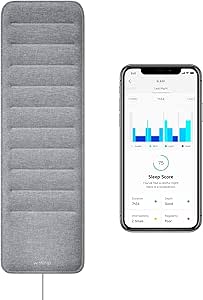
Withings Sleep Under-Mattress Sleep Tracking Pad

Garmin Forerunner 970 GPS Running Smartwatch Bundle, Soft Gold

Garmin Forerunner 965 GPS Multisport Smartwatch with AMOLED Display and Charging Bundle
As an affiliate, we earn on qualifying purchases.
From Novelty Device to Server
The author says the OpenStick was bought on a whim as a novelty, then became a way to experiment with self-hosting. Its modest specifications shape the software choices: the post contrasts small utilities with a prior Kubernetes setup and says some heavier monitoring tools felt excessive for this use. It gives examples of reported memory requirements, including about 20 MB for Beszel’s server and agent together, and roughly 8–20 MB for Cloudflare Tunnel.
The author also describes personal reasons for choosing particular tools. AdGuard Home is used to block domains through DNS, though the post acknowledges that DNS filtering cannot block every unwanted request. Zeroclaw was selected over alternatives after the author judged its documentation and community activity to be a better fit. Those assessments are the author’s views, not comparative findings independently verified in the source.
““For 10 USD you basically get a home server with minimal power usage and zero noise!””
— The author of the Bosscher blog post
Limits of the Reported Setup
The source is a single user’s account, and it does not include independent benchmarks, measured electricity use, long-term reliability results or a full security review. It is also unclear how much storage the installed services and archived pages consume over time, or how the device performs when several services are busy at once.
The author reports that 60% of DNS queries were blocked after adding blocklists, but the post does not specify the measurement period, the total query count or a comparison baseline. That figure should be read as an observation from this particular setup, not as a general rate of blocked traffic. The report also does not establish that Cloudflare Tunnel or any other individual configuration is suitable for every user’s privacy and security needs.
Possible Changes to the Setup
The post describes the current software arrangement rather than announcing a product release or a formal project roadmap. The author says Dozzle could be removed if memory savings become necessary, since its functions overlap partly with Beszel. The author also says a planned next version of Zeroclaw may include richer Telegram message support, with a related contribution available to track, though the source does not give a release date.
For readers considering a similar build, the account points to the practical next steps: install Debian, select services that fit the available memory and storage, and decide carefully which applications receive access to the device. The post itself does not provide a full installation walkthrough, so the exact setup process and results will depend on the hardware, software versions and configuration used.
Key Questions
What is an OpenStick in this report?
It is the small computing device described by the blogger. The reported specifications are 512 MB of RAM, four 1 GHz ARM Cortex-A53 cores and 4 GB of eMMC storage, along with Wi-Fi, a 4G modem and GPS.
Which services does the author run on it?
The post lists DNS filtering with AdGuard Home, CastSponsorSkip, Zeroclaw, Cloudflare Tunnel, Beszel, Dozzle, Gatus, Fusion and Shiori. The author reports using them for tasks such as domain blocking, monitoring, RSS reading and bookmark archiving.
Does the report prove the setup will work for everyone?
No. It documents one user’s experience and does not include independent benchmarks or a full installation guide. Performance and security can vary with software versions, configuration and workload.
What security limitation does the author disclose?
The author says Zeroclaw effectively has a root shell on the OpenStick, although it has no access to other systems. The post also cautions that DNS blocking cannot stop every unwanted request and describes Cloudflare Tunnel as a personal trade-off.
Source: blog.bosscher.ch