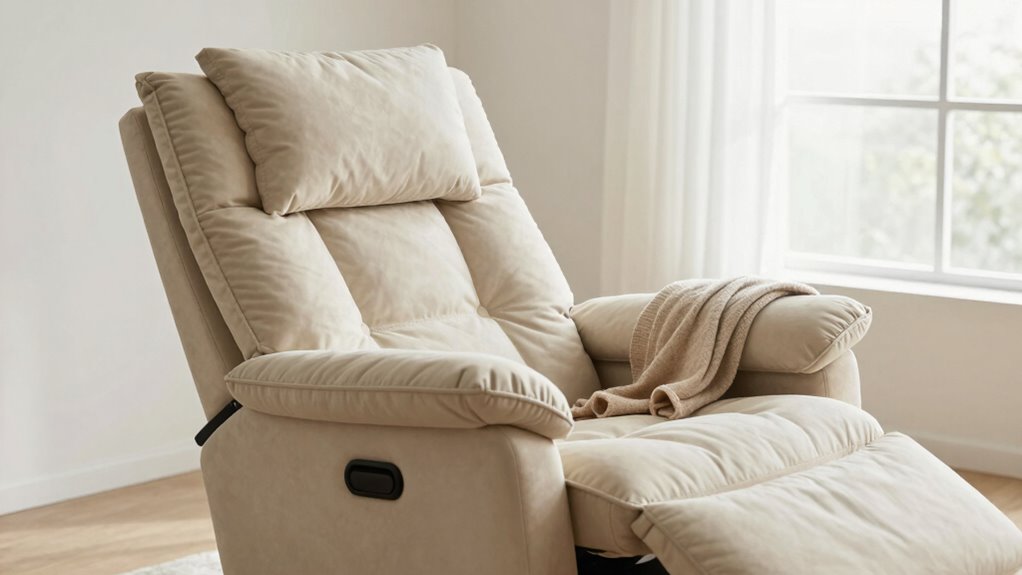

To set up your recovery chair for proper posture and relaxation, start by adjusting the chair height so your feet are flat, and your knees form a 90° angle. Position lumbar support to fit the natural curve of your lower back, adding support accessories if needed. Fine-tune the recline for comfort without compromising posture, and set armrests to keep shoulders relaxed. For even better comfort, incorporate cushions or neck pillows, and explore features that promote natural alignment—more tips await.

Get wellness gear delivered free with Prime
- Fast, free delivery on millions of items
- Prime Video, Amazon Music and more included
- Member-only deals all year
Key Takeaways
- Adjust chair height so feet are flat and knees form a 90° angle for optimal posture.
- Position lumbar support to align with the natural inward curve of your lower back.
- Fine-tune recline and armrest settings to promote relaxed shoulders and even weight distribution.
- Incorporate ergonomic accessories like cushions and neck pillows to enhance comfort and support.
- Regularly evaluate and tweak the setup to ensure maximum support, relaxation, and proper body alignment.
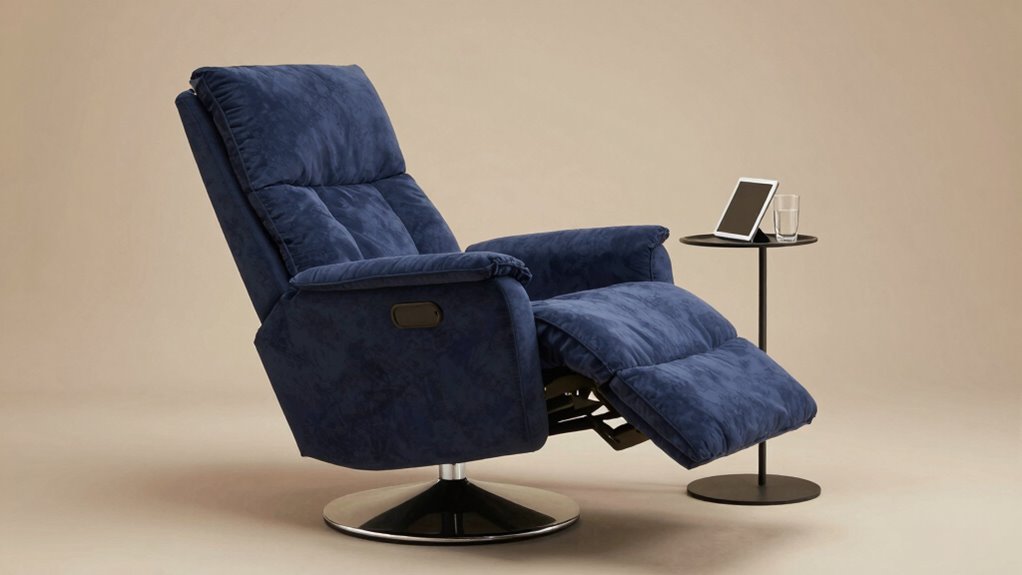
Are you wondering how to set up a recovery chair to guarantee maximum comfort and support? The key lies in making precise ergonomic adjustments that align with your body’s natural posture. Start by adjusting the chair’s height so your feet rest flat on the ground, with your knees at a 90-degree angle. This prevents unnecessary pressure on your lower back and promotes good circulation. Confirm that the lumbar support is correctly positioned to fill the curve of your lower back. If your chair has adjustable lumbar support, tweak it until it comfortably supports your spine’s natural inward curve. If not, consider adding a lumbar pillow or other comfort accessories designed for back support. These small additions can make a significant difference in maintaining proper posture during extended periods of sitting.
Adjust your recovery chair for optimal support by aligning lumbar support and maintaining proper posture.
Next, fine-tune the recline feature to suit your relaxation needs. Lean back slightly, just enough to relieve pressure on your spine without compromising your posture. A slight recline helps distribute your weight evenly, reducing strain on your neck and shoulders. Many recovery chairs also allow you to adjust the armrests; position them so your shoulders relax, and your arms rest comfortably without hunching or stretching. Proper armrest height prevents shoulder tension and encourages a relaxed posture. Understanding the ergonomic principles behind chair design can help you make more informed adjustments that support your body’s natural alignment. Additionally, adjusting the chair’s tilt or swivel features may further enhance body alignment and comfort.
Incorporate comfort accessories to enhance your experience. Memory foam cushions or seat pads can provide extra support where needed, especially if you’re sitting for long stretches. A neck pillow can help keep your head aligned, preventing neck fatigue. If your recovery chair has adjustable features, use them to customize your seating position further. For example, if the chair comes with a headrest, adjust it to support your neck and head naturally. These ergonomic adjustments and comfort accessories work together to create a setup that promotes proper posture and relaxation. Additionally, understanding the supportive design principles behind recovery chairs can help you optimize your setup for comfort and health.
Finally, take a moment to reassess once you’ve made your adjustments. Sit back and feel how your body responds. Are your shoulders relaxed? Is your lower back supported without strain? If anything feels off, tweak the settings until your comfort is maximized. Remember, the correct setup is essential for reducing discomfort and ensuring your recovery sessions are both relaxing and beneficial. When your recovery chair is properly aligned to your body’s needs, you’ll experience better support, reduced discomfort, and a more effective relaxation session.
Products Worth Considering

BowFlex Results Series SelectTech 552 Adjustable Dumbbell

Garmin Venu 3 Fitness Smartwatch, 45 mm, Black

Withings Body Scan Smart Scale with Segmental Body Composition and ECG, Black
As an affiliate, we earn on qualifying purchases.
Frequently Asked Questions
Can Recovery Chairs Help With Specific Back Conditions?
Recovery chairs can indeed help with specific back conditions by providing targeted lumbar support and promoting proper spinal alignment. When you sit in one, it encourages your spine’s natural curve, reducing pressure on painful areas. This setup relieves discomfort and aids in recovery. Adjusting the chair to support your lower back properly helps manage symptoms of conditions like herniated discs or sciatica, making your rest more effective.
Are Recovery Chairs Suitable for All Body Types?
Like Cinderella’s slipper, recovery chairs can be suitable for most body types when you make the right ergonomic adjustments. You need to take into account your body’s compatibility—adjusting seat height, lumbar support, and recline angles—to ensure comfort. While recovery chairs are versatile, some designs may not suit everyone perfectly. Always test and customize your chair to match your unique shape, maximizing both posture support and relaxation.
How Long Should I Sit in a Recovery Chair Each Day?
You should aim to sit in your recovery chair for about 20 to 30 minutes daily, especially if you’re using it for relaxation or postural support. Make ergonomic adjustments to guarantee your back is well-supported, your feet are flat on the floor, and your arms rest comfortably. Avoid prolonged sitting, and take short breaks or stretch every 15-20 minutes to maintain good posture and prevent strain.
Do Recovery Chairs Require Special Maintenance?
A recovery chair benefits from gentle upkeep to preserve its elegance. You should clean it regularly, depending on usage, to prevent dust buildup. Pay attention to material durability—leather or fabric might need different care routines. Wiping down surfaces and checking for loose parts guarantees longevity. By nurturing your chair with appropriate maintenance, you’ll enjoy its supportive comfort and refined appearance for years, making your relaxation moments truly restorative.
Can Recovery Chairs Be Used While Working or Reading?
Yes, you can use recovery chairs while working or reading. To optimize reading comfort and maintain good posture, make ergonomic adjustments like adjusting the footrest, lumbar support, and armrests. Guarantee the chair’s angle supports your back and neck properly, reducing strain during extended use. With proper setup, your recovery chair becomes a versatile space for both relaxation and focused activities, helping you stay comfortable and productive.
Conclusion
Setting up your recovery chair properly can considerably improve your posture and relaxation. By adjusting the height, lumbar support, and recline, you’ll create a space that promotes comfort and reduces strain. Did you know that poor posture can lead to chronic pain in up to 80% of adults? Investing a few minutes to customize your chair not only boosts your comfort but also helps prevent long-term health issues. Make these adjustments a priority for better, healthier sitting habits.