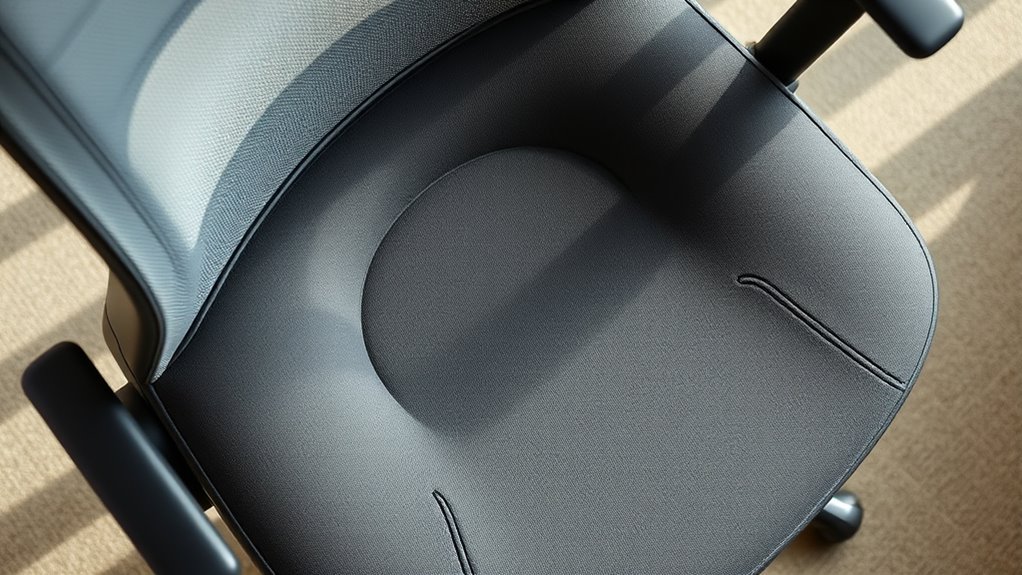

To avoid pressure points and discomfort, choose a chair with ergonomic features like adjustable height, lumbar support, and a seat that promotes even weight distribution. Good cushions made of foam, gel, or memory foam conform to your body shape, helping to reduce pressure on sensitive areas. Proper support encourages healthy posture and relieves strain during long sitting periods. If you want to discover how the right chair design can keep you comfortable all day, keep exploring these helpful tips.
Key Takeaways
- Ergonomic chairs feature adjustable components to ensure proper weight distribution and support natural body alignment.
- Cushions made of memory foam or gel help evenly spread pressure across sensitive areas like the tailbone and thighs.
- Lumbar support and seat design promote upright posture, preventing concentrated pressure points.
- Proper seat contouring and pressure distribution features reduce localized discomfort during prolonged sitting.
- Regular movement, combined with supportive chair features, enhances circulation and minimizes pressure buildup.
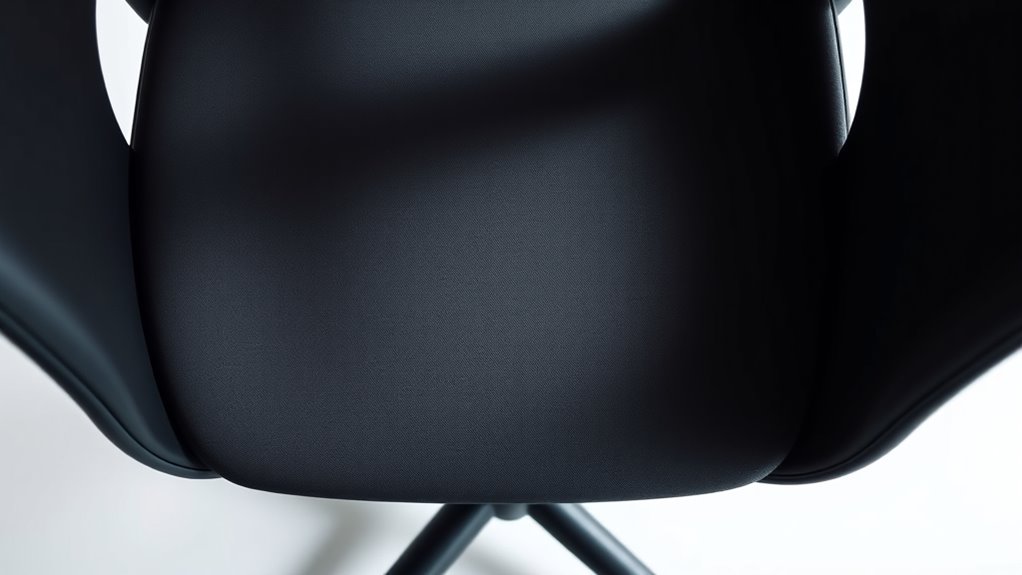
Sitting in chairs for extended periods can cause discomfort and even health issues if you’re not careful. The way your chair is designed plays an essential role in how comfortably and healthily you sit. An ergonomic design focuses on supporting your body’s natural alignment, reducing pressure points and preventing strain. When choosing a chair, look for features like adjustable height, lumbar support, and a seat that promotes proper weight distribution. These elements help guarantee your weight is evenly spread across your pelvis and thighs instead of concentrating on specific areas, which can lead to pain or numbness over time.
Choose ergonomic chairs with adjustable features to ensure balanced weight distribution and prevent discomfort during long sitting sessions.
Cushion materials are equally important in preventing pressure points. Soft yet supportive cushions made from high-quality foam, gel, or memory foam can dramatically improve your sitting experience. These materials conform to your body’s shape, distributing pressure more evenly and reducing the risk of discomfort. For example, memory foam cushions adapt to your curves, alleviating pressure on sensitive areas like the tailbone and thighs. Gel-infused cushions not only provide comfort but also help regulate temperature, keeping you cool during long sitting sessions. Avoid hard or overly firm cushions that don’t mold to your body, as they tend to create high-pressure zones that can cause soreness and numbness.
The combination of an ergonomic design and suitable cushion materials works together to minimize pressure points. When your chair supports proper posture, it encourages you to sit upright, keeping your spine aligned and reducing undue stress on your hips and lower back. Adjustable features allow you to customize the chair to your body, guaranteeing that your weight is evenly distributed regardless of your size or shape. This not only improves comfort but also helps prevent long-term health issues like back pain, sciatica, or circulation problems caused by sustained pressure on specific areas. Additionally, choosing a chair with pressure distribution features can further enhance comfort and reduce strain during prolonged sitting.
In addition to choosing the right chair, paying attention to your sitting habits matters. Take regular breaks to stand, stretch, and shift your position. This helps prevent the buildup of pressure in any one area and encourages better circulation. Remember, a well-designed chair isn’t just about comfort—it’s about promoting your overall health and well-being. Investing in a chair with thoughtful ergonomic features and quality cushion materials can make a significant difference in how you feel after hours of sitting. Prioritize these aspects, and you’ll reduce discomfort while supporting your body’s natural needs for proper weight distribution.
Frequently Asked Questions
How Do Different Chair Materials Affect Pressure Distribution?
Different chair materials, like memory foam and mesh fabric, impact pressure distribution by contouring to your body and promoting airflow. Memory foam molds to your shape, evenly spreading your weight and reducing pressure points. Mesh fabric allows air to circulate, preventing heat buildup and encouraging comfort. You feel less discomfort because these materials work together to distribute your weight more effectively and keep you cool during long sitting periods.
Can Adjustable Features Improve Pressure Point Management?
Yes, adjustable features can improve pressure point management considerably. By customizing cushion firmness, you can find the right support for your comfort, reducing strain on sensitive areas. Lumbar support adjustments help maintain proper spinal alignment, preventing pressure buildup around your lower back. These features allow you to tailor your chair to your body’s needs, distributing weight evenly and minimizing discomfort during long periods of sitting.
What Role Does Posture Play in Pressure Point Prevention?
Your posture plays a vital role in preventing pressure points by maintaining proper spinal alignment and reducing muscle tension. When you sit upright with good posture, you evenly distribute your weight, preventing excessive pressure on specific areas. This helps reduce discomfort and promotes better circulation. Regularly adjusting your position and using ergonomic features can support your posture, keeping pressure points at bay and ensuring a more comfortable sitting experience.
Are Ergonomic Chairs Suitable for All Body Types?
Ergonomic chairs can suit many body types, but they aren’t one-size-fits-all. You should look for models that offer chair customization options to accommodate your unique body diversity. Adjustable features like seat height, lumbar support, and armrests help you find a comfortable fit. This guarantees proper weight distribution, reduces pressure points, and prevents discomfort, making ergonomic chairs a versatile choice tailored to your specific needs.
How Often Should One Rotate Seating Positions During Long Sitting Periods?
You should rotate your seating positions every 30 to 60 minutes during long sitting periods. Alternating between sitting and standing helps reduce pressure points and prevents discomfort. Use a seat cushion when sitting to distribute weight evenly, and consider alternating standing to give your muscles a break. This practice encourages better circulation and reduces fatigue, making your workspace more comfortable and healthier over extended periods.
Conclusion
By choosing chairs that effectively distribute your weight, you can avoid painful pressure points and stay comfortable longer. Did you know that sitting improperly can increase pressure on your hips by up to 50%? That’s like doubling the strain on your body in just a few hours. So, invest in a well-designed chair, adjust it to fit you, and give your body the support it needs. Your comfort and health will thank you every time you sit down.