You can generally sit comfortably for about 20 to 30 minutes at a time, but everyone’s different. To stay comfortable during longer sessions, take stretching or movement breaks every 30 to 60 minutes. Use ergonomic furniture to support your posture, and once seated, focus on maintaining good alignment to avoid discomfort. Incorporating small habits like stretching and shifting positions can make extended sitting more manageable. Keep going, and you’ll discover even more tips to stay comfortable and healthy.
Key Takeaways
- Limit sitting sessions to 30-60 minutes, taking short breaks to stand and stretch regularly.
- Use ergonomic chairs with adjustable features and proper lumbar support for comfortable prolonged sitting.
- Incorporate movement breaks every 30 minutes to promote circulation and reduce muscle stiffness.
- Practice good posture, maintaining upright alignment and avoiding slouching during extended sitting.
- Add simple stretches like overhead reaches and torso twists during breaks to enhance comfort and prevent fatigue.
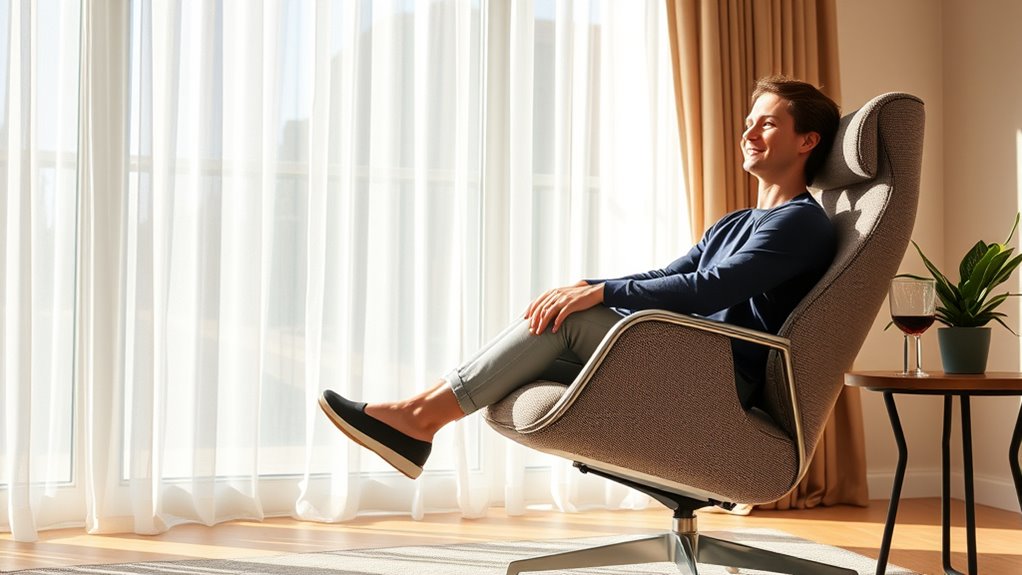
Have you ever wondered how long you can sit before it starts affecting your health? Sitting for extended periods isn’t just uncomfortable—it can lead to serious issues like back pain, poor posture, and decreased circulation. The key is understanding how to sit smartly and take breaks that support your well-being. One of the most effective strategies is using ergonomic seating. When you choose a chair designed to support your natural posture, you help reduce strain on your back, neck, and hips. Look for features like adjustable height, lumbar support, and a seat that promotes proper alignment. Proper ergonomic seating encourages you to sit upright without slouching, making longer sitting sessions more comfortable and less damaging.
But simply sitting in an ergonomic chair isn’t enough. You need to incorporate stretching routines into your daily routine, especially if you spend hours seated. Every 30 to 60 minutes, take a few minutes to stretch your legs, back, and shoulders. Simple stretches like reaching overhead, twisting your torso gently, or flexing your ankles help stimulate circulation and prevent stiffness. These routines aren’t complicated, but they’re essential for counteracting the negative effects of prolonged sitting. When you stand up and stretch, you activate muscles that often become inactive during extended periods of sitting. This not only relieves tension but also boosts your energy levels, making it easier to stay focused and comfortable.
While ergonomic seating and stretching routines are essential, remember that sitting isn’t meant to be the only position you assume throughout the day. Move around as often as possible, even if it’s just a quick walk to the restroom or a few steps to reach for something. Incorporating movement breaks into your schedule helps maintain your circulation, reduces muscle fatigue, and supports overall health. If your job requires long hours at a desk, set reminders to stand up and stretch or walk around every half hour. This simple habit can make a significant difference.
Frequently Asked Questions
What Are the Health Risks of Prolonged Sitting?
Prolonged sitting can increase your risk of heart disease, diabetes, and obesity. It also leads to poor posture, causing back and neck pain. To reduce these risks, use ergonomic accessories like supportive chairs and adjustable desks, and practice posture correction regularly. Taking breaks to stand and stretch helps prevent stiffness and promotes circulation. Staying mindful of your sitting habits can greatly improve your overall health and comfort during extended sessions.
How Often Should I Take Breaks During Long Sitting Sessions?
Taking breaks during long sitting sessions is like hitting pause on a busy day—you need to reset. You should stand up and move every 30 to 60 minutes, incorporating stretching routines to loosen tight muscles. Use ergonomic accessories like supportive chairs or footrests to stay comfortable. These simple actions prevent stiffness and improve circulation, helping you stay focused and healthy throughout extended periods of sitting.
What Ergonomic Adjustments Can Improve Sitting Comfort?
You can enhance sitting comfort with ergonomic adjustments like using ergonomic accessories, such as adjustable chairs, lumbar support pillows, and footrests. Focus on posture correction by keeping your back straight, shoulders relaxed, and feet flat on the ground. These adjustments reduce strain and promote better alignment, making long sitting sessions more comfortable. Regularly evaluate your setup and make necessary tweaks to guarantee sustained comfort and support.
Are There Specific Exercises to Reduce Sitting-Related Discomfort?
You can reduce sitting-related discomfort by incorporating stretching routines that target your hips, back, and legs. Regularly perform posture correction exercises, such as shoulder rolls and chin tucks, to keep your spine aligned. These exercises help loosen tight muscles and improve circulation, making extended sitting more comfortable. Make it a habit to stretch every 30 minutes to prevent stiffness and promote better posture throughout your sitting sessions.
Does Standing While Working Help Extend Sitting Comfort?
Standing while working offers numerous standing benefits, including improved circulation and reduced muscle stiffness. It also promotes better posture correction, helping you avoid slouching or strain. By alternating between sitting and standing, you can extend your sitting comfort and decrease discomfort. Remember to use an ergonomic desk setup and take regular breaks to maximize these benefits, ensuring your work sessions stay comfortable and healthy over extended periods.
Conclusion
Remember, sitting too long can impact your health, but knowing your limits helps you stay comfortable and safe. Did you know that the average office worker sits for about 8 hours daily? Incorporate regular breaks and stretches to combat fatigue and improve circulation. By listening to your body and taking these simple steps, you can extend your sitting sessions without risking discomfort or health issues. Stay mindful, stay comfortable, and enjoy your extended sitting time!