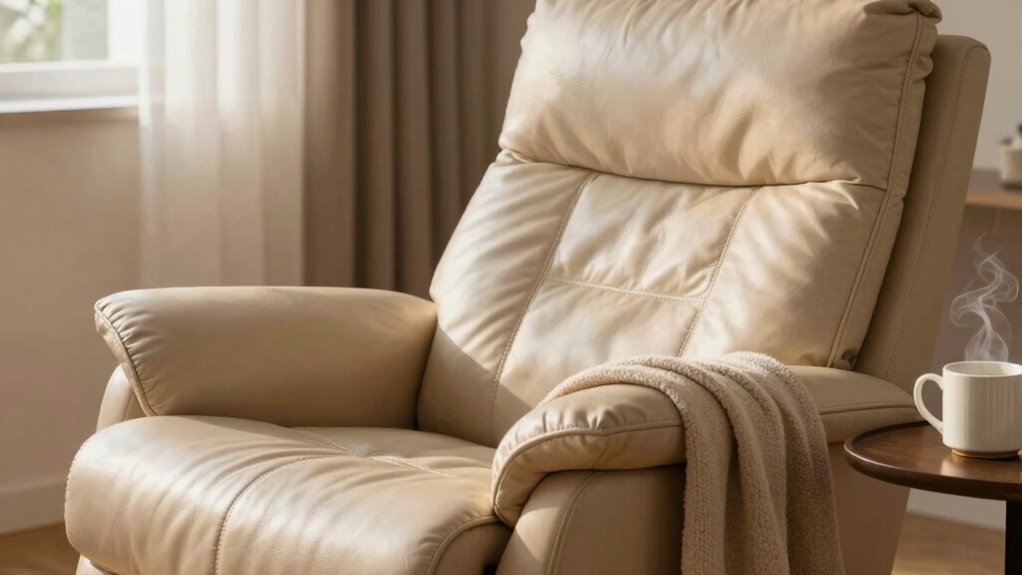

To find a comfortable recline angle, start by adjusting gradually and paying attention to how your body feels. For reading, aim for a slight recline around 100-110° for good support and visibility. For relaxing or resting, go for a more reclined position between 110-130°. Make sure your thighs rest comfortably and your shoulders stay relaxed. Continue exploring these tips to discover the perfect angle that promotes comfort and good posture throughout the day.
Open a free Amazon Business account
Business pricing, bulk buying and tax-exempt orders.
As an affiliate, we earn on qualifying purchases.
Key Takeaways
- Start with small, incremental recline adjustments to assess comfort and find the optimal angle for each activity.
- For reading, aim for a slight recline around 100-110° to support visibility and relaxed shoulders.
- During rest or recovery, recline between 110-130° to promote relaxation and reduce pressure on the lower back.
- Ensure the thighs are comfortably supported without pinching, and maintain proper spinal alignment with lumbar support.
- Regularly reevaluate your position and adjust as needed to accommodate activity changes and body feedback.
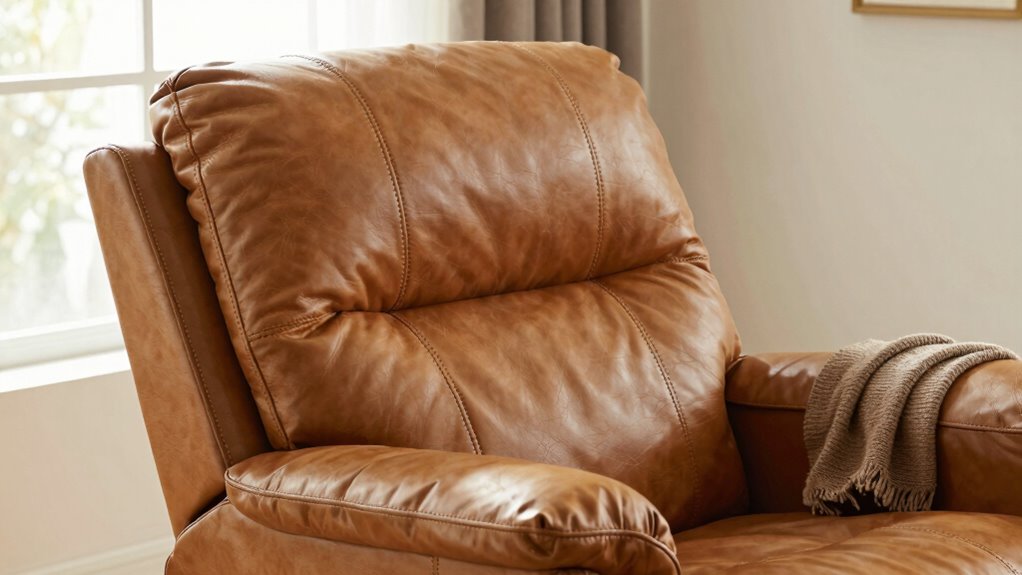
Finding the right recline angle can greatly enhance your comfort and reduce strain on your body. When you sit at an optimal recline, you support your back properly, promoting an ergonomic posture that minimizes discomfort and prevents long-term issues. The key is understanding how different angles influence pressure distribution across your seat and back. A recline that’s too upright can cause you to hunch forward, straining your neck and shoulders, while leaning too far back might put unnecessary pressure on your lower back and hips. The goal is to find a position where your spine maintains its natural curve, and your weight is evenly distributed, so no single area bears excessive pressure.
Finding the ideal recline supports your spine’s natural curve and evenly distributes pressure for lasting comfort and better posture.
Start by adjusting your chair or recliner gradually. As you lean back, pay close attention to how your body feels. You’re looking for a position where your shoulders relax, your lower back feels supported, and your thighs are comfortably resting without feeling pinched or overly compressed. When your pelvis tilts slightly backward, it helps create a more ergonomic posture, encouraging better pressure distribution and reducing fatigue. Don’t be tempted to lean back too far at first—small, incremental adjustments allow you to identify the most comfortable angle without overextending. Incorporating ergonomic principles can further improve your sitting posture and overall comfort.
While finding the ideal recline, consider the purpose of your activity. For reading, a slight recline—around 100 to 110 degrees—often works well, providing enough support without compromising your ability to see your material comfortably. Resting or recovering might call for a more reclined position, somewhere between 110 and 130 degrees, where you can relax fully without putting too much strain on your lower back. Remember, comfort isn’t just about how it feels initially; it’s also about how your body responds over time. If you notice any discomfort or pressure points, make small adjustments until you achieve a more balanced pressure distribution. Additionally, incorporating biodiversity-friendly materials into your furniture choices can promote healthier indoor environments that support your overall well-being.
Keep in mind, your body’s needs can change throughout the day. What feels perfect during one activity might not be ideal for another. Periodically reevaluate your position, especially if you start to feel stiffness or soreness. Using lumbar support can help maintain proper ergonomic posture, especially in more reclined positions. Ultimately, the best recline angle is one that aligns with your body’s natural curves, distributes pressure evenly, and allows you to relax without strain. By paying close attention to these factors, you’ll find a comfortable, sustainable position that promotes better posture and overall well-being.
ergonomic recliner with adjustable angle
As an affiliate, we earn on qualifying purchases.
As an affiliate, we earn on qualifying purchases.
Frequently Asked Questions
Can Recline Angles Improve Sleep Quality?
Yes, recline angles can improve sleep quality by enhancing sleep comfort and providing better posture support. When you find the right angle, you reduce pressure on your back and neck, helping you relax more fully. Proper recline positioning can also minimize snoring and sleep disruptions. Experimenting with different angles allows you to discover the most comfortable and supportive position, ultimately leading to more restful, uninterrupted sleep.
How Often Should I Adjust My Recline Position?
You should adjust your recline position as often as a traveler changes scenery—roughly every 30 minutes to an hour. This keeps your ergonomic posture in harmony and prevents recline stability from becoming a distant memory. Small shifts help your muscles stay engaged, reducing stiffness and discomfort. Think of it as fine-tuning a musical instrument, ensuring every note in your comfort symphony plays perfectly throughout your day.
Are There Health Risks With Too Flat or Too Upright Positions?
Yes, sitting too flat or too upright can pose health risks. An overly flat position may cause poor posture alignment, leading to muscle strain in your neck, back, and shoulders. Conversely, a very upright position can increase pressure on your lower back and neck, also resulting in muscle strain. To avoid these issues, find a balanced recline angle that supports proper posture alignment and minimizes muscle strain, promoting comfort and health.
Does Body Size Affect the Optimal Recline Angle?
Just like a tailored suit fits better, your body size influences your ideal recline angle. Body proportion affects how comfortably you sit, so you should adjust your chair to match your personal comfort needs. If you’re taller or shorter, experiment with different angles until you find one that supports your back and aligns with your body naturally. Ultimately, the best recline angle adapts to your unique body shape, ensuring comfort and proper support.
Can Specific Recline Angles Help Alleviate Back Pain?
Yes, specific recline angles can help alleviate back pain by improving lumbar support and posture alignment. When you lean back to about 100-110 degrees, it reduces pressure on your lower back and promotes better spinal positioning. Make certain your lumbar region is well-supported, either with a cushion or ergonomic chair. This positioning encourages proper posture, minimizes strain, and can greatly ease back discomfort during extended sitting or rest periods.
reclining office chair lumbar support
As an affiliate, we earn on qualifying purchases.
As an affiliate, we earn on qualifying purchases.
Conclusion
Finding your perfect recline angle is like tuning a delicate instrument—it takes patience and a keen ear. Once you strike the right balance, every read, rest, and recovery session becomes a symphony of comfort. Trust your instincts, listen to your body’s whispers, and adjust until you feel truly at ease. With the right angle, your chair transforms into a cozy haven, cradling you in a gentle embrace that makes every moment feel just right.
recliner with adjustable tilt for reading
As an affiliate, we earn on qualifying purchases.
As an affiliate, we earn on qualifying purchases.
ergonomic lounge chair for relaxation
As an affiliate, we earn on qualifying purchases.
As an affiliate, we earn on qualifying purchases.
NFL season / tailgating Picks
team gear
As an affiliate, we earn on qualifying purchases.