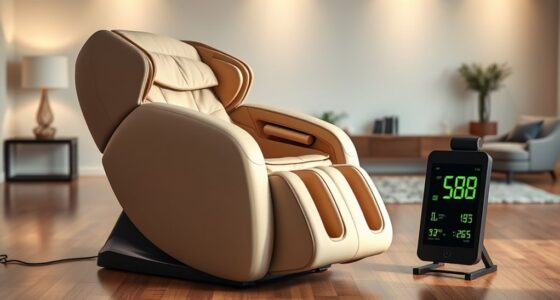
Massage chair technology has advanced from bulky, basic designs to sleek, personalized devices. Early models focused on simple vibrations, but now, chairs feature ergonomic forms that conform to your body. They incorporate complex systems like airbags, rollers, and heat therapy, often controlled by digital interfaces and AI. These innovations improve comfort, effectiveness, and customization, transforming relaxation into a precise, professional-quality experience at home. Keep exploring to discover how these innovations continue shaping the future of massage therapy.
Key Takeaways
- Early massage chairs resembled bulky furniture with basic vibration features.
- Design shifted towards ergonomic models that contour to individual body shapes for better support.
- Mechanisms evolved from simple vibrations to complex systems including airbags, rollers, and heat therapy.
- Control systems advanced from manual adjustments to digital interfaces, remote controls, AI, and biometric sensors.
- Modern chairs integrate sophisticated features like zero-gravity positioning for enhanced comfort and therapeutic benefits.
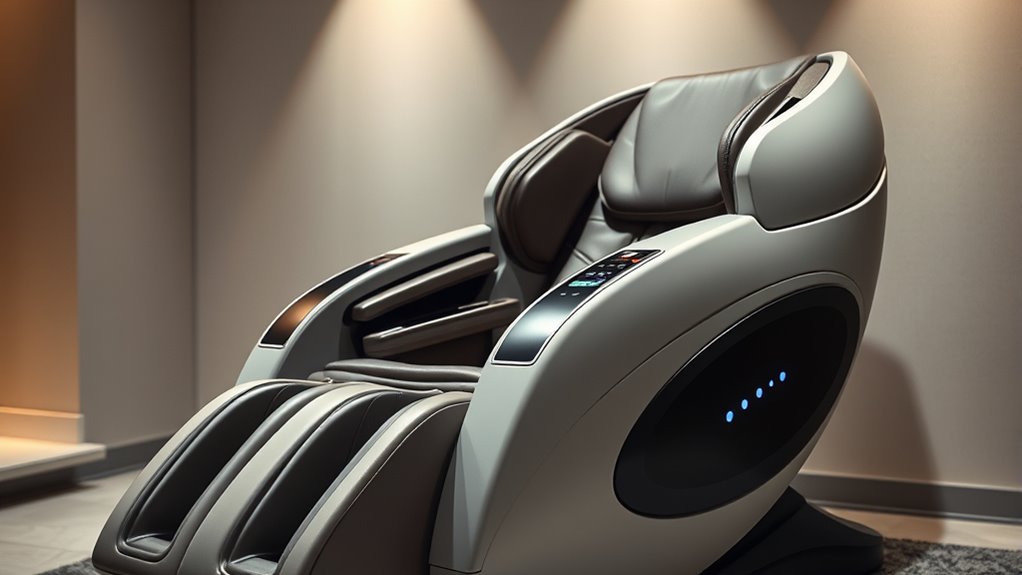
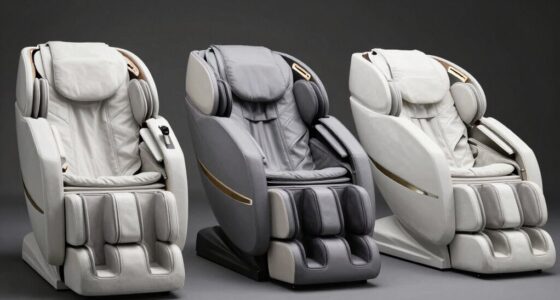
Have you ever wondered how modern massage chairs deliver such precise and customizable relief? It all comes down to advancements in ergonomic design and soothing mechanisms that have evolved over decades. Early massage chairs looked more like bulky furniture pieces, but as technology progressed, designers focused on creating seats that conform better to the human body. Ergonomic design became a cornerstone, guaranteeing that every curve and contour of the chair supports your body comfortably while targeting muscles effectively. This focus on comfort and precision allows the chair to adapt to your unique shape, making each massage feel personalized.
Modern massage chairs combine ergonomic design and advanced mechanisms for personalized, effective relief.
The development of soothing mechanisms played a vital role in transforming massage chairs from simple vibration devices to complex systems capable of mimicking human touch. Initially, basic vibrations and rollers were used to provide relaxation, but these were limited in scope. Over time, manufacturers integrated sophisticated components like airbags, rollers, and heat therapy, all controlled by computerized systems. These mechanisms work in harmony to deliver targeted pressure, kneading, tapping, and stretching motions, replicating various massage styles. The integration of sensors further enhanced the experience, allowing the chair to adjust its techniques based on your body’s response, giving you a tailored session every time.
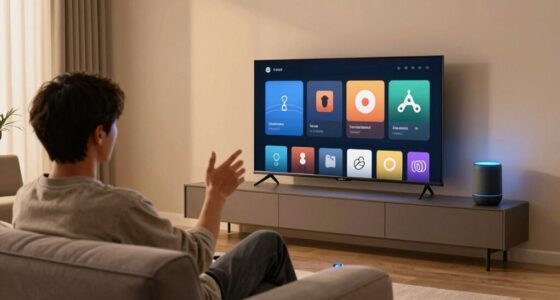
As technology advanced, so did the control systems. Early models relied on manual adjustments, but now, digital interfaces and remote controls allow you to customize your massage down to specific areas and intensity levels. Some high-end models even incorporate AI and biometric sensors that analyze your muscle tension and preferences, automatically adjusting the soothing mechanisms for maximum relief. This evolution means you no longer need to rely solely on preset programs; instead, the chair responds intelligently to your needs, providing a truly personalized experience. Additionally, the ongoing development of adjustable features has further enhanced user comfort and functionality.
The combination of ergonomic design and soothing mechanisms has also led to the development of features like zero-gravity positioning, which helps to evenly distribute your weight and reduce pressure on your spine. This innovation enhances both comfort and therapeutic benefits, making massages more effective. Over the years, manufacturers have prioritized creating chairs that are not only functional but also easy to use and aesthetically pleasing, blending seamlessly into modern living spaces.
In short, the journey of massage chair technology has been about making relief more precise, customizable, and accessible. The integration of ergonomic design ensures comfort, while advanced soothing mechanisms deliver targeted therapy. Together, these innovations have transformed what was once a simple relaxation tool into a sophisticated device capable of providing professional-quality massages at home.
Frequently Asked Questions
How Do Massage Chair Sensors Detect Muscle Tension?
You might wonder how massage chair sensors detect muscle tension. They use advanced sensor accuracy, such as pressure and infrared sensors, to measure muscle firmness and movement. These sensors detect tension detection by analyzing variations in pressure and heat, which indicate muscle tightness. As you sit, the sensors continuously monitor your muscles, allowing the chair to customize massage techniques for peak tension relief, ensuring a personalized and effective experience.
What Materials Are Used in the Latest Massage Chair Padding?
They say, “Comfort is key,” and the latest massage chair padding reflects that. You’ll find high-quality massage foam providing plush support and memory fabric that molds to your body. These materials enhance your experience by offering durability, breathability, and a cozy feel. Together, they create a luxurious, adaptive surface that responds to your movements, ensuring relaxation and comfort every time you sit down.
How Energy-Efficient Are Modern Massage Chair Models?
Modern massage chairs are quite energy-efficient, often using sustainable energy sources and eco-friendly materials. You’ll find models with energy-saving modes that reduce power consumption during standby, helping you save on electricity bills. These chairs are designed with environmentally conscious materials, making them better for the planet while still providing luxurious comfort. By choosing an energy-efficient model, you support sustainable energy practices and enjoy advanced features without compromising eco-friendliness.
Can Massage Chairs Be Customized for Specific Health Conditions?
Imagine your body as a unique symphony, and personalized therapy as the conductor guiding each note. Yes, massage chairs can be customized for specific health conditions, turning your relaxation into targeted relief. Through health condition customization, you can fine-tune the settings to address issues like muscle tension or chronic pain, ensuring that your massage experience is precisely aligned with your needs. This tailored approach transforms relaxation into an effective, healing harmony.
What Future Innovations Are Expected in Massage Chair Technology?
You can expect future massage chairs to feature smart ergonomics and AI personalization, making your experience more tailored than ever. These innovations will analyze your body’s needs in real-time, adjusting pressure, techniques, and settings automatically. As a result, you’ll enjoy more effective relief and comfort, whether you’re targeting specific health concerns or simply relaxing. These advancements will create a seamless, personalized massage experience that adapts to your evolving needs with intelligent precision.
Conclusion
As you’ve seen, massage chair technology has come a long way, blending innovation with comfort. From simple mechanical rollers to advanced AI-driven systems, these chairs continue to evolve. Remember, Rome wasn’t built in a day, and neither is perfect comfort. So, embrace the progress and enjoy the journey toward relaxation—after all, a little progress each day adds up to a lifetime of well-being. Keep relaxing and stay curious about what’s next!