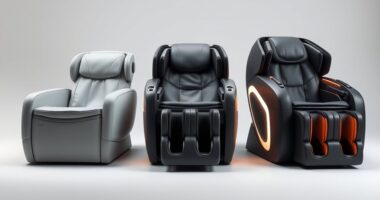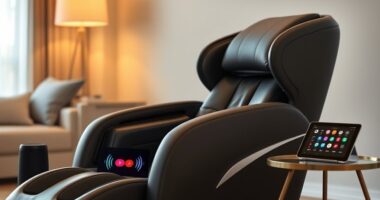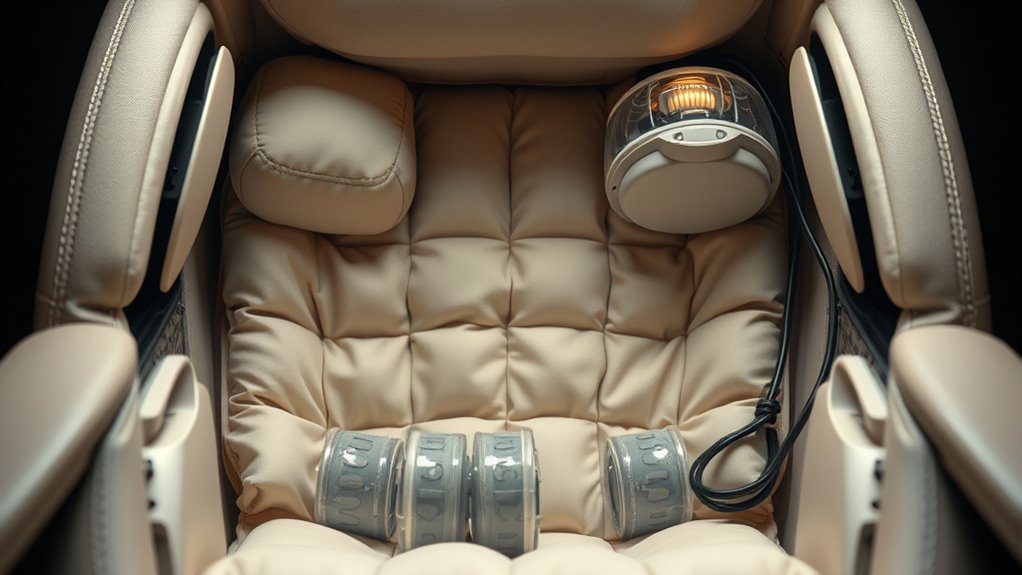

Inside your massage chair, you’ll find key components working together to provide a personalized experience. Rollers mimic hand movements, targeting muscles with kneading and tapping. Airbags inflate and deflate rhythmically for deep compression, while heating elements promote relaxation. Sensors detect your body shape and tension, adjusting movements for maximum comfort. An ergonomic design ensures proper alignment, and a control panel lets you customize modes and intensity. Explore further to understand how these features create a truly therapeutic massage.
Key Takeaways
- Rollers simulate manual massage techniques by moving along the back to target muscles with kneading, tapping, or shiatsu motions.
- Track systems enable rollers to glide vertically and horizontally for comprehensive coverage of the back, neck, and limbs.
- Airbags inflate and deflate rhythmically to provide deep compression and muscle tension relief.
- Heating elements embedded in specific areas promote blood flow and enhance muscle relaxation.
- Sensor technology detects body shape and tension, allowing personalized adjustments for an effective massage experience.
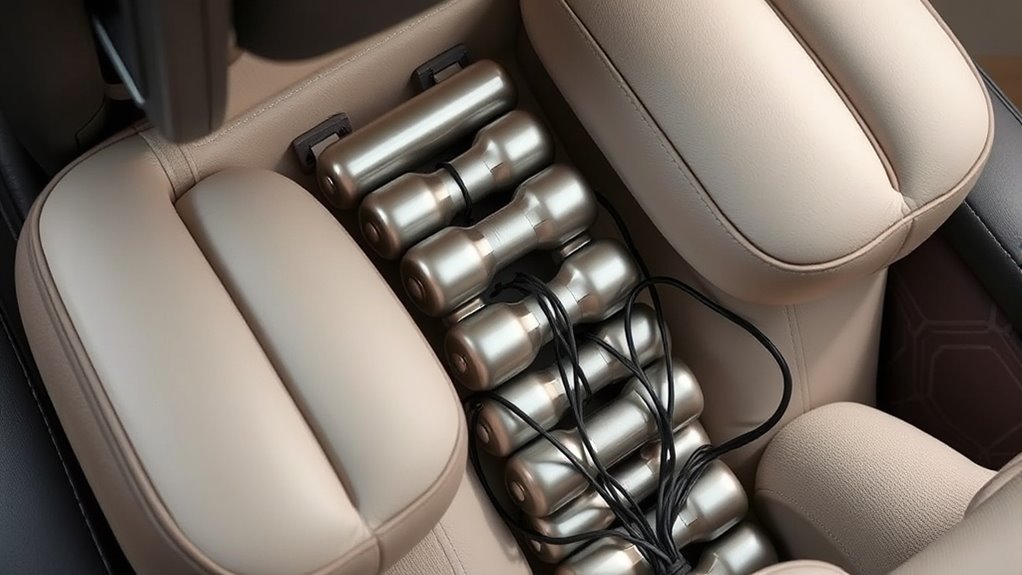
A massage chair is a sophisticated piece of equipment designed to deliver relaxation and therapeutic benefits through a complex system of components. When you sit down, you’ll notice the impressive array of massage chair features that work together to provide a customized experience. These features include rollers, airbags, heating elements, and various control mechanisms, all integrated seamlessly within the chair’s structure. The design focuses heavily on ergonomic principles, ensuring that every part of the chair supports your body comfortably and effectively. An ergonomic design isn’t just about comfort; it’s about aligning your body correctly to maximize the benefits of the massage. The shape and contouring of the chair are crafted to fit the natural curves of your spine, neck, and limbs, reducing strain and enhancing relaxation.
Inside, the core components of a massage chair include the rollers, which are responsible for mimicking human hand movements. These rollers glide along your back, targeting muscles with kneading, tapping, or shiatsu techniques. The rollers are mounted on a track system that allows them to move vertically and horizontally, so they can reach different areas of your back with precision. Airbags are another essential feature; they inflate and deflate rhythmically to gently compress muscles and tissues. This air compression helps improve circulation, reduce muscle tension, and provide a massage experience that feels both deep and soothing. The placement and size of airbags are designed with ergonomic considerations in mind, ensuring they target key muscle groups without causing discomfort.
Heating elements are embedded in specific areas, such as the lower back or shoulders, to promote blood flow and relax tight muscles. These elements are controlled electronically, allowing you to customize warmth levels during your massage session. The control panel, often a remote or touch interface, lets you select massage modes, intensity, and targeted zones, giving you full command over your experience. The internal frame and padding are constructed to support your body’s weight evenly, preventing pressure points and ensuring prolonged comfort. This structural design emphasizes ergonomic principles, aligning with your body’s natural posture for maximum relaxation and therapeutic effect.
Furthermore, advancements in sensor technology enable the massage chair to adapt its movements based on your body’s shape and tension levels, providing a more personalized massage. All these components work together in harmony, guided by intelligent programming and sensors that adapt to your body’s shape and needs. The combination of advanced massage chair features and ergonomic design results in a device that’s not just functional but also tailored to deliver a deeply personalized and comfortable massage experience. When you understand the anatomy of a massage chair, you appreciate how each element plays a crucial role in helping you unwind and recover from daily stress.
Frequently Asked Questions
How Long Do Massage Chair Components Typically Last?
The components in your massage chair usually last between 3 to 7 years, depending on usage and maintenance. For ideal component durability and lifespan considerations, regularly clean and inspect parts like motors, rollers, and upholstery. Proper care can extend their performance, ensuring your chair remains effective and comfortable. Keep an eye on signs of wear, and replace parts as needed to maximize longevity and enjoy consistent massage experiences.
Are There Safety Features to Prevent Injury During Use?
Think of your massage chair as a cautious friend, always looking out for you. It’s equipped with safety sensors that detect pressure or unusual movement, stopping the massage if needed. An emergency shutoff acts like a quick brake, allowing you to turn off the chair instantly. These safety features work together to prevent injuries, giving you peace of mind while you relax and enjoy your massage.
Can the Chair’s Massage Functions Be Customized?
Yes, you can customize the massage functions on your chair. It offers personalized programming, allowing you to target specific areas and adjust settings to your preferences. You can also control the adjustable intensity, ensuring a comfortable experience. This customization feature helps you tailor your massage sessions, whether you want a gentle relaxation or a more vigorous massage, making your experience more effective and enjoyable.
What Maintenance Is Required for the Internal Components?
You need to regularly perform internal cleaning to keep dust and debris from affecting the components, ensuring smooth operation. Check for signs of wear and tear, and replace any faulty components promptly to prevent further damage. Make sure to follow your manufacturer’s guidelines for maintenance intervals and procedures. Proper care helps extend your massage chair’s lifespan, maintaining ideal performance and avoiding costly repairs down the line.
Do All Massage Chairs Have the Same Key Components?
Not all massage chairs have the same key components, but many share core parts like motors, rollers, and airbags. You might worry about component durability, but high-quality chairs feature sturdy, long-lasting parts. With customization options, you can choose models that suit your needs and guarantee reliability. As a result, exploring different chairs helps you find one with the right combination of durability and features for your comfort.
Conclusion
Now that you know the key components inside your massage chair, you’re like a skilled navigator understanding the ship’s inner workings. Every motor, roller, and cushion works together like a symphony, ready to soothe your muscles and ease your tension. With this knowledge, you’re empowered to appreciate the craftsmanship behind your relaxation haven. Just as a master artist brings a masterpiece to life, your massage chair transforms your space into a sanctuary of comfort.