
To get the most out of advanced heat therapy in chairs, understand that ideal temperature ranges from 104°F to 113°F, with gradual adjustments for comfort. Use sessions of 15-20 minutes, 2-3 times daily, and pay attention to signs like redness or numbness to prevent overuse. Proper placement of heat elements and combining therapy with stretching or cold treatments can boost effectiveness. Stay mindful of safety tips—there’s more to discover that can help you maximize your relief efforts.
Key Takeaways
- Optimal heat therapy uses precise temperature ranges (104°F-113°F) to maximize benefits without risking burns or discomfort.
- Limit sessions to 15-20 minutes, 2-3 times daily, and watch for signs like redness or numbness to prevent overuse.
- Combining heat with stretching or massage enhances muscle relaxation and flexibility, speeding recovery and reducing stiffness.
- Regular maintenance and proper cleaning of the chair ensure safety, longevity, and consistent heat performance.
- Integrate modalities carefully, starting with low intensity, to avoid overheating and optimize therapeutic effects safely.
Understanding the Science Behind Heat Therapy
Have you ever wondered how heat therapy actually works to relieve pain and relax muscles? It all comes down to heat conduction, where heat transfers from the therapy source into your tissues. When you apply heat, your body responds by increasing blood flow, bringing oxygen and nutrients to the affected area. This tissue response helps reduce stiffness and soothe sore muscles. As heat penetrates deeper layers, it prompts your tissues to relax, easing discomfort. The process isn’t just about warming the skin; it triggers cellular reactions that promote healing. Understanding how heat conduction influences your tissue response allows you to appreciate the science behind effective heat therapy, making it easier to use in a way that maximizes relief and recovery.
Optimal Temperature Settings for Maximum Relief
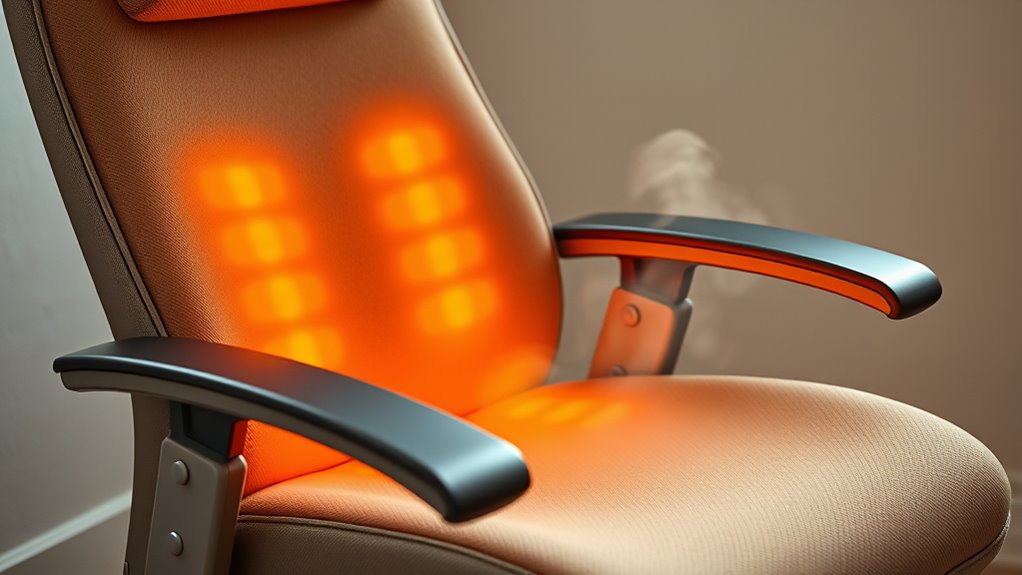
Finding the right temperature is key to getting the most relief from heat therapy in chairs. Proper temperature calibration guarantees you don’t experience discomfort or insufficient warmth. Generally, a range of 104°F to 113°F (40°C to 45°C) provides effective relief without risking burns or irritation. Adjust the settings gradually, paying attention to your user comfort, and avoid sudden jumps in heat. Keep in mind that individual preferences vary, so fine-tune the temperature to suit your needs. Too high, and you might feel overheated; too low, and you won’t notice any benefits. Consistent, safe temperatures maximize therapeutic benefits while keeping you comfortable throughout the session. Remember, the goal is to find that sweet spot where heat eases tension without causing discomfort. Additionally, monitoring AI safety measures and ensuring reliable device performance can help prevent accidental overheating and enhance your overall experience.
Duration and Frequency: How Long and How Often to Use
Knowing how long and how often to use heat therapy can make a big difference in your relief. Usually, sessions last about 15-20 minutes, and most people find that 2-3 times a day works best. Pay attention to your body and stop if you notice any discomfort or irritation. To prevent damage, always use a low heat setting and avoid prolonged exposure to protect your skin and materials.
Recommended Session Lengths
For most people, sessions of heat therapy in chairs should last between 15 to 30 minutes to achieve effective relief without overexposure. This duration balances heat penetration and user comfort, ensuring you get benefits without discomfort. If your session is too short, you might miss out on deep muscle relaxation; too long, and you risk overheating. To help customize your experience, consider these guidelines:
| Session Duration | Frequency per Week | Best Time of Day |
|---|---|---|
| 15-20 minutes | 3-4 times | Evening |
| 20-30 minutes | 2-3 times | Morning or Evening |
| 10-15 minutes | As needed | Anytime |
| 30+ minutes | Rarely | Only with medical advice |
| Adjust based on comfort and heat response |
Additionally, understanding your body’s heat response can help prevent discomfort and maximize relaxation.
Optimal Usage Frequency
To maximize the benefits of heat therapy in chairs, it’s important to balance both session duration and frequency. Typically, shorter sessions of 15 to 20 minutes allow ideal heat penetration without compromising comfort levels. Using the chair too frequently—more than once or twice daily—can lead to overstimulation or reduced effectiveness. Pay attention to how your body responds; if you start feeling numb or uncomfortable, it’s a sign to reduce session length or frequency. Consistency is key, but giving your body time to recover between sessions ensures sustained heat penetration benefits. Adjust your usage based on your comfort, and avoid overdoing it to prevent diminishing returns or irritation. Finding the right balance helps you get the most out of your heat therapy sessions safely. Additionally, understanding the heat penetration process can help optimize your session outcomes.
Signs to Limit Use
Pay attention to how your body reacts during and after heat therapy sessions, as signs like numbness, tingling, or discomfort indicate you should cut back on duration or frequency. Overusing heat can lead to skin irritation or diminished muscle relaxation benefits. To optimize stress reduction and muscle relaxation without overdoing it, watch for these signs:
- Persistent soreness or redness
- Tingling sensations that don’t fade
- Dizziness or lightheadedness
- Unusual discomfort or pain
Limiting use ensures you avoid adverse effects, letting heat therapy support your recovery effectively. Stick to recommended durations and frequency, and always listen to your body. Proper moderation maximizes the benefits of heat therapy, helping you relax muscles and reduce stress safely. Additionally, understanding the science behind sound vibrations can enhance your overall well-being and recovery.
Different Types of Heat Elements and Their Benefits
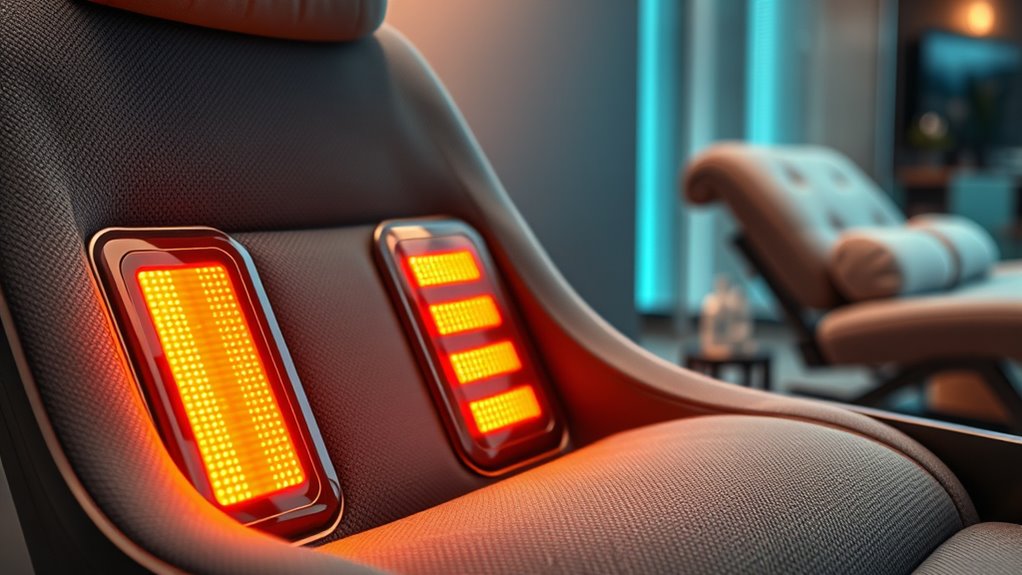
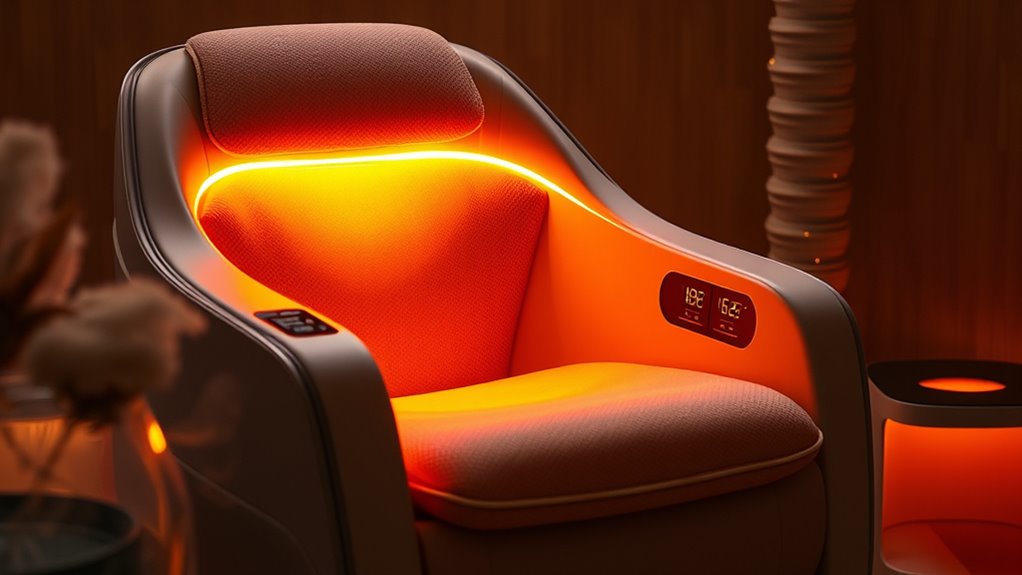
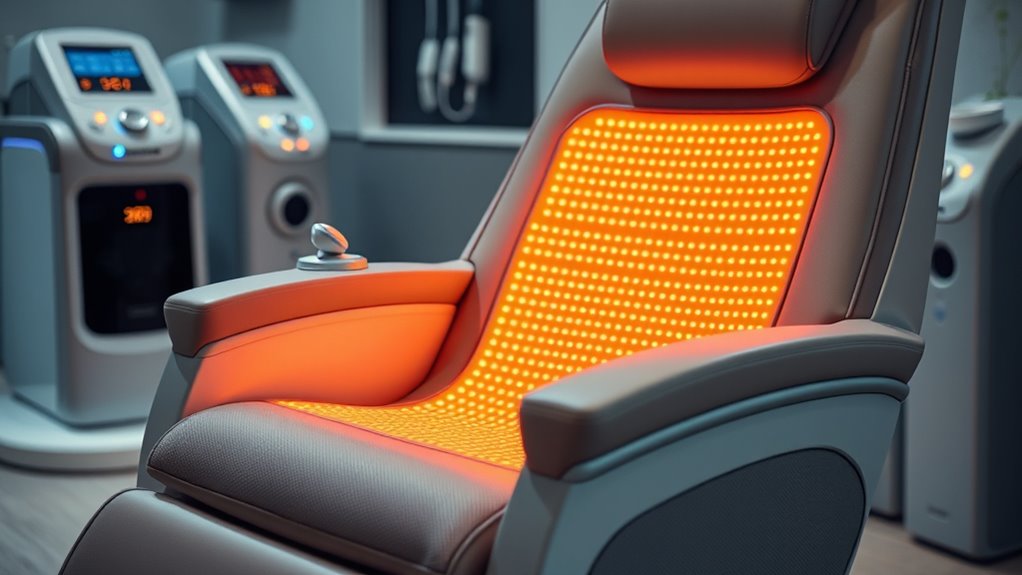
Different types of heat elements in heated chairs deliver varying levels of comfort and efficiency, making it important to understand their unique benefits. Infrared heating penetrates deeper into muscles, providing soothing relief and faster warmth. Gel packs, on the other hand, mold to your body’s shape, offering targeted, flexible heat that’s gentle yet effective. In addition, understanding Kia Tuning options can help optimize the overall performance of your vehicle, much like selecting the right heat element enhances chair comfort.
The Importance of Proper Placement for Targeted Relief

Proper placement of heat elements in your chair is essential for effective, targeted relief. When you focus on placement precision, you guarantee the heat reaches the muscles that need it most, maximizing comfort and benefits. Accurate placement helps you avoid unnecessary heat spread, which can reduce effectiveness and cause discomfort. To optimize muscle targeting, position heat zones directly over sore spots or tight areas. Adjusting the location based on your body’s needs enhances relief and prevents overuse. Utilizing vetted heating technology ensures safety and reliability during use. Ensure consistent contact for even heat distribution
Safety Precautions and Recognizing Overuse Signs
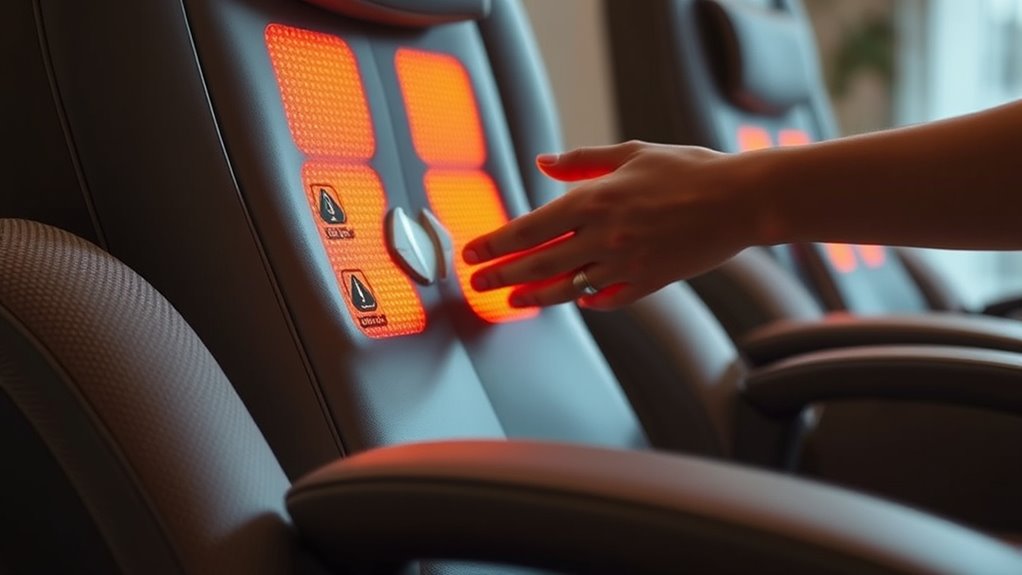
To guarantee safe use of heat therapy in your chair, it’s important to follow recommended guidelines and be aware of potential risks. Always check electrical safety features, like grounded plugs and proper wiring, to prevent shocks. Pay attention to user comfort; if heat becomes too intense or causes discomfort, reduce the setting immediately. Overuse signs include skin redness, tingling, or warmth that persists after therapy. Limit sessions to the advised duration—usually 15-20 minutes—and avoid falling asleep with the device on. Keep the chair dry and inspect cords regularly for damage. Being familiar with bicycle tire longevity in storage can help ensure your equipment remains safe and functional when not in use. Keep the chair dry and inspect cords regularly for damage.
Combining Heat Therapy With Other Recovery Techniques
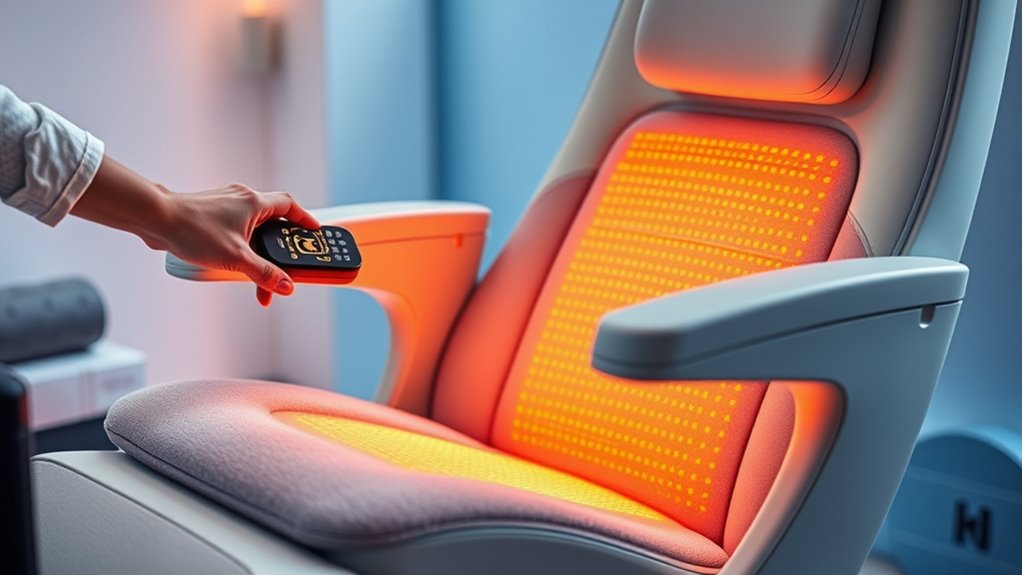
Combining heat therapy with other recovery techniques can amplify your results and promote faster healing. When used together carefully, these methods can naturally improve your flexibility and reduce tension. Just make sure to guarantee safety guidelines to avoid overdoing it and assure each modality works effectively. Proper ventilation and environmental considerations can enhance comfort and safety during therapy sessions.
Synergistic Recovery Effects
When heat therapy is paired with other recovery techniques, you can experience enhanced relief and faster results. Combining heat with methods like stretching, massage, or cold therapy boosts muscle relaxation and pain relief more effectively than using each alone. This synergistic effect helps reduce stiffness and accelerates the healing process. For example, applying heat before stretching loosens muscles, making exercises more effective. Similarly, combining heat with massage deepens muscle relaxation, easing tension. Cold therapy afterward can then reduce inflammation. These strategies work together to optimize recovery, helping you feel better sooner and prevent future injuries. Incorporating complementary techniques with heat therapy creates a extensive approach that maximizes pain relief and promotes quicker muscle recovery.
Enhancing Flexibility Naturally
Enhancing flexibility naturally becomes more effective when you combine heat therapy with other recovery techniques. Applying heat relaxes your muscles, making them more pliable and easier to stretch. This muscle relaxation reduces tension and promotes better movement, which is essential for improving flexibility. Additionally, heat therapy aids in pain reduction, helping you move more freely without discomfort. When paired with gentle stretching or mobility exercises, the benefits multiply. The warmth increases blood flow, delivering nutrients and oxygen to your muscles, speeding recovery and decreasing stiffness. By integrating heat therapy into your routine, you create an environment where your muscles are more receptive to stretching, leading to safer, more effective flexibility gains. This holistic approach helps you progress naturally and sustainably.
Combining Modalities Safely
To guarantee you get the safest and most effective results, it’s important to integrate heat therapy with other recovery techniques carefully. Proper modality integration ensures your body maintains ideal temperature regulation while maximizing benefits. Combining heat with techniques like stretching, massage, or cold therapy can enhance recovery, but you must monitor your body’s responses. Always start with lower intensities and durations, especially when adding new modalities. Pay attention to how your body reacts to prevent overheating or overstimulation.
- Use heat before stretching to loosen muscles safely
- Alternate heat with cold therapy to reduce inflammation
- Avoid combining heat with intense exercise to prevent overheating
- Listen to your body’s signals for safe modality integration
Maintenance and Care to Keep Your Chair Performing at Its Best

Proper maintenance and regular care are essential to guarantee your heat therapy chair continues to deliver effective and consistent performance. Keep the chair upholstery clean by regularly wiping it down with a damp cloth and avoiding harsh chemicals that could damage the fabric or leather. Inspect the upholstery for tears or wear and address issues promptly to prevent further damage. Additionally, review your warranty coverage to understand what repairs or replacements are included, especially if you encounter mechanical or heating problems. Proper upkeep not only extends the lifespan of your chair but also ensures safety and peak functioning. Remember, following the manufacturer’s care instructions helps maintain the chair’s performance and preserves your investment long-term.
Frequently Asked Questions
Can Heat Therapy Worsen Inflammation or Cause Adverse Effects?
Heat therapy can worsen inflammation or cause adverse effects if you overheat or apply it improperly. Overheating risks include burns or increased swelling, especially if you leave the heat source on too long or use it at too high a temperature. Always follow recommended guidelines, avoid direct skin contact, and monitor your response to prevent adverse effects. Proper application guarantees you enjoy the benefits without risking inflammation or injury.
Are There Specific Health Conditions That Contraindicate Heat Therapy Use?
Yes, certain medical contraindications can make heat therapy unsafe for you. If you have conditions like deep vein thrombosis, infections, or skin sensitivities, you should avoid heat therapy unless your doctor approves. Always consider allergy considerations, especially if you have allergies to materials or substances used in the therapy device. Consult your healthcare provider to confirm heat therapy won’t worsen your condition or cause adverse reactions.
How Do I Choose the Right Type of Heat Element for My Needs?
You should choose the right heat element based on your material options and safety considerations. Look for elements made from durable, conductive materials like carbon or ceramic that provide consistent warmth. Prioritize safety features such as automatic shut-off and temperature controls to prevent overheating. Consider your specific needs, like targeted heat or full-back coverage, and select a heat element that offers reliable performance while minimizing risks.
Is It Safe to Use Heat Therapy While Pregnant or Nursing?
Using heat therapy during pregnancy or nursing isn’t generally recommended without consulting your healthcare provider. Pregnancy safety is vital, as excessive heat can pose risks like overheating or fetal distress. Nursing considerations also include avoiding high temperatures that might affect milk supply or comfort. Always check with your doctor first, and follow their guidance to guarantee both your safety and your baby’s well-being when considering heat therapy.
What Are Signs That My Chair’s Heat System Needs Professional Maintenance?
If your chair’s heat system isn’t working properly, it’s time for professional chair maintenance. Look for signs like inconsistent heat, strange noises during operation, or the system not turning on at all. These issues indicate you need expert heat system troubleshooting. Don’t ignore these signs, as proper maintenance guarantees safe, effective heat therapy and prolongs your chair’s lifespan. Contact a professional to diagnose and fix the problem promptly.
Conclusion
Did you know that regular heat therapy can reduce muscle tension and improve circulation by up to 30%? By understanding how to use your chair properly, you can access these benefits and enhance your recovery routine. Just remember to stay within safe temperature and time limits, and always listen to your body. With the right knowledge, you’ll get the most out of your heat therapy sessions and feel better faster.