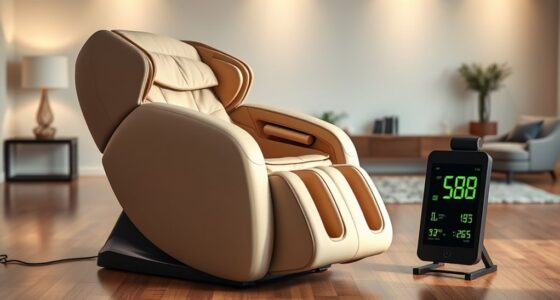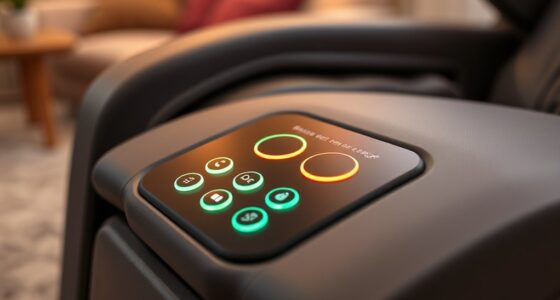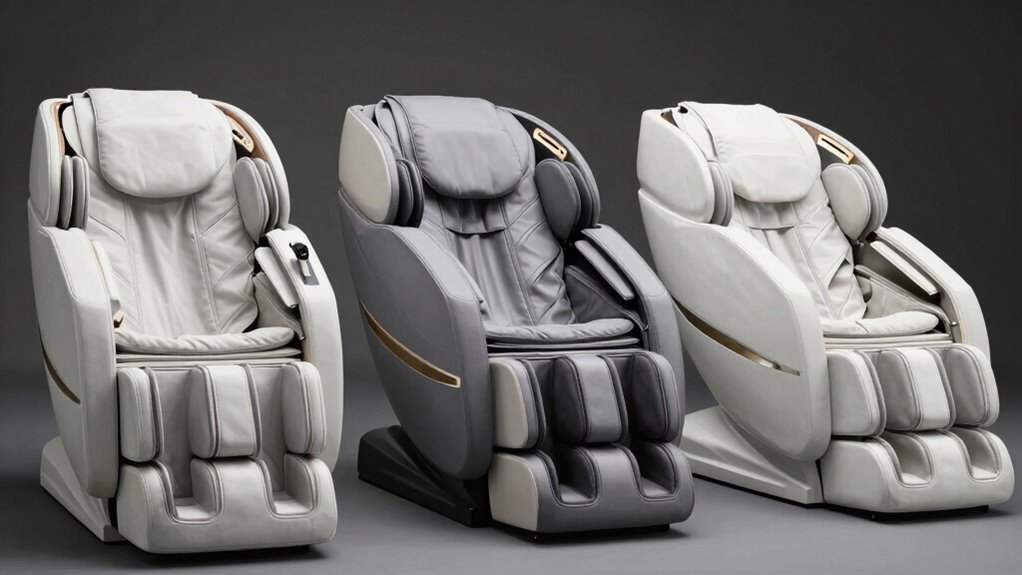
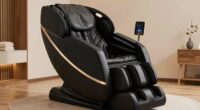
The most vital difference between 2D, 3D, and 4D massage chairs is the complexity of their movement capabilities, which directly impacts how realistic and personalized your massage feels. A 2D chair offers basic back-and-forth motions, while a 3D adds in/out motion for deeper pressure. The 4D takes it further with variable speed and rhythm, mimicking human touch more closely. Understanding this detail helps you choose the right chair to match your needs — discover more about these innovations below.
Key Takeaways
- The ‘D’ level indicates the complexity of motion, with 2D offering basic back-and-forth, 3D adding lateral movement, and 4D including adjustable speed and rhythm.
- Higher ‘D’ levels provide more natural, human-like massage experiences, which can significantly improve muscle relief and relaxation.
- The key difference impacting overall experience is the addition of in/out (lateral) and variable speed movements in 3D and 4D chairs.
- 4D massage chairs simulate real human touch more closely through rhythm and speed adjustments, setting them apart from 2D and 3D models.
- Choosing between 2D, 3D, or 4D depends on desired massage realism, targeted relief, and budget considerations.
What Are 2D, 3D, and 4D Massage Chairs?
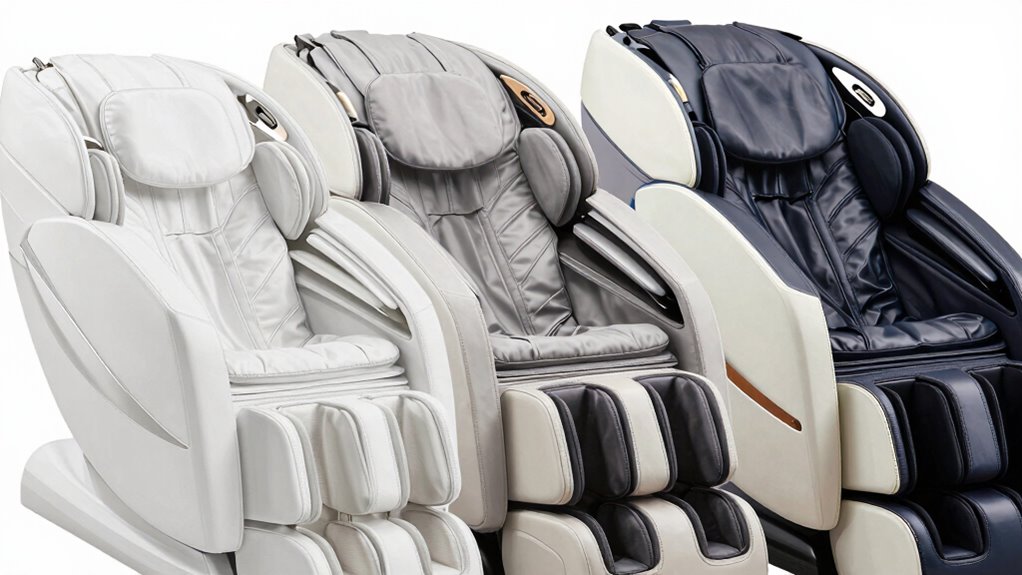
If you’re exploring different types of massage chairs, understanding what sets 2D, 3D, and 4D models apart is essential. These distinctions influence the massage therapy benefits you receive and the ergonomic design considerations. A 2D massage chair moves the massage rollers back and forth and up and down, providing basic relief. A 3D model adds an extra dimension by moving the rollers in and out, offering deeper, more customizable pressure. Meanwhile, 4D chairs incorporate variable speed and rhythm, mimicking the natural movements of a human massage therapist. This progression enhances comfort and effectiveness. Recognizing these differences helps you choose a chair that best addresses your needs, ensuring maximum relaxation and targeted relief. Additionally, the motion technology used in higher-end models often results in a more realistic and satisfying massage experience, making the massage quality significantly better. Furthermore, advancements in ergonomic design play a crucial role in supporting proper posture and reducing strain during use.
How Do 2D, 3D, and 4D Massage Chairs Differ in Movement?
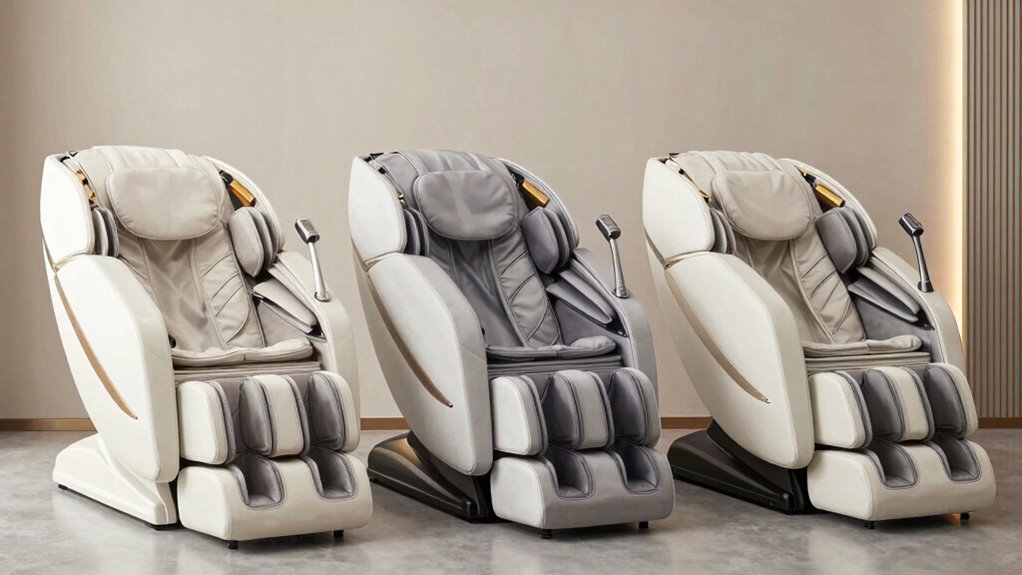
The key difference in movement among 2D, 3D, and 4D massage chairs lies in how the rollers operate to deliver various levels of pressure and customization. In 2D chairs, rollers move in two directions—up/down and left/right—offering basic personalized massage techniques. 3D chairs add a third layer by extending the rollers forward and backward, increasing the depth and intensity of the massage. 4D chairs take it further by adjusting the speed and rhythm of roller movement, mimicking the variations of human hands. These differences impact not only the massage experience but also the maintenance and durability of the chair, as more advanced movement mechanisms require careful upkeep to ensure long-lasting performance. Additionally, movement mechanism complexity influences the overall longevity and potential repair needs of the chair. Knowing how these movement levels differ helps you choose the right chair for your needs.
Why Is the ‘D’ Level Important When Choosing a Massage Chair?
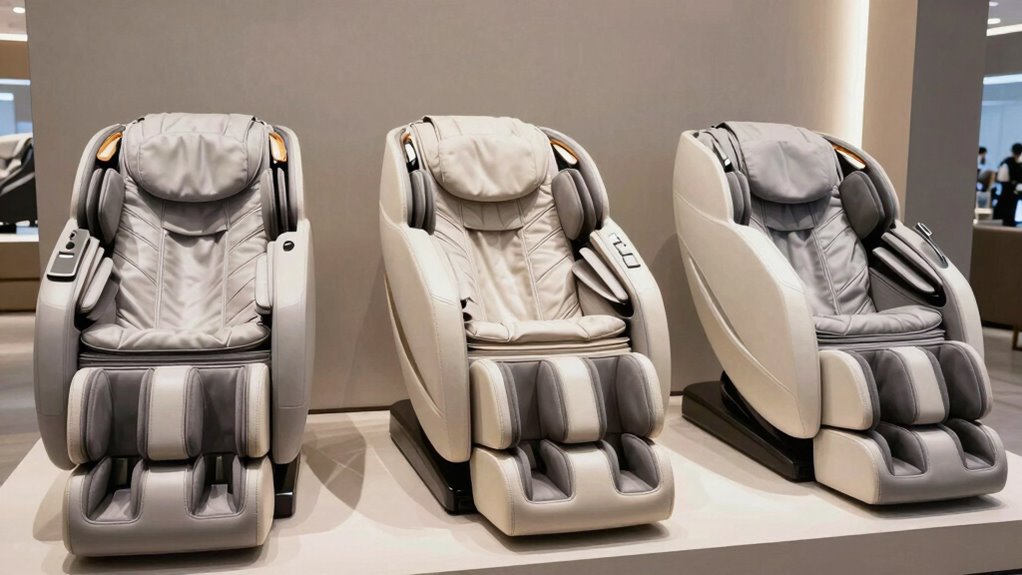
Why does the ‘D’ level matter when choosing a massage chair? The ‘D’ level, indicating the number of movement dimensions, directly affects ergonomic benefits and maintenance considerations. Higher ‘D’ levels, like 3D or 4D, mimic human-like motions more realistically, offering better relief. They also tend to be more complex, requiring more careful maintenance. Additionally, astrological signs have been linked to perceptions of attractiveness, which can influence personal confidence and how one engages with massage therapies. Here’s a quick comparison:
| Level | Movement Precision | Maintenance Complexity | Ergonomic Benefits |
|---|---|---|---|
| 2D | Back-and-forth, up-down | Low | Basic comfort |
| 3D | Adds lateral movement | Moderate | Improved relief |
| 4D | Includes rotational motion | Higher | Most realistic |
Choosing the right ‘D’ level balances your comfort preferences and upkeep capabilities.
What Features Are Improved in Higher ‘D’ Technology Chairs?
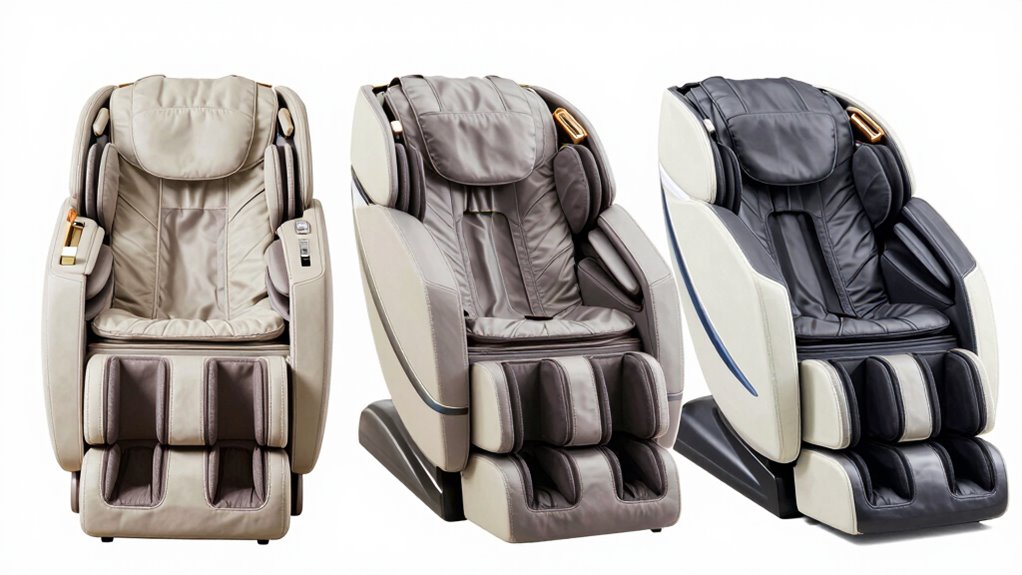
Higher ‘D’ technology in massage chairs considerably enhances their ability to mimic real human movements, providing a more natural and effective massage experience. This advancement offers improved ergonomics, allowing the chair to better target specific muscle groups and contours of your body. You’ll notice more precise and varied massage techniques, closely resembling human hands. Additionally, higher ‘D’ models often feature enhanced user customization options, enabling you to adjust intensity, speed, and targeted zones with greater accuracy. These improvements mean your massage session feels more personalized and tailored to your needs. Furthermore, realistic movement in higher ‘D’ chairs contributes significantly to overall relaxation and muscle recovery. The incorporation of advanced technology further elevates the quality of the massage, delivering a more immersive experience. The use of sophisticated motion control systems ensures smoother and more consistent massage patterns, enhancing comfort and effectiveness. Moreover, natural motion simulation helps reduce fatigue and stress during the session, making the experience even more therapeutic. Higher ‘D’ models also utilize innovative sensors to adapt to your body’s responses in real-time, ensuring optimal pressure and technique throughout the massage. Overall, higher ‘D’ technology delivers a more realistic, comfortable, and effective experience, making your massage sessions both more enjoyable and beneficial for overall relaxation and muscle recovery.
How Do You Pick the Right D-Level Massage Chair for Your Needs and Budget?
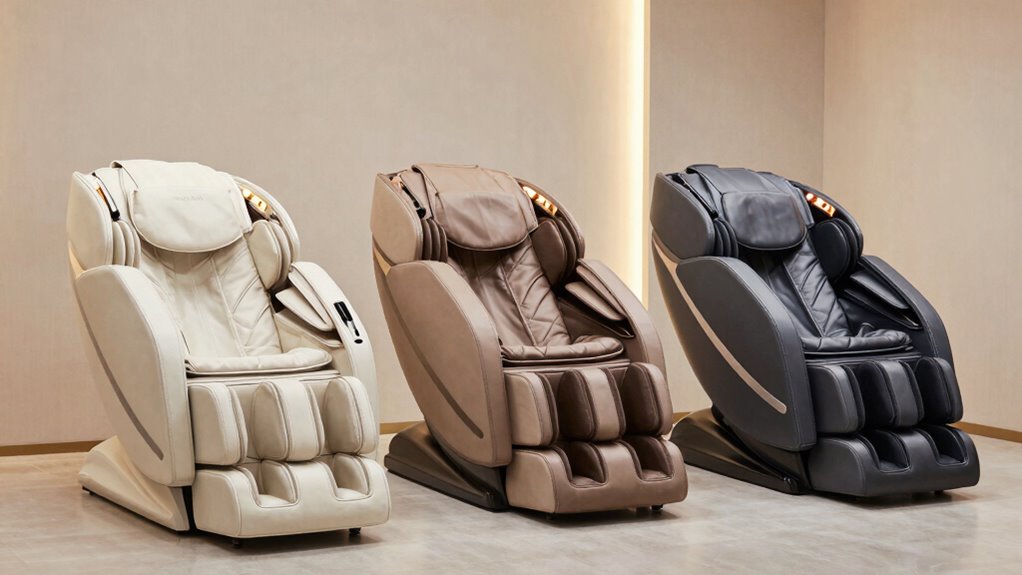
Choosing the right D-level massage chair depends on your specific needs and budget, as these factors influence which features and technology levels are most suitable. Understanding the massage chair history helps you appreciate the evolution of features, ensuring you select a model that offers genuine benefits. Consider ergonomic design considerations, such as adjustable settings and user-friendly controls, to maximize comfort and effectiveness. Higher D-level chairs provide more advanced features, but they also come with increased costs. Reflect on what you truly need—whether targeted massage zones, deep tissue relief, or customizable programs—and balance that with your budget. By focusing on these aspects, you can find a D-level massage chair that offers the best value and comfort tailored to your lifestyle.
Frequently Asked Questions
Are 4D Massage Chairs More Durable Than 2D or 3D Models?
4D massage chairs aren’t necessarily more durable than 2D or 3D models. The durability comparison depends mainly on material quality and construction rather than the technology level. If you choose a chair with high-quality materials like sturdy frames and durable padding, it’ll last longer regardless of whether it’s 2D, 3D, or 4D. So, focus on material quality to guarantee your massage chair withstands regular use over time.
How Does the Price Typically Vary Across Different D-Level Massage Chairs?
You’ll notice that price comparison shows 4D massage chairs are often 30-50% more expensive than 2D or 3D models due to advanced feature enhancements. This higher cost reflects their enhanced capabilities like deeper, more precise massage motions. If you prioritize advanced tech and a more customizable experience, expect to invest more; if budget is key, 2D or 3D models offer solid performance at lower prices.
Can I Upgrade a 2D or 3D Chair to 4D Later?
You can often upgrade a 2D or 3D massage chair to 4D, but it depends on the model and manufacturer’s upgrade options. Some chairs offer firmware updates or hardware upgrade kits, while others have feature limitations that prevent a full upgrade. Check with the retailer or manufacturer first to see if your specific chair supports an upgrade, as not all models are designed for this flexibility.
What Maintenance Is Required for Higher D-Level Massage Chairs?
Maintaining your higher-dimension massage chair is like tending a fine engine—regular care keeps it running smoothly. You should follow cleaning routines to prevent dust buildup and guarantee hygiene. Additionally, software updates are essential to keep the massage algorithms optimized and functioning correctly. Check manufacturer guidelines periodically, and consider professional servicing if you notice irregular performance, ensuring your chair remains a reliable source of relaxation.
Do Higher D-Level Chairs Consume More Power Than Lower D-Level Models?
Higher D-level chairs generally consume more power than lower D-level models because they have more advanced features and motor functions. However, their energy efficiency varies by brand and design. You can reduce power consumption by choosing models with energy-saving modes and good insulation. While they might use slightly more energy, the added features often provide better massage experiences, making them worth the extra power use if you value performance.
Conclusion
Choosing between 2D, 3D, and 4D massage chairs is like picking the right tool for a job—you want the one that fits your needs perfectly. Higher ‘D’ levels offer more realistic, dynamic massages, but they come at a cost. Consider your budget and what features matter most to you. With the right info, you’ll find a chair that feels as natural as a gentle breeze, transforming your relaxation routine.