TL;DR

Get wellness gear delivered free — and shop member deals
- Fast, free delivery on millions of items
- Access to Prime Big Deal Days deals on October 6–7
- Prime Video, Amazon Music and more included
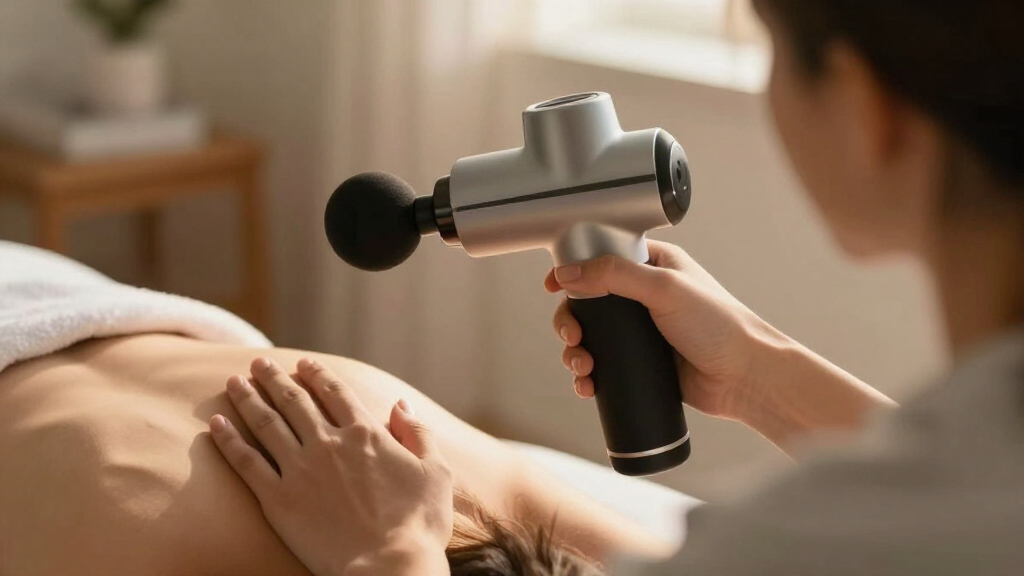
A massage gun, also called a percussive therapy device, delivers rapid pulses to soft tissue and may temporarily ease post-workout stiffness or improve range of motion. Evidence does not show that it speeds muscle repair, prevents injuries, or replaces sleep, food, fluids, and sensible training. Start gently, stay on large muscle groups, and stop if you feel pain, numbness, tingling, or unusual bruising.
Your legs can feel like packed sand after a hard run, and a few minutes with a massage gun may make them feel easier to move. That change in comfort can be useful, but it does not mean your muscles have repaired faster.
Here’s what a massage gun for muscle recovery can realistically offer, how to use one with care, and what still does the heavy lifting: rest, food, fluids, and training that gives your body time to adapt.
A massage gun may temporarily ease perceived stiffness or soreness and help you feel more mobile.
Current evidence does not establish faster muscle repair, injury prevention, or dependable performance gains.
Start with a low setting, soft attachment, light pressure, and brief passes over a large muscle.
Avoid joints, bones, the spine, sensitive neck areas, acute injuries, and unexplained swelling.
Rest, sleep, food, fluids, and sensible training remain the foundation of recovery.
What a massage gun can do for sore muscles
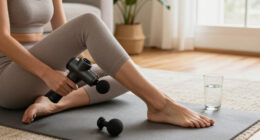
A massage gun for muscle recovery is a handheld device that delivers rapid pulses through an attachment to soft tissue. People use it to warm up, ease stiffness, or feel more comfortable after exercise. Small studies suggest percussive massage may temporarily improve range of motion or reduce perceived soreness, though results vary by technique, device, and study design [1].
Think of it as a brief comfort measure, like loosening a stiff shoelace before a walk. After a Saturday hike, for example, you might glide a soft attachment over your thigh and find stairs feel less awkward for a while. That change in how the area feels is not proof that the muscle has healed.
Comfort can improve before recovery is complete. A massage gun may help you feel ready to move, while your body still needs time to repair and adapt.
Why a massage gun won’t repair muscle faster
A massage gun for muscle recovery may change short-term soreness or stiffness, but strong evidence that it speeds tissue repair is lacking. Research on percussive devices remains limited: studies often involve small groups and use different devices, treatment times, and measures [1]. That makes sweeping promises about recovery hard to support. In practice, feeling better and being fully recovered are different outcomes: less soreness might make movement more comfortable, while the underlying tissue still needs time to adapt to training.
It also does not reliably prevent injuries, remove “lactic acid,” or guarantee better athletic performance. Your muscles do most of their rebuilding after the workout, with enough sleep, food, fluids, and time. If you trained hard on Tuesday, pounding a sore calf on Wednesday cannot replace a rest day or a meal that supports your training. This matters because treating a temporary change in sensation as proof of readiness can lead you to repeat hard training before your body is prepared.
Device features do not settle the evidence question. A quieter motor, heated head, or app-guided routine may make a product more pleasant to use, but those extras do not prove better recovery outcomes [1]. They may be worthwhile for convenience, yet they should not be confused with a reason to expect faster repair.
Use a massage gun gently with these five steps
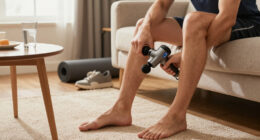
To use a massage gun for muscle recovery, begin with a low setting and a soft attachment, then make light, slow passes over a large muscle group. There is no single treatment time proven to work for everyone, so keep your first session brief and follow your device’s instructions. The goal is comfortable movement, not a contest to tolerate pressure. A gentle start also lets you notice how your body responds; more force can make an area sore or irritated without adding a proven recovery benefit.
- Choose a large muscle: Try your thigh or calf, rather than a joint or a small, tender spot. Larger muscle areas give you room to move the device while avoiding sensitive structures.
- Start low: Pick the gentlest speed and a soft attachment. You can stop or adjust if the sensation is uncomfortable; beginning at maximum power removes that margin of control.
- Keep it moving: Glide slowly across the muscle with light pressure instead of holding the head in one place. This helps avoid concentrating repeated force on one spot.
- Check how you feel: Pause if the sensation becomes sharp, painful, or unpleasant. Discomfort is not evidence that the treatment is working.
- Stop for warning signs: End the session if you notice numbness, tingling, unusual bruising, or worsening symptoms. These signs are a reason to stop, not to increase the setting or push through.
For example, after cycling, you could make a few light passes along your thigh, then see whether a comfortable walk feels easier. If it hurts, back off or stop; a stronger setting is not automatically more effective. Judge the session by whether movement feels comfortable afterward, not by how much pressure you tolerated.
Know where to use it—and where to avoid it
A massage gun belongs on healthy, fleshy muscle, and you should avoid bones, joints, the spine, and the front or sides of your neck. These areas have less protective muscle or contain sensitive structures, so direct percussion can cause pain or irritation without offering a clear benefit. Do not use one on an acute injury, unexplained swelling, or an area that feels unusually painful. Strong pressure can cause bruising or tissue irritation, so let comfort guide you rather than the device’s maximum setting.
Say your shoulder feels tight after carrying a heavy bag: a gentle pass over a comfortable muscle area is different from pressing directly on the joint or a sharp, newly painful spot. The location and character of the discomfort matter; a new sharp pain or unexplained swelling may have a cause that percussion cannot identify or treat. Stop if you develop pain, numbness, tingling, or swelling that seems unusual. Persistent or severe symptoms deserve professional assessment rather than repeated percussion.
Ask a healthcare professional before using a massage gun if you are pregnant or have a bleeding disorder, reduced sensation, blood clot risk, significant circulation problems, or a recent surgery or injury. These conditions can change how pressure is sensed or how the body responds, so general use advice may not fit your situation. Never use one to treat a suspected clot, fracture, or serious injury.
Choose comfort and control over maximum power
The best massage guns for your routine are the ones you can handle comfortably and control, not necessarily the ones with the most force or attachments. A massage gun, also called a percussive therapy device, delivers rapid pulses, but extra power does not establish stronger recovery benefits. In practical use, a lighter device with simple speed controls may make it easier to keep pressure gentle and stop when needed. Weight, noise, grip, battery life, and easy speed adjustment can matter more in everyday use.
Imagine using it in a small apartment after an evening run: a lighter, quieter model may be easier to hold and less disruptive than a louder device with features you rarely use. Heat, cooling, and guided routines can affect convenience or preference, but product features should be judged separately from evidence about percussive massage itself [1]. The tradeoff is straightforward: added features may improve the experience, but they can also add cost and complexity without establishing a better recovery result.
- Look for easy control: You should be able to use a gentle setting without straining your hand. Better control makes it easier to keep the session comfortable.
- Check the feel: A comfortable grip and manageable weight make short sessions easier, especially when reaching a thigh or calf.
- Ignore pressure to buy more: More attachments and higher speeds do not prove better results. Choose features you will actually use for comfort or convenience.
Build recovery around the habits that matter most
A massage gun for muscle recovery works best as an optional comfort tool alongside sleep, enough food and fluids, sensible training progress, and rest. Those basics give your body the conditions and time it needs to recover. Percussion can be one small part of your routine, but it cannot make an overloaded training week disappear. This distinction helps you decide what to do next: use the device if it makes movement more comfortable, and adjust training if your body still needs recovery.
For instance, if you add hill sprints after several weeks off and your calves ache, consider easing your next session and giving yourself time to rest. A gentle massage gun session may make the area feel more comfortable, but worsening pain or symptoms that persist should prompt professional advice. The sensation of looseness is useful feedback about comfort, not a diagnosis or a reliable test of whether the calf is ready for another hard workout.
Before a workout, some people use brief, light passes to feel more mobile. Keep a gradual warm-up too: an easy jog, brisk walk, or movement practice prepares you to exercise in ways a handheld device does not replace. The device may help you feel ready to move, while the warm-up lets you build into the actual movements and effort of the session.
Frequently Asked Questions
Do massage guns actually speed up muscle recovery?
They may temporarily ease perceived soreness or stiffness, but faster muscle tissue repair has not been established. Sleep, adequate food and fluids, and time remain central to recovery.
Should using a massage gun hurt?
No. The sensation may feel intense, but sharp pain is not a goal or a sign that the device is working. Stop if you feel pain, numbness, tingling, or worsening discomfort.
How long should I use a massage gun on each muscle?
There is no single proven dose for every person or muscle. Start with brief, gentle passes, keep the device moving, and follow the manufacturer’s instructions.
Can I use a massage gun on my neck, spine, or joints?
Avoid direct treatment over the spine, joints, and the front or sides of the neck. If you are unsure where it is safe to use, ask a healthcare professional.
Are massage guns safe for everyone?
No. Pregnancy, bleeding disorders, reduced sensation, blood clot risk, circulation problems, and recent surgery or injury can affect safety. Ask a healthcare professional before use when any of these apply.
Conclusion
Use a massage gun for comfort, not as a promise of faster healing. Start gently, stay on healthy muscle, and give your body the rest it needs. Recovery is less like flipping a switch and more like letting a campfire settle into steady warmth.
Fall Picks
fall essentials
As an affiliate, we earn on qualifying purchases.