If you’re considering using a massage chair while on medication or after drinking alcohol, proceed with caution. Always consult your healthcare provider first, especially if you’re on blood thinners, muscle relaxants, or other drugs affecting your nervous system. Start with gentle settings and stay alert to how your body responds. Avoid sessions if you’re feeling drowsy, dizzy, or unwell. To guarantee safety, familiar tips will guide you through the do’s and don’ts you need to know.

Get wellness gear delivered free with Prime
- Fast, free delivery on millions of items
- Prime Video, Amazon Music and more included
- Member-only deals all year
Key Takeaways
- Consult your healthcare provider before using a massage chair if you’re on medication or have health conditions.
- Avoid alcohol consumption prior to massage sessions to prevent dizziness, falls, or impaired judgment.
- Start with gentle, low-intensity settings to monitor your body’s response during use.
- Do not operate the chair if experiencing drowsiness, dizziness, or adverse side effects from medication or alcohol.
- Keep a phone nearby and remain seated safely; discontinue use immediately if you experience discomfort.
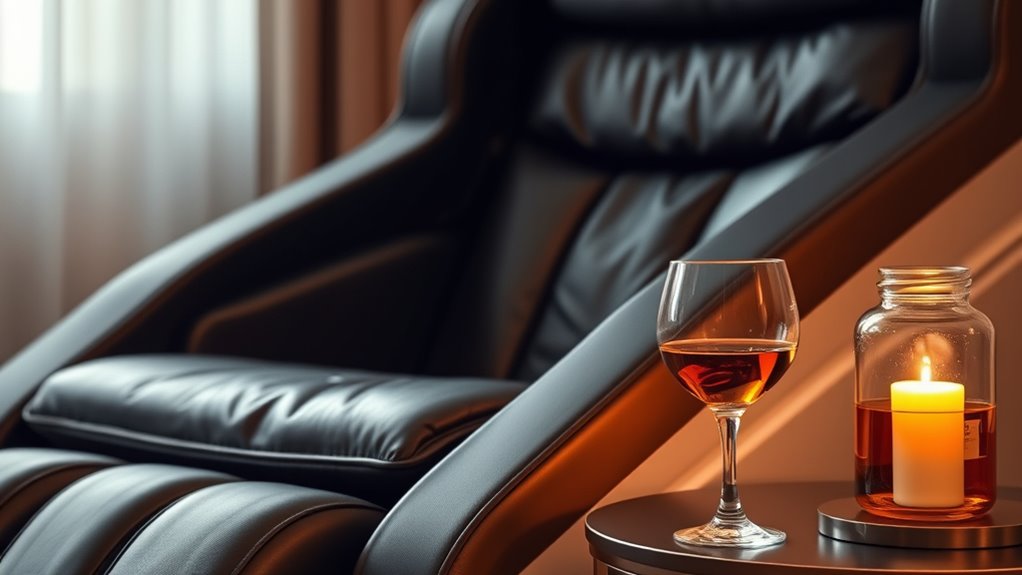
Using a massage chair while you’re under medication or alcohol can seem tempting, but it’s important to understand the potential risks involved. One of the main concerns is drug interactions. Many medications, especially those that affect your nervous system or blood flow, can react unpredictably with the sensations and pressure from a massage chair. For example, muscle relaxants or blood thinners might increase your risk of bruising or bleeding if the massage stimulates blood flow or causes muscle relaxation. Alcohol, on the other hand, dulls your awareness and impairs your coordination, which can make you less able to gauge how your body is responding during the massage. Combining alcohol with a massage chair could lead to dizziness, fainting, or falls, especially if the chair’s rollers or vibrations are intense.
Because of these risks, it’s *essential* to follow safety precautions when considering using a massage chair in such states. First, consult your healthcare provider if you’re on medication or have health conditions that could be affected by massage therapy. They can advise whether it’s safe to use the chair and if any specific precautions are necessary. Always read the medication labels and understanding potential side effects can help you recognize signs that massage might be unsafe. For example, if your medication causes drowsiness, you should avoid using the massage chair until the effects wear off. Similarly, if alcohol has impaired your judgment or balance, it’s best to wait until it’s cleared from your system.
Another safety precaution involves starting with gentle settings. Use the lowest intensity to see how your body reacts and avoid prolonged sessions until you’re confident it’s safe. Never operate the massage chair if you feel dizzy, lightheaded, or overly relaxed, as this can increase the risk of accidents. Stay seated in a stable position, and don’t fall asleep in the chair, especially if you’ve consumed alcohol or are under the influence of medication. Keep a phone nearby in case you need assistance. Remember, your body’s response to massage can be altered by medications or alcohol, so listening to your body is essential.
Furthermore, being aware of how medications can affect your body’s response can help prevent adverse events during massage therapy. Ultimately, being cautious and informed is the best way to enjoy the benefits of a massage chair without risking your health. Recognize the importance of understanding drug interactions and adhering to safety precautions. If you’re unsure, it’s always better to wait until you’re sober or your medications are at safe levels before using the device. Your safety should always come first, so taking these simple measures can help you relax without unintended consequences.
massage chair with adjustable intensity
As an affiliate, we earn on qualifying purchases.
As an affiliate, we earn on qualifying purchases.
Frequently Asked Questions
Can Alcohol or Medication Affect the Safety of Massage Chair Usage?
Alcohol effects can impair your judgment and increase the risk of dizziness or falls when using a massage chair, so it’s best to abstain from drinking beforehand. Medication safety varies; some drugs may cause drowsiness or interact negatively with massage therapy, so check your medication’s side effects. Always consult your healthcare provider if you’re unsure. Prioritizing safety ensures you enjoy the benefits of your massage chair without unnecessary risks.
Are There Specific Medications That Contraindicate Massage Chair Use?
Imagine the gentle hum of your massage chair as you read medication warnings that highlight potential drug interactions. Some medications, like blood thinners or muscle relaxants, contraindicate massage chair use because they can increase bleeding risk or cause unexpected reactions. Always check your medication warnings and consult your healthcare provider. Ignoring these warnings could lead to adverse effects, so stay informed and prioritize your safety before unwinding in your massage chair.
How Does Alcohol Influence Muscle Response During Massage Therapy?
Alcohol impacts your muscle response during massage therapy by impairing muscle relaxation. When you’ve consumed alcohol, your muscles may not respond as effectively to the massage, leading to less relief and potential discomfort. Alcohol can also increase the risk of soreness or injury due to impaired coordination and judgment. It’s best to avoid alcohol before using a massage chair to guarantee you get the full benefits of relaxation and avoid adverse effects.
Should I Avoid Using a Massage Chair if I’M on Blood Thinners?
You should avoid using a massage chair if you’re on blood thinners because it can increase bleeding risk due to blood thinning. The massage’s pressure might cause bruises or minor injuries, and the sedative effects of some medications can make you less aware of discomfort. Always consult your healthcare provider first to guarantee safety, as they can advise whether massage therapy is appropriate for your specific medication regimen.
What Signs Indicate I Should Stop Using a Massage Chair Under Medication or Alcohol Influence?
If you experience sudden pain, dizziness, or nausea while in a massage chair under medication or alcohol, stop immediately. Don’t brush it off as just a minor inconvenience—those are your body’s way of saying, “Hey, maybe this isn’t a good idea right now.” Continuing could worsen your condition or lead to injury. Play it safe: listen to your body and pause the massage until you’re clear-headed and stable.
massage chair for sensitive health conditions
As an affiliate, we earn on qualifying purchases.
As an affiliate, we earn on qualifying purchases.
Conclusion
So, next time you reach for that massage chair after a night out or while on medication, remember it’s not exactly a free pass to relaxation. Ironically, what’s meant to soothe might actually cause more harm if you’re impaired. Instead of turning your living room into a risky spa, play it safe—save the massage for sober days. After all, a calm mind and body deserve more than just a questionable shortcut to relaxation.
As an affiliate, we earn on qualifying purchases.
massage chair safety accessories
As an affiliate, we earn on qualifying purchases.
As an affiliate, we earn on qualifying purchases.
Cold & flu season Picks
humidifiers
As an affiliate, we earn on qualifying purchases.