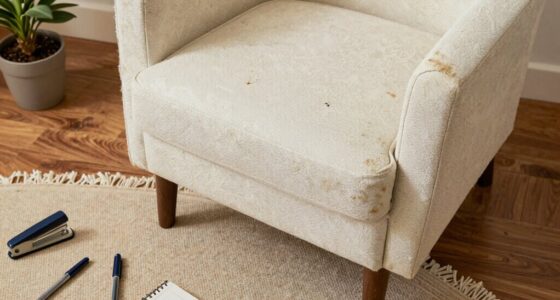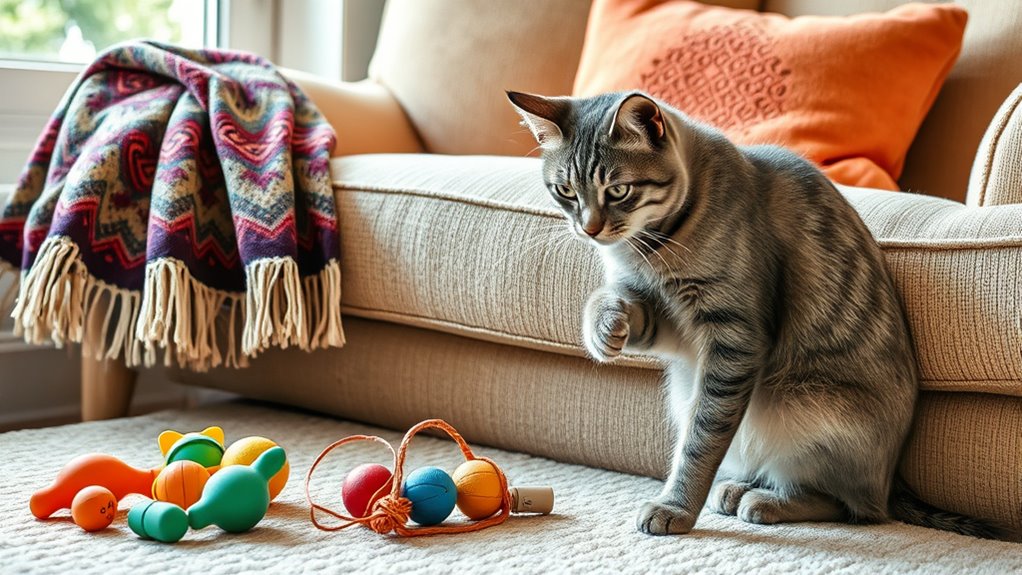

To pet-proof your chair, choose durable, claw-resistant fabrics like microfiber or leather to protect upholstery from scratches and tears. Manage cords by hiding them behind furniture, using cord covers, or route them along baseboards with clips to prevent chewing and tripping hazards. Regularly trim your pet’s nails and provide scratching posts or toys to divert their attention. Effective precautions like these keep your furniture safe—keep going to discover more ways to safeguard your space.

Get wellness gear delivered free with Prime
- Fast, free delivery on millions of items
- Prime Video, Amazon Music and more included
- Member-only deals all year
Key Takeaways
- Use claw-resistant fabrics like microfiber or leather to protect upholstery from scratches and bites.
- Conceal cords behind furniture or run through conduit to prevent pet access and damage.
- Attach cord covers or route cords along baseboards with clips to keep them out of pets’ reach.
- Provide scratching posts and toys to divert pets from furniture and reduce scratching behavior.
- Keep pet nails trimmed and use deterrent sprays to minimize furniture scratching and biting.
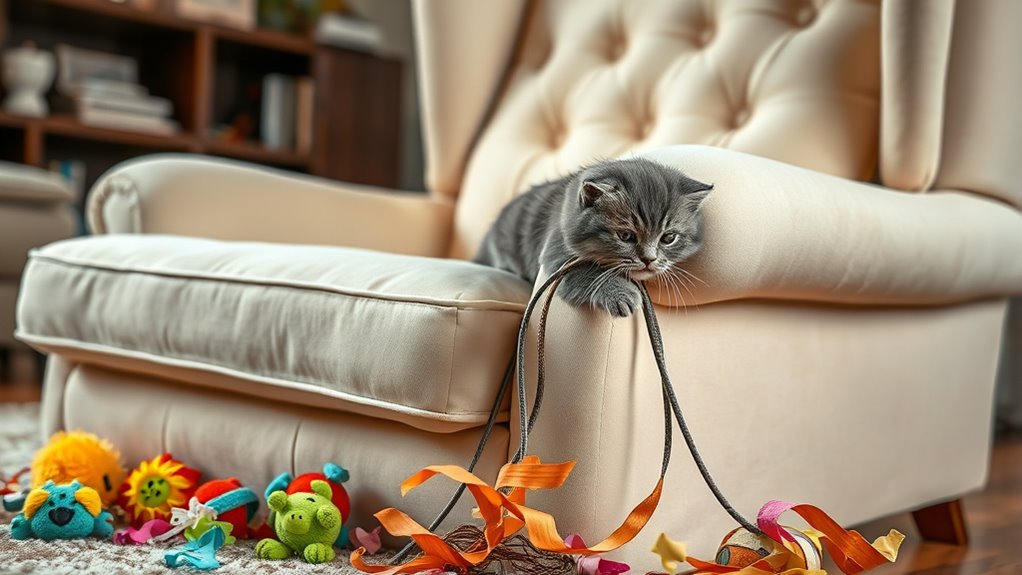
If you love having pets but want to keep your chair in good condition, pet-proofing is essential. Pets, especially cats and curious dogs, can cause significant damage to upholstery and pose safety hazards with exposed cords. To protect your furniture, start by choosing claw resistant fabrics. These fabrics are specially designed to withstand scratching and biting, making them less appealing targets for your pets’ claws. Materials like microfiber, tightly woven textiles, or leather are excellent options because they resist tearing and minimize visible damage from scratching. Investing in furniture with these fabrics can save you money and frustration over time, as they extend the lifespan of your chair and reduce repair costs.
Choosing claw-resistant fabrics like microfiber, leather, or tightly woven textiles protects your furniture from pet scratches and damage.
In addition to selecting durable fabrics, addressing the cords that run around or beneath your chair is vital. Pets, especially dogs and cats, often find cords fascinating, and their chewing or pulling can lead to dangerous situations or damage to your electronics and furniture. Implementing cord concealment strategies is a smart move. You can hide cords behind furniture, run them through conduit, or use cord covers that keep them out of your pet’s reach. Tucking cords into furniture channels or using adhesive cord clips to route them along baseboards also keeps them secure and less tempting for your pets. These strategies not only protect your cords from chewing but also prevent tripping hazards, ensuring a safer environment for everyone.
Beyond fabrics and cords, consider adding pet deterrents or protective barriers. Slipcovers made from claw resistant fabrics can be easily removed for cleaning and can shield your upholstery from scratches and fur. If your pet tends to jump onto furniture, training or using pet-safe deterrent sprays can help reduce their interest. Placing scratching posts or toys nearby can divert their attention away from your chair, saving your furniture from unnecessary damage. Regularly trimming your pet’s nails also minimizes the risk of scratches, especially if your furniture isn’t made from claw resistant fabrics. Incorporating dog breeds known for their calm demeanor can also help, as some breeds are less inclined to scratch or chew furniture. Ultimately, pet-proofing your chair requires a combination of choosing the right materials, managing cords effectively, and training your pets. By taking these steps, you protect your investment and maintain a beautiful, safe space for both you and your pets. It’s about creating a harmonious environment where your pet’s curiosity doesn’t come at the expense of your furniture’s condition. With some effort and strategic planning, your chair can stay in excellent shape despite your furry friends’ antics.
microfiber pet-proof furniture slipcover
As an affiliate, we earn on qualifying purchases.
As an affiliate, we earn on qualifying purchases.
Frequently Asked Questions
Can Pet-Proofing Harm My Chair’s Comfort or Style?
Pet-proofing your chair doesn’t have to harm its comfort or style. When you choose pet-proofing solutions, opt for items that blend seamlessly with your decor and don’t bulk up the chair. Using stylish covers or discreet cord protectors can enhance pet-proofing aesthetics while maintaining chair comfort. With thoughtful choices, you keep your furniture safe and attractive, ensuring your pet’s safety without sacrificing style or comfort.
How Do I Prevent My Pet From Chewing Cords?
You can prevent your pet from chewing cords by using cord covers to hide and protect them. Apply taste deterrents, like bitter sprays, to make cords unappealing. Keep cords out of reach, and provide your pet with plenty of toys to redirect their chewing instincts. Consistent training and positive reinforcement help reinforce these habits. Combining these strategies effectively keeps your cords safe and your pet satisfied.
Are There Safe Deterrents for Pets on Furniture?
Think of your furniture as a treasure chest, and pets as curious explorers. You can keep them safe with pet-safe sprays that make furniture unappealing, or deterrent mats that gently discourage climbing or chewing. These options are safe for your pets and effective at protecting upholstery. Using these deterrents, you’ll turn your furniture into a no-go zone, ensuring your pets stay safe while preserving your home’s beauty.
What Are Quick Fixes for Accidental Pet Damage?
When you spot pet damage, act fast with quick furniture repair to minimize further harm. Use furniture repair kits for scratches and tears, and consider slipcovers to hide damage temporarily. Concurrently, reinforce pet training to prevent future accidents. Redirect your pet’s attention with toys or deterrents, and reward good behavior. Combining swift repairs with consistent training helps protect your furniture and keeps your pet from causing more damage.
How Often Should I Re-Evaluate Pet-Proofing Measures?
Think of pet-proofing maintenance as a regular health check for your furniture. You should re-evaluate your measures every few months or whenever your pet’s behavior changes. Conduct furniture safety checks to spot new risks or damages early. Staying vigilant guarantees your pet’s safety and keeps your space protected. Frequent assessments help you adapt to your pet’s evolving needs, maintaining a secure environment for everyone involved.
cord concealment clips for furniture
As an affiliate, we earn on qualifying purchases.
As an affiliate, we earn on qualifying purchases.
Conclusion
By pet-proofing your chair, you’re not just safeguarding furniture—you’re creating a sanctuary of trust and comfort. Think of your chair as a symbol of shared moments and unconditional love, now fortified against the chaos of playful paws. When you protect your space, you nurture a bond rooted in care and understanding. In doing so, you turn your home into a haven where both you and your pets can thrive—resilient, connected, and loved.
pet claw resistant upholstery fabric
As an affiliate, we earn on qualifying purchases.
As an affiliate, we earn on qualifying purchases.
dog and cat scratching post with toys
As an affiliate, we earn on qualifying purchases.
As an affiliate, we earn on qualifying purchases.
Cold & flu season Picks
humidifiers
As an affiliate, we earn on qualifying purchases.