
When importing a massage chair, you’ll need to check its voltage compatibility with your country’s power system to avoid damage or voided warranties. Be sure to understand customs procedures, import duties, and restrictions, and prepare all necessary documents like invoices and packing lists to simplify clearance. Using experienced carriers and proper packaging helps prevent damage and delays. For detailed steps on ensuring smooth importation, keep going—there’s important info you won’t want to miss.

Get wellness gear delivered free with Prime
- Fast, free delivery on millions of items
- Prime Video, Amazon Music and more included
- Member-only deals all year
Key Takeaways
- Verify the massage chair’s voltage compatibility with your country’s electrical standards before purchase.
- Research import duties, customs regulations, and restrictions for your destination country.
- Ensure proper documentation such as invoices, packing lists, and shipping papers for smooth customs clearance.
- Use reliable carriers experienced in international shipping to prevent damage and delays.
- Confirm warranty coverage and after-sales support options available in your country.

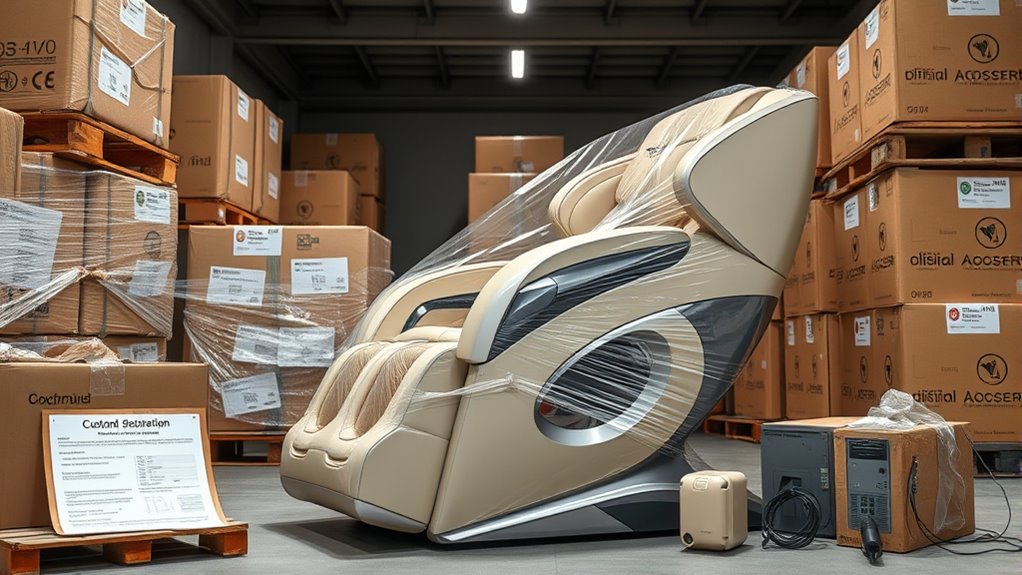
Importing a massage chair can be a straightforward process if you understand the necessary steps and regulations involved. The first thing you need to consider is shipping regulations. These rules vary depending on your country and the origin of the product, so it’s essential to research customs policies, import duties, and any restrictions specific to massage chairs. You’ll want to ensure the seller provides detailed shipping documentation, including invoices and packing lists, to facilitate smooth customs clearance. Proper packaging is also critical to prevent damage during transit, especially since massage chairs are bulky and fragile. Using a reliable shipping carrier with experience in international freight can minimize delays and hidden costs.
Importing a massage chair requires understanding shipping regulations, proper documentation, and reliable carriers.
Voltage compatibility is another vital aspect. Many massage chairs are designed for specific electrical standards, such as 110V or 220V. If the voltage doesn’t match your local power supply, you might need a converter or transformer. Failing to address this can cause equipment malfunction or even permanent damage. Confirm the voltage specifications before placing your order, and consider whether the seller offers models compatible with your electrical standards. This step helps avoid warranty issues later on, as using an incompatible voltage might void the warranty or make repairs difficult.
Speaking of warranties, understanding warranty issues upfront can save you headaches down the line. Different manufacturers have varying policies for international buyers. Some may only honor warranties if the product is serviced locally by authorized technicians, which could mean additional costs or delays if there’s a defect. Before purchasing, verify what the warranty covers, the duration, and the process for claims. Keep all receipts, warranty cards, and correspondence handy should you need to make a claim. It’s also wise to check if the seller offers any after-sales support or assistance with repairs, especially if you’re importing from a different country.
Customs clearance is another step where attention to detail pays off. Customs officers might inspect your shipment and request additional documentation or fees. Being prepared with accurate paperwork and clear communication can speed up this process. If you’re unfamiliar with the customs procedures, working with a freight forwarder or customs broker can help ensure compliance and prevent unexpected delays or costs.
As an affiliate, we earn on qualifying purchases.
Frequently Asked Questions
What Is the Typical Lead Time for Importing a Massage Chair?
You can expect the import process for a massage chair to take anywhere from 4 to 8 weeks, depending on import regulations and customs procedures. During this time, import taxes and duties are assessed, which may add to the delay. Ensuring all paperwork is complete and compliant with customs rules helps speed up the process, so plan accordingly and stay in touch with your shipping provider for updates.
Are There Specific Safety Standards for Massage Chairs Internationally?
Yes, there are specific international safety standards for massage chairs that you need to follow. You should guarantee your chair complies with international safety regulations, like CE in Europe, UL in the US, or other regional standards. These standards focus on electrical safety, fire resistance, and user protection. By meeting these standards, you guarantee your product’s safety, comply with import regulations, and avoid potential legal issues.
How Do I Handle Warranty Claims Across Borders?
To handle cross border warranty claims, you should register your massage chair with the manufacturer’s international repair network. Keep all receipts and warranty documents handy, and contact their customer service directly. They’ll guide you on repairs or replacements abroad. Additionally, check if the warranty covers international repairs, so you’re aware of any limitations. This guarantees smooth resolution of issues regardless of where you are.
Can I Modify the Voltage Settings After Import?
Modifying the voltage settings may seem straightforward, but it’s a delicate process. You can perform voltage adjustments or product modifications, but only if you’re confident in your skills or seek professional help. Changing the voltage after import can affect warranty coverage and safety. Always consult the manufacturer’s guidelines or a qualified technician to guarantee proper adjustment, preventing potential damage or electrical hazards.
What Are the Best Shipping Options to Reduce Damage Risk?
To reduce damage risk during shipping, choose a reliable carrier with insurance options that cover potential damages. Opt for sturdy packaging techniques like double boxing, foam padding, and corner protectors to safeguard your massage chair. Make certain the shipment is fully insured for the item’s value. Tracking and signature confirmation add extra security, so you can monitor the delivery and confirm it arrives safely, minimizing the chances of damage.
international massage chair shipping
As an affiliate, we earn on qualifying purchases.
As an affiliate, we earn on qualifying purchases.
Conclusion
Ultimately, importing a massage chair is like opening a door to relaxation you’ve long envisioned. While the path may have its twists—voltage tweaks, customs dances—you’ll find that patience and preparation turn these hurdles into gentle guiding stars. Embrace the journey, knowing that the comfort awaiting you is worth every careful step. Sometimes, the most rewarding experiences come from steering small obstacles, leading you to a haven where stress melts away, just within your reach.
massage chair customs clearance kit
As an affiliate, we earn on qualifying purchases.
As an affiliate, we earn on qualifying purchases.
As an affiliate, we earn on qualifying purchases.
Halloween Picks
halloween
As an affiliate, we earn on qualifying purchases.