TL;DR

Get wellness gear delivered free — and shop member deals
- Fast, free delivery on millions of items
- Access to Prime Big Deal Days deals on October 6–7
- Prime Video, Amazon Music and more included
At-home massage guns are handheld devices that deliver rapid pulses to muscles, offering a convenient way to support relaxation and post-exercise comfort. Choose a model for its comfortable grip, useful speed range, manageable noise, and suitable attachments—not simply its power—and use light pressure for short sessions while avoiding bones, joints, injuries, and areas where a clinician has advised caution.
The first time you switch on an at-home massage gun, the rapid thudding can sound more like a tiny power tool than a wellness device. Used gently, though, that handheld pulse can fit into a short post-walk or post-workout routine without booking an appointment or hauling out a foam roller.
These devices are designed to deliver percussive, repetitive pulses to muscles. People use them to support relaxation and post-exercise comfort, but they are not a cure for pain and do not replace individualized care. Their popularity has grown alongside interest in convenient self-care, giving you a wider range of sizes, prices, attachments, and noise levels to compare.
This guide explains what a massage gun can and cannot do, which features matter in daily use, and how to try one with sensible precautions. You’ll also get a straightforward routine and a checklist for deciding whether a device belongs in your home—or whether a conversation with a healthcare professional should come first.
Choose a massage gun for comfortable grip, useful low settings, manageable noise, and practical attachments—not maximum power alone.
Start with light pressure on a large muscle, keep the device moving, and use a short pass of about 1–2 minutes per muscle group as a flexible starting point.
Avoid bones, joints, injured or infected skin, and any area that feels unusually painful or sensitive.
Ask a healthcare professional before use if you have a blood-clotting disorder, osteoporosis, a skin infection, or another relevant health concern.
Clean attachments as the manufacturer directs, and treat the device as a self-care aid rather than a replacement for professional assessment or treatment.
What an At-Home Massage Gun Can—and Cannot—Do
At-home massage guns are handheld devices designed to deliver rapid, repetitive pulses to muscles, offering a convenient way to support temporary relaxation and post-exercise comfort. They work by pressing a moving attachment against the body, so the sensation is a rhythmic tap rather than the broad, steady pressure of a foam roller or a therapist’s hands. Your experience depends on the speed, attachment, pressure, and body area.
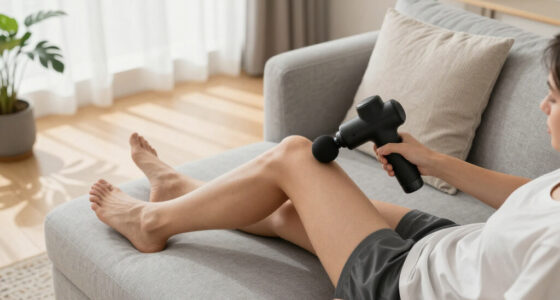
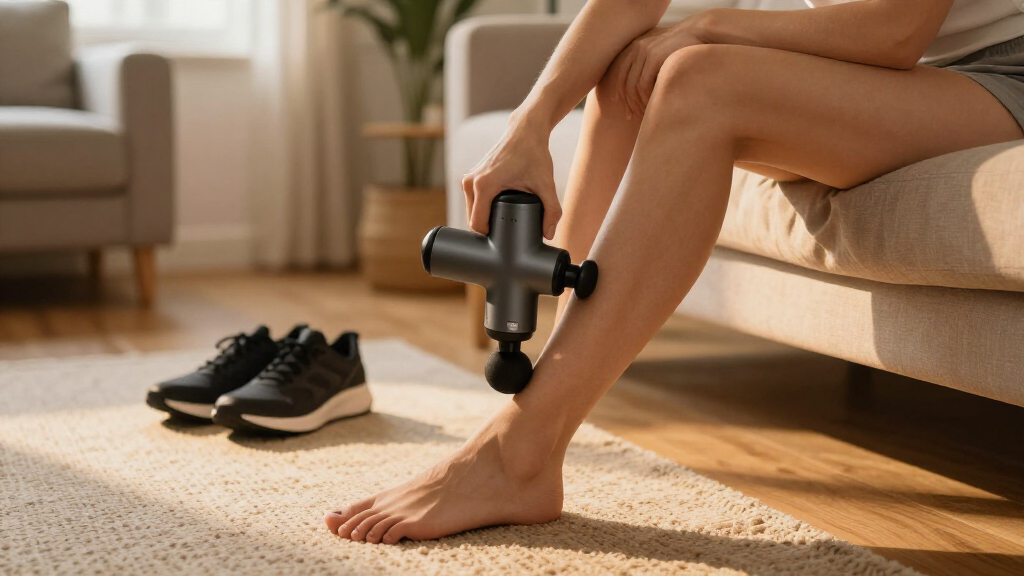
That variation matters: the same setting can feel comfortable on a large thigh muscle and too intense on a smaller or more sensitive area. A massage gun is therefore less like a treatment with one correct dose and more like a tool whose effects depend on how and where you use it. After a long walk, for example, you might use a soft round head on your calf for a brief, gentle pass while standing comfortably. The buzzing sensation may feel soothing, but more pressure does not mean more benefit. If you have to brace, flinch, or tense against the device, ease off or stop rather than treating intensity as a sign of effectiveness.
A device can help you build a relaxing routine; it cannot diagnose why an area hurts, repair an injury, or promise faster recovery. Massage guns are used by athletes, physical therapists, and wellness enthusiasts, but that does not make every technique right for every person. The product guidance supplied for this topic describes their use as supporting soreness relief, flexibility, circulation, and relaxation; those are supportive wellness aims, not guaranteed outcomes. Feeling temporarily more comfortable is not proof that an underlying problem has resolved. If discomfort is persistent, severe, or tied to an injury, seek professional advice instead of trying to pound it away.
Think of the device as a short self-care tool, not a substitute for medical care. A comfortable, light pass is a better starting point than chasing a “deep” feeling.
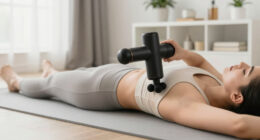
at-home massage gun with adjustable speed
As an affiliate, we earn on qualifying purchases.
As an affiliate, we earn on qualifying purchases.
Choose the Features You’ll Actually Use
The best massage gun for home use is the one you can hold comfortably and use at a sensible intensity. Compare grip, weight, speed options, noise, battery life, attachments, and price before you focus on a powerful motor. These features affect whether the device fits into your routine: an awkward grip can make a brief session tiring, while a motor that is loud enough to bother you may mean you use the device less often. A feature only helps if it makes the device easier and more comfortable for your real routine.
Imagine using it after a jog in a shared apartment: a quiet motor may matter more than a high top speed. If your hands tire quickly, a lighter body and easy-to-reach controls may beat a heavier premium model. Weight and grip are a tradeoff, too: a very light device may be easier to maneuver, but check whether it still feels stable and well balanced in your hand. A long battery life is handy for travel or frequent use, while a clear charging indicator saves you from discovering a dead device just as you settle onto the couch. If you mostly use it at home near an outlet, battery capacity may matter less than comfort and noise.
| Feature | What it changes | Everyday example |
|---|---|---|
| Speed settings | Lets you begin gently and adjust within the maker’s guidance | Start low on a sensitive calf |
| Attachments | Changes the contact shape and feel | Use a broad head on a large muscle rather than a narrow tip |
| Weight and grip | Affects reach and hand comfort | Reach your thigh without straining your wrist |
| Noise and battery | Shapes when and where you’ll use it | Choose a quieter model for evening use |
| Price and controls | Balances cost with practical ease | Pick simple buttons over app features you won’t open |
Speed settings are most useful when they let you start gently; a high maximum speed is not a reason to use it. Attachments change the size and feel of the contact area, but more heads do not automatically mean better results. A broader head may feel more forgiving over a large muscle, while a narrow tip concentrates contact and calls for particular care. Read the manual to learn each head’s intended use, and check for an automatic shut-off or other safety features. Premium models may add app-guided routines or faster charging, while a basic device may suit someone who only wants occasional, simple use. Compare those extras with the cost: paying more makes sense only if the feature solves a real inconvenience for you.
handheld percussion massage device
As an affiliate, we earn on qualifying purchases.
As an affiliate, we earn on qualifying purchases.
Use a Massage Gun in a Gentle, Repeatable Routine
To use an at-home massage gun, start on a large muscle with the lowest comfortable setting, keep the head moving, and stop if you feel pain, numbness, or unusual discomfort. Short sessions are easier to control than lingering in one spot. Moving the head spreads contact over the muscle instead of repeatedly stressing one small patch; light pressure also makes it easier to notice when an area is becoming uncomfortable. Follow the specific device instructions, since designs and recommended use can differ.
- Choose a suitable area. Pick a broad muscle, such as the thigh or calf, rather than a joint or bony point. Sit or stand in a stable position.
- Start gently. Fit an attachment recommended for that area, switch to a low setting, and let the device rest lightly against the muscle.
- Keep it moving. Glide slowly over the muscle instead of pressing hard in one place. Treat roughly 1–2 minutes per muscle group as a starting point, not a target you must meet.
- Check how you feel. Stop if the sensation becomes painful or leaves you feeling worse. Don’t use the device to push through an injury.
- Clean and store it. Turn it off, clean the attachment as the maker directs, and charge or store the device safely.
For example, after a weekend bike ride, you might spend a short, easy pass over each thigh while seated, then leave your calves alone if they feel tender. The supplied guidance describes 1–2 sessions daily as a typical range, with about 1–2 minutes per muscle group, but your needs vary. Treat those figures as a conservative reference rather than a schedule to complete: if one brief pass feels like enough, stop there. More frequent or longer sessions can add irritation without making the routine more useful. Check the manual and stop if your body signals that the sensation is too much.
As an affiliate, we earn on qualifying purchases.
Know When to Skip the Device or Ask a Professional
Skip a massage gun on painful, injured, bruised, infected, or unusually sensitive areas, and get professional guidance if a health condition could affect safe use. Rapid pulses and pressure may irritate tissue rather than soothe it, especially when you apply the device too forcefully or use it for too long. A massage gun is not a way to test whether an injury is serious: worsening the sensation does not reveal what caused it, and temporary comfort would not rule out a problem.
People with conditions such as blood-clotting disorders, osteoporosis, or skin infections should ask a healthcare professional before use. These conditions can change how the body responds to pressure or make a local issue more consequential, so general product instructions may not be enough to judge what is appropriate. The same careful approach makes sense if you have a health concern, unexplained symptoms, or a clinician’s instructions about massage or pressure. If you are unsure, wait for advice rather than experimenting on the affected area.
Picture a sore shoulder after moving boxes. If it is simply tired and comfortable with gentle touch, you might choose to rest instead of using a device; if pain is sharp, worsening, or linked to a possible injury, don’t try to solve it by increasing the speed. Overuse, excessive pressure, or poor technique can cause bruising, soreness, or discomfort. These are reasons to stop, not signs that a session is “working.” Follow the maker’s directions, avoid bones and joints, and stop when the sensation turns unpleasant.
Comfort is your guide, not a sign that you need to press harder. A massage gun should not make you grit your teeth or leave a painful mark.
massage gun attachments for muscle recovery
As an affiliate, we earn on qualifying purchases.
As an affiliate, we earn on qualifying purchases.
Decide Whether a Home Device Fits Your Routine
A home massage gun makes sense when you want convenient, brief self-care and can use it comfortably within its instructions. It may be less useful if you expect it to treat persistent pain, replace a professional massage, or solve an injury without identifying the cause. That distinction helps set a realistic purchase test: the device should make a routine you already want easier, not create pressure to treat every ache yourself. Think about when you would actually reach for it, rather than buying based on a long feature list.
Suppose you finish two strength-training sessions a week and enjoy a few quiet minutes of gentle muscle care afterward. A simple, easy-to-hold model may be plenty. If you share walls with neighbors, prioritize noise; if you travel, consider weight and battery; if you dislike navigating apps, pay for straightforward controls rather than software features you won’t use. These priorities involve tradeoffs: a feature-rich model may offer more options, but it can cost more and add complexity without improving the experience you want.
Recent product options include quieter motors, longer-lasting or faster-charging batteries, redesigned attachments, app-guided routines, and, in some cases, more sustainable materials or packaging. These developments can improve convenience, but they do not establish that one device will work better for your body. An app may make it easier to follow a routine, for example, but it cannot know whether a particular area is appropriate for treatment. Compare the return policy, warranty, cleaning instructions, and availability of replacement attachments alongside the headline specifications; practical support matters if a device breaks or a part needs replacing.
Home massage guns can supplement professional care, but they are not a substitute when you need a tailored assessment or treatment. A clinician or therapist can consider your symptoms and health history in a way a device cannot. If a therapist or clinician has already given you specific guidance, ask whether a percussive device fits that plan. The most useful purchase is one that supports a realistic routine without asking you to ignore discomfort.
Keep Your Device Clean and Ready for the Next Session
Clean the attachment after use and follow the manufacturer’s care instructions to keep your massage gun ready for the next session. Dust, sweat, and skin oils can collect where the head meets your body, especially after a workout. Cleaning is a small practical step that helps keep the contact surface in good condition; it does not replace avoiding use on infected or broken skin.
After using the device, switch it off and remove the attachment only if the manual says to do so. Wipe the parts with the cleaning method the manufacturer recommends, then let them dry fully before putting the device away. Don’t assume every attachment can be soaked or cleaned with the same product; materials and electronics differ, and an unsuitable cleaner or excess water could damage them. The manual is the safer guide than a generic cleaning routine.
For instance, if you keep your massage gun in a gym bag, take it out after a sweaty session rather than sealing a damp attachment in a pocket overnight. Store it somewhere dry, protect the charging port, and charge the battery as directed. If the device begins making an unfamiliar sound, feels unusually hot, or shows damage, stop using it and check the instructions or contact the maker. These checks can help you catch a device problem before the next session, but regular maintenance supports the device’s lifespan; it cannot make unsafe technique safe.
Frequently Asked Questions
Are at-home massage guns safe for everyone?
They are not right for everyone. If you have a blood-clotting disorder, osteoporosis, a skin infection, an injury, or another health concern, ask a healthcare professional before using one. Stop if you feel pain, numbness, or unusual discomfort.
How often should I use a massage gun?
The supplied product guidance describes 1–2 sessions a day and roughly 1–2 minutes per muscle group as a typical range, but that is not a prescription. Follow your device manual, use a comfortable setting, and do less—or stop—if the area feels worse.
Can a massage gun replace professional massage or treatment?
No. A home device can be a convenient self-care tool, but it cannot assess an injury or provide individualized treatment. Use professional guidance when discomfort persists, worsens, or comes with a health concern.
Which massage gun attachment should I use?
Attachments differ in shape and feel, and their intended uses depend on the device. Check the maker’s instructions, begin with a gentle option suited to a broad muscle, and avoid pressing a narrow head into bones, joints, or sensitive areas.
What can happen if I use a massage gun too forcefully?
Too much pressure, long sessions, or poor technique can leave you with soreness, discomfort, or bruising. Keep the device moving, start at a low speed, and stop if the sensation becomes painful rather than soothing.
How do I clean and maintain a massage gun?
Turn it off after use and clean its attachments according to the manufacturer’s directions. Let cleaned parts dry fully, store the device in a dry place, and follow the maker’s charging and care guidance.
Conclusion
Choose a massage gun you can use gently, comfortably, and consistently. Start with a low setting, keep each pass short, follow the device instructions, and skip it when symptoms or health concerns call for professional guidance.
A little rhythmic buzz after a walk may become a pleasant part of your evening; the best session ends with you feeling comfortable, not flattened by a power tool.
Halloween Picks
halloween
As an affiliate, we earn on qualifying purchases.