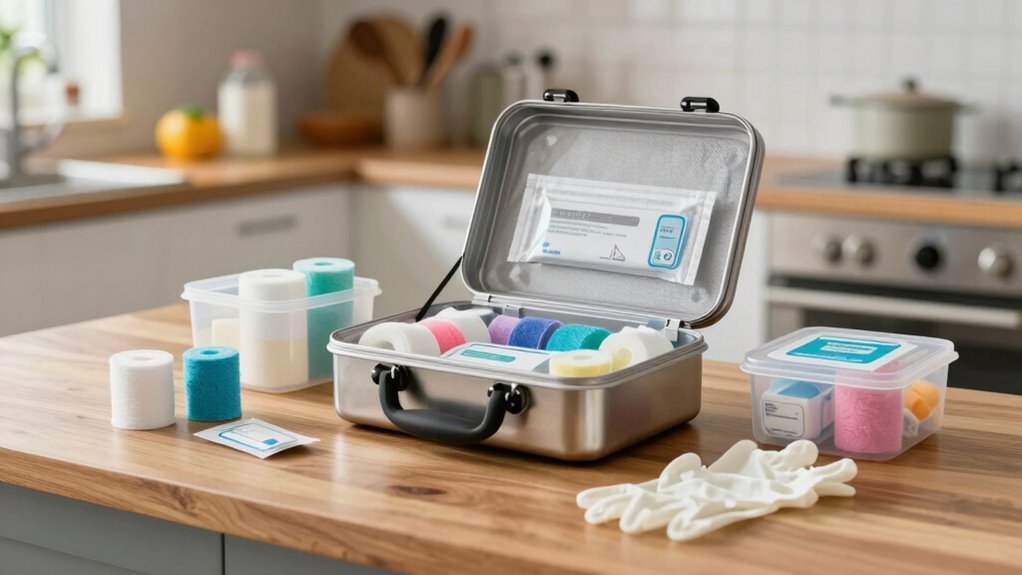

To keep shared recovery gear hygienic in a busy home, you should organize supplies with clear labels and keep used items separate from new ones. Regularly sanitize tools like scissors and thermometers using disinfectants, and wipe down surfaces after each use. Encourage family members to wash their hands before handling gear and participate in cleaning routines. Proper storage, good ventilation, and consistent sterilization help prevent bacteria buildup. Keep going to discover more effective tips for maintaining a clean recovery space.

Get wellness gear delivered free with Prime
- Fast, free delivery on millions of items
- Prime Video, Amazon Music and more included
- Member-only deals all year
Key Takeaways
- Regularly sanitize all shared recovery tools and supplies after each use with appropriate disinfectants.
- Use clearly labeled, separate containers for clean and used gear to prevent cross-contamination.
- Establish routine cleaning schedules for storage areas and ensure proper ventilation to reduce bacteria buildup.
- Train family members on proper handling, disinfection, and storage procedures to maintain hygiene standards.
- Check and discard expired supplies regularly to ensure only safe, sterile items are in use.
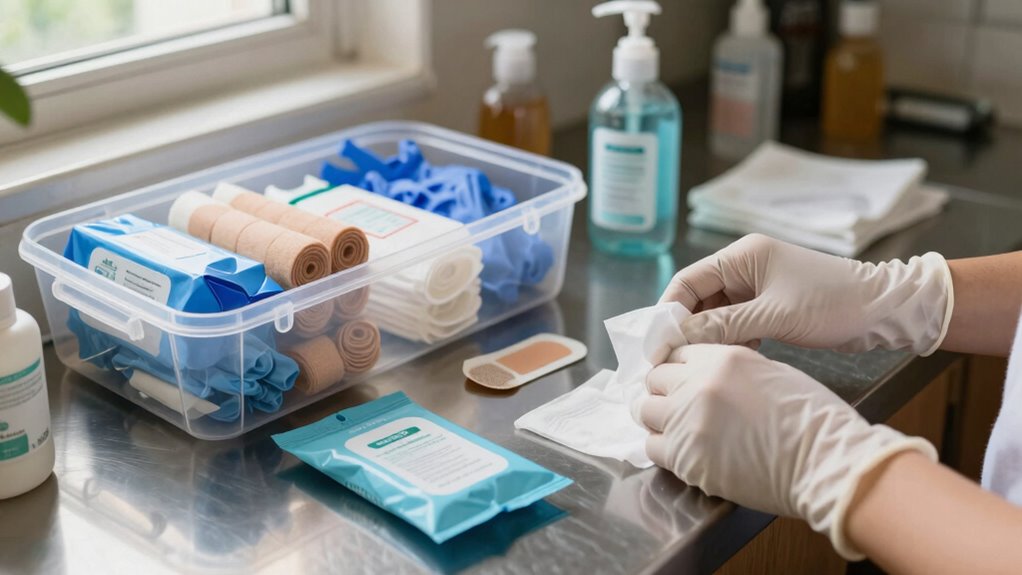
Ever wonder how to keep shared recovery gear clean in a busy household? It’s a common concern, especially when multiple people rely on the same equipment for injuries or recovery. The key is to establish effective first aid kit organization and consistent equipment sanitization routines. When you keep your first aid kit well-organized, it becomes easier to spot what’s clean, what needs replacing, and what requires sterilization. Use clear containers or labeled compartments to separate used supplies from fresh ones. Regularly check expiration dates and discard expired items immediately. This not only keeps your kit ready for emergencies but also minimizes cross-contamination risks.
Implementing routine equipment sanitization is vital. After every use, sanitize items like bandages, scissors, and thermometers with appropriate disinfectants. Keep a dedicated cleaning station nearby, stocked with alcohol wipes, disinfectant sprays, and microfiber cloths. When you finish using recovery gear, wipe down all surfaces and tools thoroughly before storing them away. For reusable equipment, follow manufacturer instructions on sterilization processes, whether that involves boiling, autoclaving, or chemical disinfectants. This habit guarantees that shared gear remains hygienic and safe for everyone to use. Additionally, ensuring proper ventilation helps reduce moisture and bacteria buildup around recovery areas. Proper storage conditions also play a crucial role in maintaining hygiene by preventing mold and bacterial growth. Creating a hygienic environment around recovery spaces encourages consistent cleaning habits among family members. Incorporating proper sterilization techniques into your routine ensures all reusable tools are effectively disinfected and safe for repeated use.
In a busy household, it’s easy to overlook small details, but maintaining strict routines makes a big difference. Encourage everyone to participate in these routines—reminding family members to clean their hands before and after handling recovery gear can considerably reduce bacteria transfer. Designate specific storage spots for clean and used items to avoid mixing contaminated supplies with sanitized ones. Training everyone on proper first aid kit organization helps prevent mix-ups and ensures that essential supplies are always accessible and safe. Establishing these hygiene routines and understanding proper disinfection techniques helps create a safer environment for all family members.
disinfectant wipes for first aid supplies
As an affiliate, we earn on qualifying purchases.
As an affiliate, we earn on qualifying purchases.
Frequently Asked Questions
How Often Should Shared Recovery Gear Be Disinfected?
You should disinfect shared recovery gear after every use to maintain personal hygiene and prevent the spread of germs. Regular gear maintenance is essential, especially in busy homes where multiple people share equipment. Use disinfectant sprays or wipes designed for sports gear, ensuring all surfaces are thoroughly cleaned. By doing so, you keep the gear hygienic, prolong its lifespan, and reduce the risk of infections for everyone using it.
What Are the Best Storage Solutions for Recovery Gear?
You should opt for personal storage solutions like labeled bins or dedicated shelves to keep recovery gear organized and hygienic. Use clear labeling systems to easily identify each person’s equipment, preventing cross-contamination. Store gear in a dry, clean area away from moisture and dirt. Regularly disinfect storage containers and guarantee each person’s gear has its own space. This approach keeps shared recovery gear cleaner and more accessible for everyone.
Can Shared Recovery Gear Be Washed in a Regular Washing Machine?
Yes, shared recovery gear can often be washed in a regular washing machine, but you need to take into account the gear material. Soft foam rollers or fabric-covered items usually handle machine washing well, while rubber or hard plastic gear might not. Always check the manufacturer’s instructions first. Using a gentle cycle and mild detergent helps keep your gear clean and hygienic without damaging it, making shared use safer and more hygienic in busy homes.
Are There Specific Cleaning Products Recommended for Recovery Gear?
You should choose cleaning products that are safe for both your gear and your household. Look for disinfectants labeled as effective against bacteria and viruses, and follow the manufacturer’s cleaning schedules. Avoid harsh chemicals that could damage the gear or pose safety risks. Using gentle, approved disinfectants regularly keeps your recovery gear hygienic, ensuring everyone stays safe and the gear remains in good condition.
How to Prevent Cross-Contamination Between Different Users?
To prevent cross-contamination, prioritize personal hygiene by encouraging everyone to wash their hands before handling gear. Use gear labeling to assign specific equipment to each individual, reducing mix-ups. Regularly clean and disinfect gear after each use, and store personal items separately. Reminding everyone to follow these practices minimizes the risk of spreading germs, keeps the recovery gear hygienic, and guarantees safe sharing in busy homes.
labeled storage containers for medical supplies
As an affiliate, we earn on qualifying purchases.
As an affiliate, we earn on qualifying purchases.
Conclusion
Now that you know how to keep shared recovery gear clean and hygienic, think about what’s truly at stake. Every time you overlook proper maintenance, you’re risking more than just dirt — you’re risking safety, trust, and peace of mind. The secret isn’t just in cleaning, but in consistency. So, are you ready to take that extra step and protect everyone in your busy home, or will you leave the unseen dangers lurking? The choice is yours.
autoclave sterilizer for reusable medical tools
As an affiliate, we earn on qualifying purchases.
As an affiliate, we earn on qualifying purchases.
hand sanitizer for household use
As an affiliate, we earn on qualifying purchases.
As an affiliate, we earn on qualifying purchases.
Halloween Picks
halloween
As an affiliate, we earn on qualifying purchases.