
Before using a chair right before sleep, understand it’s not designed for resting and can cause discomfort, stiffness, or muscular tension if used long-term. Make ergonomic adjustments like keeping your feet flat, hips slightly higher than knees, and supporting your neck and back with cushions. Remember, chairs lack the proper support of a bed, and extended use may restrict circulation or lead to pain. To discover how to improve comfort and safety, keep exploring these tips.
Key Takeaways
- Chairs are not designed for sleeping and may cause discomfort or health issues if used for rest.
- Adjust ergonomic features like height, armrests, and headrest to improve comfort temporarily.
- Use cushions or lumbar supports to help maintain proper posture and reduce muscular tension.
- Limit chair sleeping duration to avoid stiffness, soreness, and circulation problems.
- Prioritize finding a proper bed for long-term, restful sleep and use chairs only as a temporary solution.
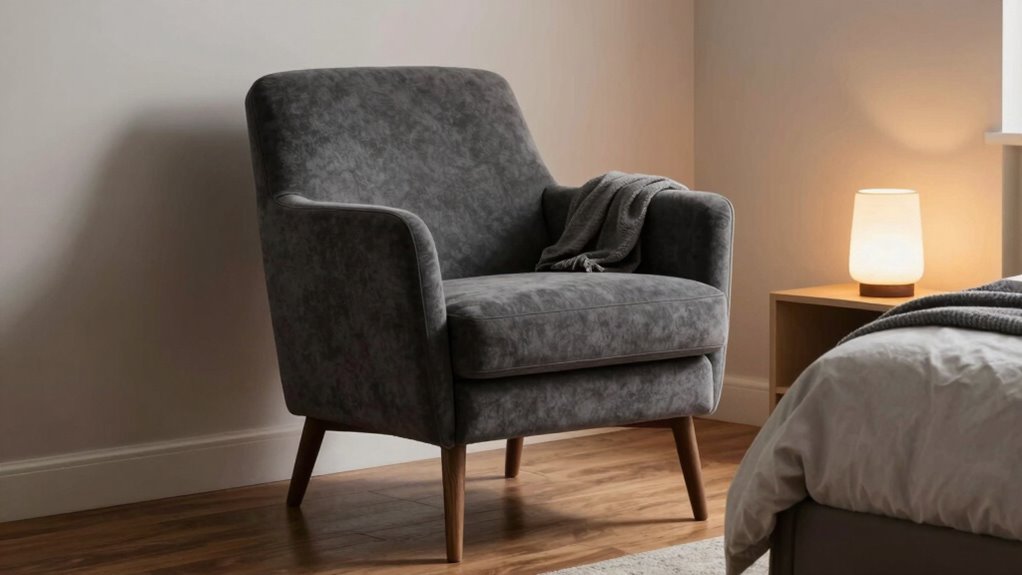
Using a chair as a makeshift bed might seem like a quick solution when you’re tired, but it’s vital to understand the potential risks and limitations before you settle in. Chairs aren’t designed for sleeping, and spending extended time in one can lead to discomfort and health issues. If you’re considering using a chair before sleep, focus on making ergonomic adjustments to improve your comfort and reduce strain. Adjust the height so your feet rest flat on the ground, and verify your hips are slightly higher than your knees. This helps distribute your weight evenly and prevents unnecessary pressure on your lower back. If your chair has adjustable armrests, set them at a height that supports your arms without causing your shoulders to hunch. Proper support can make a significant difference in your posture during short rests.
Posture correction is essential when you’re using a chair as a sleep substitute. Sit back fully against the backrest to maintain the natural curve of your spine. Avoid slouching or leaning forward, as this can cause muscular strain and lead to discomfort. Use a small pillow or lumbar support if necessary to fill the gap between your lower back and the chair, encouraging better spinal alignment. Keep your head aligned with your spine; don’t crane your neck forward or backward. If the chair’s headrest is adjustable, set it to support your neck comfortably. These ergonomic adjustments help prevent neck and back pain, which are common issues when sleeping in an unsuitable position. Additionally, it’s important to be aware that chairs often lack the full support needed for restful sleep and can cause stiffness or soreness if used repeatedly as a sleeping surface. Extended or improper use may also contribute to muscular tension and discomfort, especially without proper ergonomic setup. Prolonged or frequent use may also restrict circulation, especially if the chair’s design doesn’t allow for proper leg and foot positioning. If you must sleep in a chair temporarily, try to avoid staying there for more than a few hours. Use cushions or blankets to enhance comfort, but don’t rely on this as a long-term solution. Prioritize finding a proper bed or sleeping surface whenever possible, as that’s designed to support your body fully through the night.

Marsail Ergonomic Office Chair: Office Desk Chair with High Back Mesh and Adjustable Lumbar Support Rolling Work Swivel Task Chairs with Wheel 3D Armrests and Headrest
- Fully Adjustable Headrest: 2D adjustable for personalized comfort
- Reclining Backrest: Adjusts from 90° to 120°
- 3D Adjustable Armrests: Multiple work postures supported
As an affiliate, we earn on qualifying purchases.
As an affiliate, we earn on qualifying purchases.
Frequently Asked Questions
Can Sitting in a Chair Before Sleep Improve Sleep Quality?
Sitting in a chair before sleep can improve your sleep quality if it’s part of your sleep hygiene routine. Using relaxation techniques like deep breathing or gentle stretching in the chair helps calm your mind and body, making it easier to fall asleep. Just make certain your environment is comfortable and avoid screens. Incorporating this habit can signal to your brain that it’s time to wind down, promoting better rest.
Are There Specific Chair Types Better for Pre-Sleep Use?
Did you know that ergonomic chairs can boost relaxation before sleep? For pre-sleep use, opt for chairs with ergonomic design and material comfort, like padded cushions or breathable fabric. These features support your body, reduce tension, and help you unwind more effectively. Avoid stiff or overly firm chairs, as they can cause discomfort. Choosing the right chair enhances your relaxation routine, making it easier to shift into restful sleep.
How Long Should I Stay Seated in a Chair Before Sleeping?
You should stay seated in a chair for about 15 to 30 minutes before sleeping to allow your body to relax and make ergonomic adjustments. During this time, focus on posture correction by sitting upright with your shoulders relaxed and feet flat on the ground. This helps reduce tension, promotes better circulation, and prepares your body for a restful sleep. Avoid rushing, and listen to your body’s signals.
Does Using a Chair Before Bed Affect Sleep Disorders?
Using a chair before bed can influence sleep disorders by impacting your mood and posture. If you sit comfortably, it might enhance your mood and relax your muscles, potentially easing sleep issues. However, poor posture or overstimulation from sitting too long can disrupt sleep patterns. Pay attention to your body’s responses; gentle posture adjustment and calming activities can help foster a more restful, restorative sleep, reducing sleep disorder symptoms.
Is It Safe for People With Back Pain to Sit in a Chair Before Sleep?
If you have back pain, sitting in a chair before sleep can be safe if you focus on posture correction. Choose an ergonomic chair that supports your spine and promotes proper alignment. This helps reduce strain and discomfort. Additionally, sitting in a chair can improve circulation benefits, which may help relax muscles and ease pain. Just avoid slouching or sitting for extended periods, and consider gentle stretching beforehand.

AmazeCov Adjustable Headrest Pillow for Recliners and Armchairs – Non-Slip Velvet Cushion for Neck Support and Pain Relief (Gray)
- Comfortable Neck Support: Provides excellent support for travel and daily use
- Removable Inner Lining: Filled with soft pearl cotton for elasticity and support
- Anti-Slip Back Design: Ensures stable support during use
As an affiliate, we earn on qualifying purchases.
As an affiliate, we earn on qualifying purchases.
Conclusion
Before you settle into that chair before bed, remember it’s more than just a quick break — it’s a decision that can make or break your sleep. Ignoring proper comfort or posture can turn your night into a battle with rest, feeling like you’ve wrestled a bear instead of unwinding peacefully. So, choose your chair wisely, focus on comfort, and give your body the respect it deserves. Otherwise, you might end up more exhausted than a marathon runner after a sprint!

Everlasting Comfort Doctor Recommended Memory Foam Seat Cushion for Office Chairs & Car – Ergonomic Office Desk Accessories – Cushions for Tailbone Pain Relief, Sciatica (Black, Large)
- Doctor Recommended Support: Provides ergonomic support and comfort
- Premium Memory Foam: Conforms to body for all-day comfort
- Breathable & Washable Cover: Easy to clean and keeps cushion fresh
As an affiliate, we earn on qualifying purchases.
As an affiliate, we earn on qualifying purchases.

Lumbar Support Pillow for Office Chair,Mothers Day Gifts for Mom, Back Support Pillow for Car, Office Supplies, Chair Cushions, Back Pain Relief Improve Posture, Mesh Cover Double Adjustable Straps
- Extended Adjustable Straps: Fits more chairs securely
- Ergonomic Back Support: Relieves back pain and tightness
- Supports Proper Posture: Maintains natural spinal curve
As an affiliate, we earn on qualifying purchases.
As an affiliate, we earn on qualifying purchases.