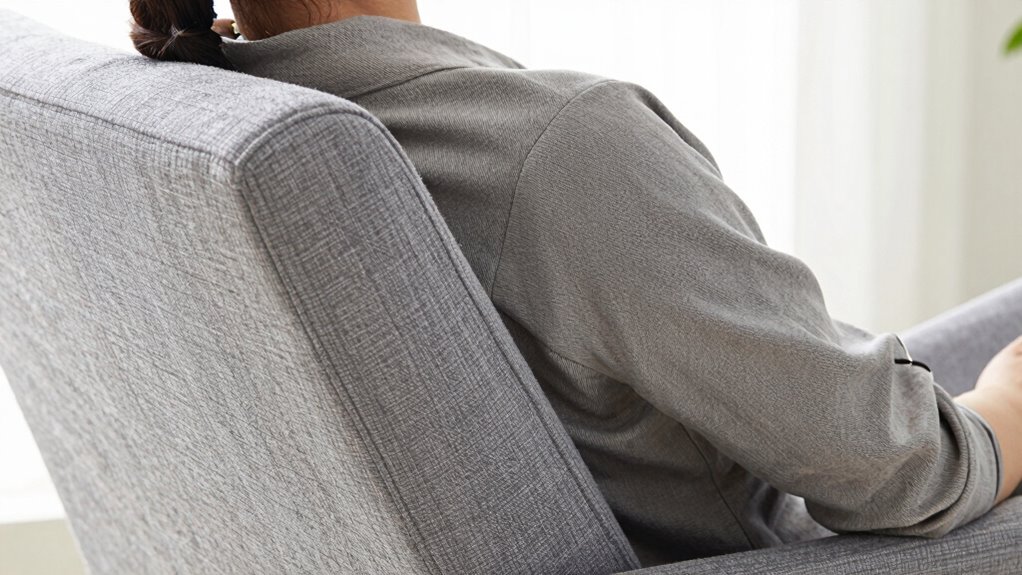

When you recline, your muscles and spine shift to adapt, so maintaining support requires understanding your body’s biomechanics. Adjust your chair or recliner to distribute weight evenly, supporting your lumbar curve and keeping your head, shoulders, and hips aligned. Proper support activates core muscles naturally, reducing strain. Small adjustments can make a big difference in comfort and health. Keep exploring how these hidden biomechanical principles influence your support and posture for long-term well-being.
Key Takeaways
- Proper ergonomic adjustments ensure even weight distribution, maintaining support during reclining movements.
- Lumbar support maintains natural spinal curves, preventing misalignment and discomfort when reclining.
- Adjustable furniture facilitates smooth transitions, reducing strain and promoting optimal biomechanical alignment.
- Engaging core muscles stabilizes the spine, enhancing support without sacrificing comfort during recline.
- Understanding reclining biomechanics helps select furniture that adapts to body movements, ensuring consistent support.
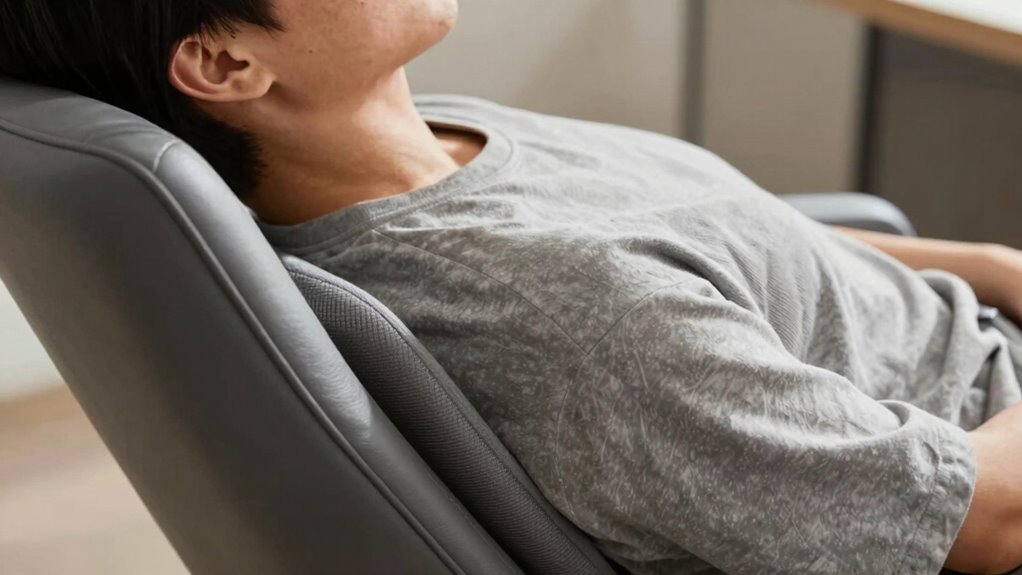
Have you ever wondered how reclining positions influence your body’s movement and comfort? When you lean back, your posture shifts, and the way your body supports itself changes considerably. This is where understanding the hidden biomechanics of reclining becomes essential. Proper ergonomic adjustments are key to maintaining comfort and avoiding strain. By fine-tuning your chair or recliner to fit your body’s unique shape, you help guarantee your spine stays in a healthy position, promoting ideal spinal alignment. When your seat is too far back or too upright, it can lead to misalignment, causing discomfort and long-term issues. Adjusting the angle of your backrest or the height of your seat can make a noticeable difference, helping you distribute your weight evenly across your pelvis and back. This reduces pressure points and prevents slouching, which often results from poor support.
Reclining without losing support involves more than just tilting backwards. Your core muscles work harder to stabilize your posture when you change positions, especially if your ergonomic adjustments aren’t right. If your recliner lacks proper lumbar support, your lower back might curve unnaturally, leading to discomfort or pain over time. Correctly positioned lumbar support encourages your spine to maintain its natural curves, reducing strain on your muscles and discs. Remember, the goal is to keep your head, shoulders, and hips aligned; otherwise, you risk creating tension in your neck and shoulders or overexerting your lower back muscles. When your ergonomic setup is refined, you can recline with confidence, knowing your support system is working efficiently. Recognizing the importance of posture alignment helps you prevent long-term discomfort and enhances your overall sitting experience. Additionally, exploring adjustable furniture options can further improve your ergonomic setup and support.
Furthermore, understanding reclining biomechanics helps you optimize your furniture’s design and adjustability, making your sitting experience more comfortable and health-conscious. Your body’s movement during reclining also depends on how well your furniture adapts to your body’s biomechanics. A well-designed recliner facilitates smooth transitions between positions, allowing your muscles to relax and your joints to move naturally. This minimizes the effort needed to change postures, reducing fatigue and making reclining feel effortless. Incorporating proper ergonomic support can significantly enhance your comfort and prevent potential long-term issues. This not only enhances comfort but also promotes healthier movement patterns. Gaining awareness of biomechanical principles enables you to make more informed choices about your seating arrangement. Ultimately, understanding these biomechanics helps you find a reclining position that feels both supportive and relaxed, allowing you to enjoy your time seated without compromising your body’s health or comfort.

Sweetcrispy Massage Recliner Chair for Adults, Adjustable Home Theater Seating with Lumbar Support for Living Room, Modern Fabric Reclining for Small Space, Grey
- Adjustable Reclining Positions: Reclines from 90° to 160° for comfort
- Full-Body Massage Modes: 8 massage modes with vibration and intensity
- Lumbar Support Massage: Targeted lumbar relief with massage zone
As an affiliate, we earn on qualifying purchases.
As an affiliate, we earn on qualifying purchases.
Frequently Asked Questions
How Does Reclining Affect Spinal Alignment Over Time?
Reclining can impact your spinal alignment over time by altering lumbar support and spinal curvature. If you don’t maintain proper lumbar support, your lower back may strain, leading to poor spinal curvature and discomfort. Reclining too much or poorly can cause your spine to adapt incorrectly, increasing the risk of long-term misalignment. To protect your spine, make sure your chair provides adequate lumbar support and avoid prolonged, unsupported reclining.
What Materials Best Support Ergonomic Reclining?
Forget flimsy cushions—your ideal ergonomic recliner should feature memory foam and lumbar support. Memory foam molds perfectly to your shape, preventing awkward postures, while lumbar support keeps your spine in happy alignment. Don’t settle for less; these materials guarantee comfort and support, so you can recline without sacrificing your back’s dignity. After all, your spine deserves a throne, not a trampoline of misery.
Can Reclining Improve Circulation and Reduce Fatigue?
Reclining can improve circulation and reduce fatigue by allowing you to make posture adjustments that promote better blood flow. When you lean back, you alleviate pressure on your lower back and legs, facilitating blood flow enhancement. This position encourages a more relaxed posture, which helps prevent muscle strain and fatigue. So, regularly reclining with proper support can keep you energized and improve overall circulation throughout the day.
How Do Different Recline Angles Impact Muscle Engagement?
You might think reclining always relaxes muscles, but different angles impact muscle engagement differently. A slight recline promotes better posture adjustment, reducing strain on your back, while a more reclined position encourages muscle relaxation in your shoulders and neck. However, extreme angles can decrease core activation, leading to less support. Finding the right angle balances muscle relaxation with engagement, helping you stay comfortable without sacrificing posture or support.
Are There Specific Ergonomic Principles for Recliner Design?
Yes, there are ergonomic principles for recliner design. You should look for adjustable headrests to customize comfort and maintain proper neck alignment. Lumbar support is essential to keep your lower back supported, preventing strain during recline. A well-designed recliner allows smooth adjustments, ensuring your spine remains aligned, muscles stay engaged without overexertion, and you enjoy both comfort and support, reducing fatigue and promoting better posture.
adjustable office chair for proper posture
As an affiliate, we earn on qualifying purchases.
As an affiliate, we earn on qualifying purchases.
Conclusion
Now that you understand the hidden biomechanics behind reclining without losing support, you see it’s not just about leaning back—it’s about harmony within your body’s design. Like a perfectly tuned instrument, your body responds to subtle shifts, balancing comfort and stability. When you master this dance of biomechanics, you reveal the secret to effortless relaxation. So, embrace the science beneath the surface, and let your body support you like a trusted friend in every moment of repose.
ergonomic recliner with head and neck support
As an affiliate, we earn on qualifying purchases.
As an affiliate, we earn on qualifying purchases.
lumbar support cushion for chairs
As an affiliate, we earn on qualifying purchases.
As an affiliate, we earn on qualifying purchases.